Durations : - 16 Nights / 17 Days
Place Covered : - Delhi - Agra - Jaipur - Mandawa - Bikaner - Jaisalmer - Jodhpur - Narlai - Udaipur - Mumbai
Most visitors see Rajasthan in a week and go home with Jaipur and Udaipur. This expedition gives the state seventeen days and goes much further: into the painted merchant towns of Shekhawati, the camel country around Bikaner, the sandstone fort of Jaisalmer and the hill villages between Jodhpur and Udaipur. It starts with Delhi and the Taj Mahal, crosses Rajasthan from its northern edge to the lakes in the south, and ends with a night at the Taj Mahal Palace in Mumbai.
The route has been planned around where you sleep as much as what you see. Most nights are spent in palaces, forts and old hunting lodges that still belong to the families who built them, with a few of India's best modern luxury hotels in the bigger cities. A private chauffeur stays with you from Agra to Udaipur, an English speaking local guide joins you in every major stop, and no single day has more than about five and a half hours on the road.
The trip suits travellers on a first visit to India who have the time to do it properly, and those who have already done the Golden Triangle and want to see the Rajasthan that short tours leave out. It runs best from October to March, when desert days are warm and nights are cool. Every departure is private, so dates, hotels and the pace of each day can be changed to suit you.
Our representative meets you in the arrivals hall at Indira Gandhi International Airport and drives you to your hotel in central Delhi. Most long haul flights land late at night or very early in the morning, so nothing is planned for today. Rest, get over the time difference and use the pool or spa if you feel like it. The drive into the city takes 45 minutes to an hour, depending on traffic. Indian rupees can be drawn from the ATMs in the arrivals hall before you leave the terminal.
In the evening your tour manager will come by to go through the route, hand over your travel documents and answer any questions. If you land early and still have energy, a short drive past India Gate and the government buildings of New Delhi can be arranged. There is no need to go out for dinner tonight, as the hotel has some of the best restaurants in Delhi. From today, drink only bottled or filtered water, which is supplied in your car and room.
Overnight: Delhi
Start in Old Delhi, the walled city laid out by Shah Jahan in the 17th century. Climb the steps of Jama Masjid, one of the largest mosques in India, then take a cycle rickshaw through the lanes of Chandni Chowk, where spice traders, silver shops and sweet makers have worked from the same addresses for generations. You pass the red sandstone walls of the Red Fort on the way out. Your guide will point out Sis Ganj Gurudwara and the Jain bird hospital along the main street. If you want to try the food the area is known for, stop for hot parathas in Paranthe Wali Gali.
In the afternoon the day moves to New Delhi. Visit Humayun's Tomb, the garden tomb whose design later shaped the Taj Mahal, and Qutub Minar, a tower of about 73 metres begun around the year 1200. Finish with a drive down Kartavya Path to India Gate as the evening traffic builds. At Qutub Minar look for the iron pillar in the courtyard, which has stood for about 1,600 years without rusting. Allow about an hour at each site, with lunch in between at a restaurant in Khan Market or Lodhi Colony.
Overnight: Delhi
Take the morning Gatimaan Express from Hazrat Nizamuddin station. It reaches Agra in about 100 minutes, which is far more comfortable than the road. Your car and chauffeur drive ahead and meet you on the platform. Check in at a hotel close enough to the Taj Mahal that many rooms look straight at it. The train leaves at about eight in the morning and serves a light breakfast on board. Keep your passport with you, as ticket checks are made against photo ID.
In the afternoon visit Agra Fort, the red sandstone citadel where three generations of Mughal emperors lived and ruled. Shah Jahan spent his last years here as a prisoner of his own son, looking across the river at the tomb he had built for his wife. Before sunset cross the Yamuna to Mehtab Bagh, a quiet garden on the far bank, and watch the Taj change colour from the side most visitors never see. Allow about an hour and a half at the fort. Mehtab Bagh closes at sunset, so the guide will time the drive to get you there about 45 minutes before.
Overnight: Agra
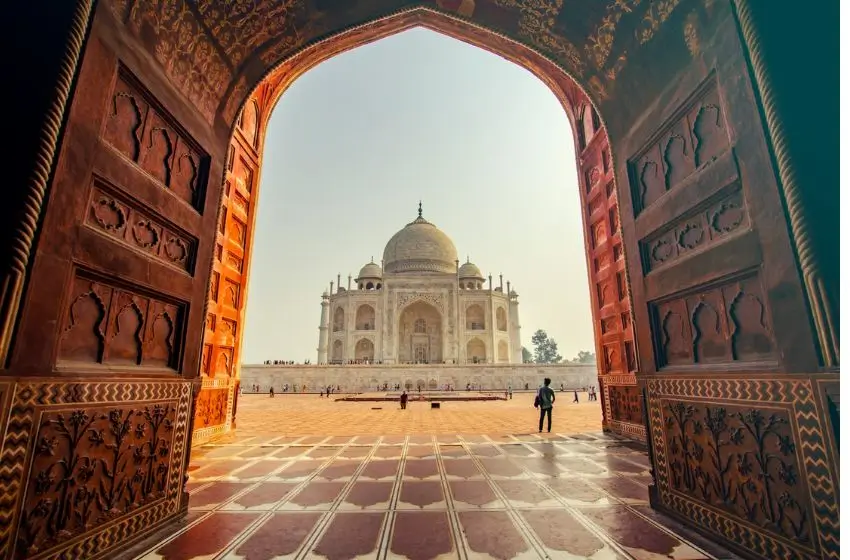
Be at the gate when the Taj Mahal opens at sunrise, before the day's crowds arrive. Your guide will show you how the stone inlay was done, why the four minarets lean slightly outwards and what the calligraphy around the main arch says. Return to the hotel for breakfast. The Taj Mahal is closed on Fridays, so your dates are planned around that. In December and January the first view of the dome often comes slowly as the morning mist lifts. Only small bags, phones and cameras are allowed in, so leave food, tobacco and tripods in the car.
Leave for Jaipur, about five hours by road. On the way stop at Fatehpur Sikri, the red sandstone city Emperor Akbar built in the 1570s and left soon after. Its palaces, courtyards and great mosque are still almost complete. You reach Jaipur in the late afternoon. Your guide will take you through the Diwan-i-Khas, the five storey Panch Mahal and the white marble tomb of the Sufi saint Salim Chishti, where visitors tie threads to the screens when making a wish. Allow about two hours here, with a lunch stop on the highway afterwards.
Overnight: Jaipur
Drive out early to Amber Fort, the hilltop palace of the Kachhwaha rulers before they moved down to the plains and founded Jaipur in 1727. You go up to the main gate by jeep. Inside, the Sheesh Mahal is lined with thousands of small mirror pieces, set so that a single lamp could light the whole room. Arrive soon after the fort opens at 8 am to avoid both the queue for jeeps and the midday heat. On the way back, stop by Man Sagar lake to photograph Jal Mahal, the palace that stands in the middle of the water.
Back in the city, visit City Palace, part of which is still home to the former royal family, and Jantar Mantar next door, an 18th century observatory whose giant sundial tells local time to within a few seconds. Stop for photographs at Hawa Mahal, the five storey screen wall built so the women of the court could watch the street without being seen. The evening is free. Ask your guide about a block printing or gem cutting workshop if you want to see local crafts up close. For lunch, try dal baati churma, the Rajasthani dish of baked wheat balls served with lentils and sweet crumbled wheat.
Overnight: Jaipur
A drive of three and a half to four hours north takes you into Shekhawati, a region of small towns that grew rich in the 18th and 19th centuries when local merchant families traded across India. They spent their money back home on havelis, large courtyard houses with every wall covered in frescoes. The road passes farming villages and small market towns, with a tea stop on the way. You arrive in time for lunch at the hotel, as the afternoon is spent on foot.
After check-in, walk through Mandawa with a local guide. The paintings show gods, battle scenes and, in the later ones, trains, motor cars and Europeans in hats, because the artists painted what their patrons had seen on their travels. Some havelis are cared for and open to visitors, others are locked and slowly fading, and seeing both tells the story of the town. Your hotel tonight is set inside the old castle at the centre of Mandawa. Wear comfortable shoes, as some of the lanes are unpaved.
Overnight: Mandawa
Drive about three and a half hours west to Bikaner, a desert city that stood on the old caravan routes. Junagarh Fort was built in the late 16th century and, unusually for Rajasthan, sits on flat ground rather than a hilltop. It was never captured, and its rooms are among the best kept in the state, with gold leaf work, painted walls and the Badal Mahal, a room painted with blue rain clouds for rulers who rarely saw rain. Lunch can be taken at the hotel. Bikaner is also the home of bhujia, the crisp gram flour snack, and shops near the old market fry it fresh through the day.
Later in the afternoon you can visit the National Research Centre on Camel, a government farm where you see different breeds up close and can taste camel milk ice cream. Another choice is the Karni Mata Temple at Deshnoke, about 30 km away, known for the thousands of rats that live inside and are treated as sacred. Your guide will help you decide which one suits you. On the way back, the red sandstone Rampuria havelis in the old city are worth a short stop for their carved facades.
Overnight: Bikaner
This is the longest drive of the trip, about five and a half hours on a good highway across the Thar Desert. Expect open scrub land, camel carts, herds of goats and villages of round mud houses. Your chauffeur will stop for tea and photographs whenever you like. Leave after an early breakfast so that you arrive with daylight to spare. Lunch is at a highway restaurant on the way, or the hotel in Bikaner can pack one for you.
Jaisalmer appears on the horizon as a yellow sandstone fort rising out of flat land. Check in and rest, then go to Gadisar Lake for sunset. The lake was built in the 14th century as the town's water supply and its banks are lined with small temples and carved stone pavilions. Go about an hour before sunset to catch the light on the water. Small rowing boats can be hired at the ghat for a short trip around the lake.
Overnight: Jaisalmer
Jaisalmer Fort was founded in 1156 and is one of very few forts in the world where people still live. A few thousand residents have homes, shops and guesthouses inside its walls. Walk through its lanes to the Jain temples, carved between the 12th and 15th centuries, then go down into the town to see Patwon ki Haveli, a row of five merchant houses with some of the finest carved stone balconies in Rajasthan. The Jain temples open to visitors only in the morning, which is why the fort comes first today. Leather items are not allowed inside, so leave belts and bags in the car.
In the afternoon drive about 45 km to the sand dunes near Sam. Ride a camel or a jeep over the dunes for sunset, then sit down to a private dinner on the sand while musicians from the Manganiyar community play the folk songs their families have performed for royal courts for centuries. Return to the hotel afterwards. The drive back to the hotel takes about an hour. Bring a warm layer, as desert evenings between December and February turn cold quickly once the sun goes down.
Overnight: Jaisalmer
Drive about five hours east to Jodhpur, the old capital of the Marwar kingdom. The desert slowly gives way to farmland as you get closer, and the first sight of Mehrangarh Fort on its rock above the city is one of the great arrivals in India. Halfway along the road you pass Pokaran, a small desert town with a red sandstone fort, which makes a good place for a break and lunch.
After check-in, spend the late afternoon around the Clock Tower and Sardar Market, where stalls sell spices, textiles and silver. Try the thick saffron lassi that Jodhpur is known for. Mishrilal Hotel near the Clock Tower is where most people go for it, and the market lane beside it sells the same spices the local cooks use. In the evening the fort is lit up, and several hotels in the city have terraces that look straight at it. Bargain gently in the market, as first prices for textiles and spices are always high.
Overnight: Jodhpur
Mehrangarh was founded by Rao Jodha in 1459 and sits on a rock about 120 metres above the city. Its museum holds palanquins, elephant howdahs, weapons and miniature paintings, and is one of the best organised museums in India. From the ramparts you can see how far the blue houses of the old city spread below. A lift near the entrance takes you up if you would rather not walk the steep ramps. Allow two to three hours for the fort and museum together.
Walk down through Brahmpuri, the old quarter where many houses are painted blue, then visit Jaswant Thada, a white marble memorial to one of the Jodhpur rulers. In the afternoon see the museum at Umaid Bhawan Palace, finished in 1943 and among the last great palaces built in India. Part of it is still home to the royal family. For something different, the Flying Fox zipline runs over the fort walls and lakes, and can be booked separately. Lunch can be at the cafe inside the fort or back in the old city, where the local snack is mirchi bada, a large green chilli stuffed with spiced potato and fried in batter.
Overnight: Jodhpur
A drive of about two and a half hours south brings you to Narlai, a village in the Aravalli hills with granite rocks, small temples and fields worked by hand. You stay in a 17th century hunting lodge of the Jodhpur royal family, now a quiet heritage hotel with only a few dozen rooms. You leave Jodhpur after breakfast and arrive in time for lunch. Rooms are spread around the old lodge and its gardens, so ask for one near the main courtyard if steps are a concern.
The afternoon is slow on purpose. Walk through the village, climb Elephant Hill for the view, or take a jeep into the nearby rocky country where leopards live close to the villages. In the evening the hotel serves dinner inside an old stepwell lit with hundreds of oil lamps, which is the reason many travellers come here. Elephant Hill takes its name from the white stone elephant on its summit. The climb is best done in the late afternoon when the rock has cooled, and good walking shoes are needed.
Overnight: Narlai
Drive about an hour to Ranakpur and visit the 15th century Chaumukha Jain temple, built from white marble with 1,444 pillars, each carved differently. Visitors need to cover shoulders and knees and leave leather items such as belts and bags outside. The temple opens to non-Jain visitors from noon to 5 pm, as the mornings are kept for worship, so the drive is timed to arrive around midday. Have a light lunch at one of the hotels near the temple before you continue.
Continue for about two and a half hours through the Aravalli hills to Udaipur. If you want to add the walls of Kumbhalgarh Fort, which run for more than 30 km over the hills, it can be fitted in today and adds about two hours. You reach Udaipur in the late afternoon and check in at a hotel on the lake. The road climbs through forest and small villages where grey langur monkeys often sit by the roadside. Tonight dinner is not included, so ask the hotel to book a table by the water.
Overnight: Udaipur
Udaipur was the capital of the Mewar rulers, who are known in Rajasthan for never giving up their independence to the Mughals. Visit City Palace, a series of buildings added over about 400 years, with courtyards, balconies and the Mor Chowk, a courtyard decorated with peacocks made from coloured glass. Then walk to Jagdish Temple and through the lanes of the old city. Allow about two and a half hours for City Palace, as the museum section is large and has many steps.
In the late afternoon take a boat on Lake Pichola, stopping at Jag Mandir island before returning as the sun sets behind the hills and the palace walls turn gold. Boats leave from the jetty at City Palace and the ride takes about an hour, including the stop on the island. Afterwards, many of the rooftop restaurants in the old city have tables that look across the water to the Lake Palace.
Overnight: Udaipur
After two weeks on the road, today has no fixed plan. Your car and guide are available for half a day. Good choices are the Saheliyon ki Bari gardens with their fountains, a cooking class with a local family, or a drive up to the Monsoon Palace at Sajjangarh for a sunset view over the lakes. Sajjangarh is about 5 km west of the city up a steep hill road, and the best light comes in the last hour before sunset. A cooking class usually lasts three hours and ends with lunch, so keep breakfast light.
In the evening you can watch the folk dance show at Bagore ki Haveli, or simply stay at the hotel and enjoy the lake. Many guests use this day for a long spa treatment. The show at Bagore ki Haveli starts at 7 pm and runs for about an hour, ending with a dancer balancing a tall stack of brass pots on her head. Seats are not reserved, so arrive half an hour early.
Overnight: Udaipur
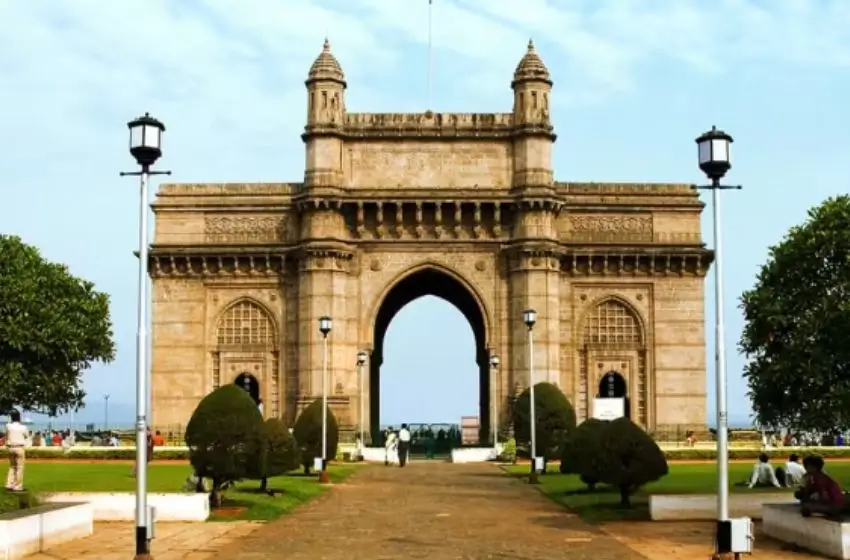
Take the morning flight from Udaipur to Mumbai, about an hour and a half. A new car and guide meet you at the airport. Spend the afternoon in South Mumbai: the Gateway of India, the Kala Ghoda art district and Chhatrapati Shivaji Maharaj Terminus, a Victorian Gothic railway station that is still one of the busiest in the country and is listed by UNESCO. Your guide will plan the route to keep time in traffic down. Lunch can be at one of the old Irani cafes in the Fort area, where berry pulao and bun maska are the dishes to order.
End the day on Marine Drive, the seafront road that curves around the bay, as the street lights come on. Your last night is at the Taj Mahal Palace, which opened in 1903 and faces the Gateway of India. Chowpatty beach at the north end of Marine Drive is where families gather in the evening for bhel puri. Later, walk across to the Gateway after dinner, when the crowds have thinned.
Overnight: Mumbai
Your free time today depends on your flight. If there is time in the morning, your guide can take you to Dhobi Ghat, the open air laundry, or the old Crawford Market. Hotel check-out is usually at noon, and since many international flights leave Mumbai late at night, a late check-out or a day room can be arranged. Dhobi Ghat is best seen from the bridge by Mahalaxmi station in the early morning, when the washing is at its busiest.
At the right time you are driven to Chhatrapati Shivaji Maharaj International Airport for your flight home. The drive from South Mumbai to the airport takes 45 minutes to an hour and a half, depending on the time of day. Plan to arrive at least three hours before an international departure, as security queues can be long. Our representative will help with your bags at the terminal entrance.
Any query? Write us mail.
info@indiaagratours.com
Guide Services Coordinator
+91-9058900786
Chat to Experts
WhatsApp: 919058900786
Delhi - Jaipur - Agra - Orchha - Khajuraho - Varanasi - Delhi
Delhi - Agra - Jodhpur - Udaipur - Varanasi - Mumbai
Delhi - Agra - Ranthambore - Jaipur - Jawai - Udaipur
Delhi - Agra - Jaipur - Udaipur - Kochi - Kumarakom - Marari
Delhi - Agra - Rishikesh - Varanasi - Delhi
Delhi – Agra – Jaipur – Jodhpur – Udaipur – Varanasi – Delhi
Mumbai - Udaipur - Jodhpur - Jaipur
Delhi - Varanasi - Agra - Jaipur - Mumbai