Taj Mahal Entry Fee for Foreigners (Complete Guide)
13 May 2025
Taking elderly parents or a traveler with limited mobility to the Taj Mahal requires more preparation than an ordinary sightseeing visit. The monument is spread across a large complex, vehicles cannot drive directly to the main monument, security checks are required before entry, and visitors may spend considerable time walking or standing. For a healthy traveler these details may seem minor, but for an elderly person, someone using a wheelchair, or a visitor who cannot comfortably walk long distances, they can determine whether the visit feels memorable or exhausting.
The good news is that a Taj Mahal visit with elderly parents is possible for many families when the day is arranged around the visitor's actual mobility rather than around a standard sightseeing schedule. Wheelchairs and accessibility measures are associated with the monument, but visitors should not assume that every section of this historic complex provides the same level of step-free access as a modern building. The Taj Mahal is a protected heritage site with historic surfaces, raised platforms, long pathways and areas where physical access can be more difficult.
The first decision should therefore be how much of the complex the elderly traveler genuinely needs to cover. Seeing the Taj Mahal does not require racing through every corner of the grounds. A slower visit with regular pauses can be much more satisfying than trying to follow the pace of younger family members.
Timing is equally important. The Taj Mahal generally opens around sunrise and remains open until around sunset, with normal public entry unavailable on Fridays. Exact seasonal opening and closing arrangements should always be checked shortly before the visit. Early mornings can offer cooler conditions, while winter mornings may be cold or foggy. During warmer months, avoiding the strongest afternoon heat becomes particularly important for senior travelers.
Families using India Agra Tours can arrange a private Agra visit with a car, driver and local guide so that hotel pickup, gate selection, walking pace and other sightseeing can be adjusted around an elderly traveler's comfort rather than following a fixed group schedule.
The most important point about Taj Mahal wheelchair accessibility is that accessibility is not identical throughout the entire monument.
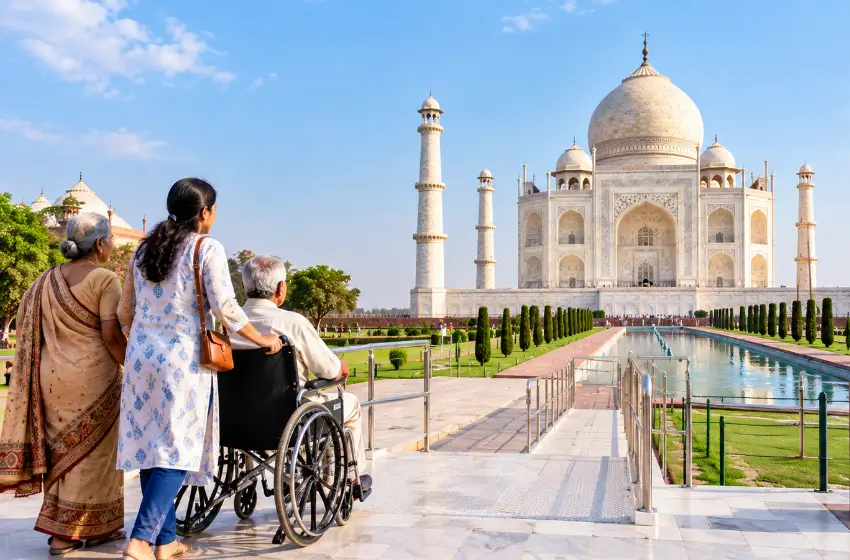
The main Taj Mahal complex contains broad pathways and open garden areas where a wheelchair can be useful. Accessibility initiatives at protected monuments include facilities such as ramps, pathways, wheelchairs and other assistance where feasible. However, the Taj Mahal remains a centuries-old heritage complex, and visitors should expect physical limitations in certain locations rather than assuming completely barrier-free movement from the parking area to every interior section.
A wheelchair can dramatically reduce fatigue for an elderly traveler who can walk short distances but cannot comfortably cover the entire complex on foot. This is a common situation. Many older visitors do not need a wheelchair in daily life but find that long tourist days involving queues, security, stone pathways and extended standing are considerably more demanding than normal daily activity.
Families should therefore consider a wheelchair as a practical mobility aid rather than something reserved only for travelers who are completely unable to walk.
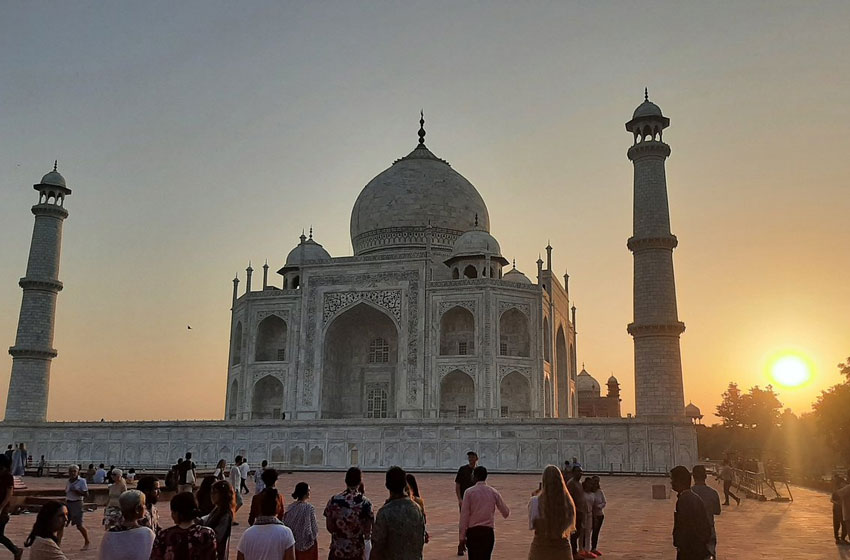
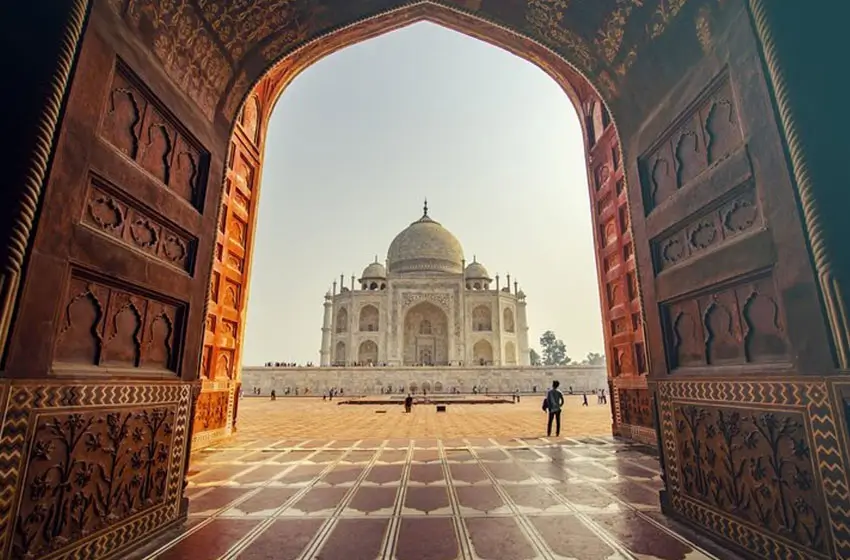
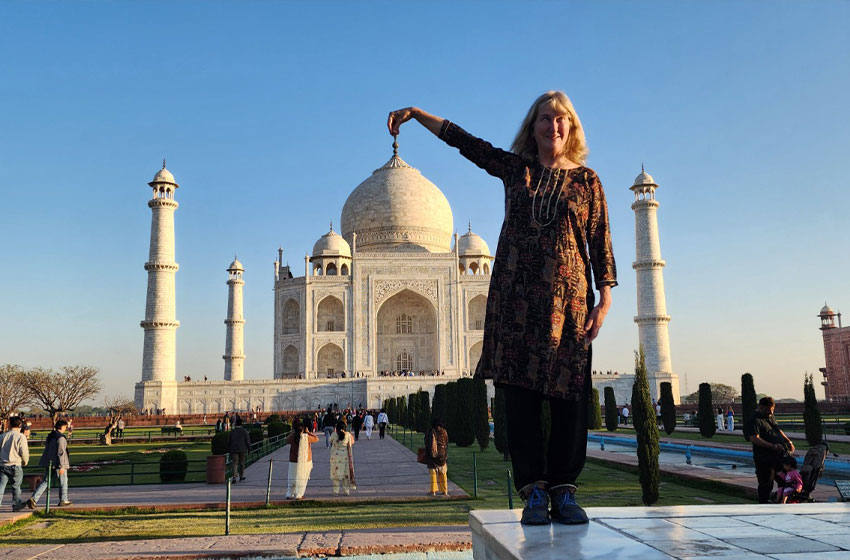
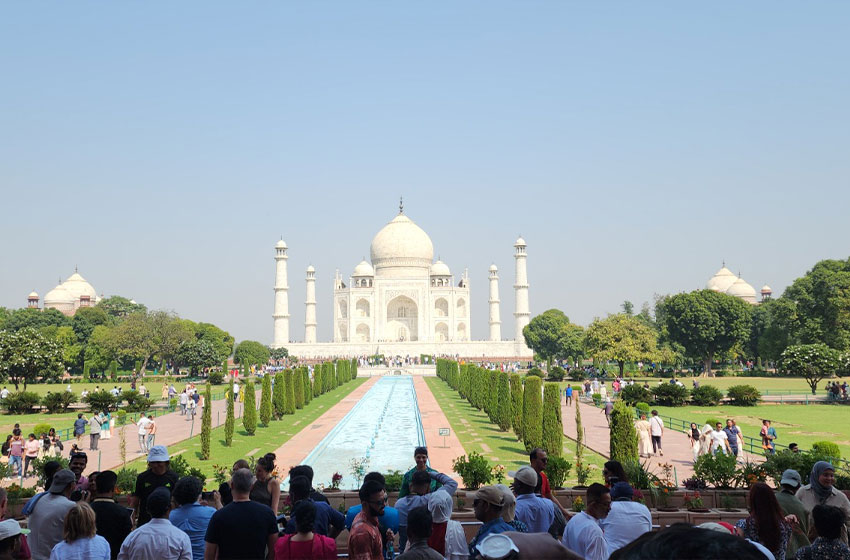
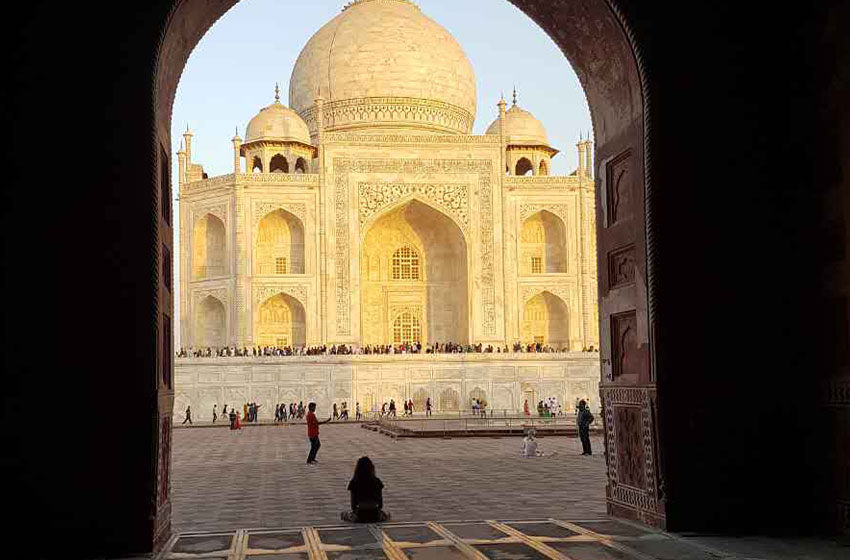
The garden area provides some of the most famous Taj Mahal views. An elderly visitor does not necessarily need to climb every available level to appreciate the monument. The central garden, reflecting pool area and other accessible viewpoints already provide the classic experience most travelers have come to see.
The more difficult question arises when the family wants to reach the raised marble platform and enter the main mausoleum. Historic steps, changes in level, crowd movement and monument-specific access arrangements can make this part of the visit more challenging. Accessibility conditions can also be affected by temporary restrictions or operational changes.
For that reason, visitors with substantial mobility limitations should verify the current on-site arrangement before assuming that a wheelchair can reach every point of the mausoleum.
A local guide can be particularly useful here. Instead of reaching an inaccessible section and then trying to work out an alternative in a crowd, the guide can help set realistic expectations before the family starts moving through the complex.
Wheelchair users should also remember that surface conditions matter. Historic stone, ramps, joints between paving and wet surfaces after rain may require assistance from a companion. A wheelchair user traveling independently should consider whether another person will be available to help where the surface or gradient becomes difficult.
For an elderly traveler who can walk but tires easily, the best arrangement may involve using a wheelchair for longer distances and walking only where necessary and comfortable.
That approach conserves energy for the actual monument instead of exhausting the traveler before reaching the best viewpoints.
Choosing the correct entry point is more important for an elderly visitor than it is for a young traveler who can comfortably walk long distances.
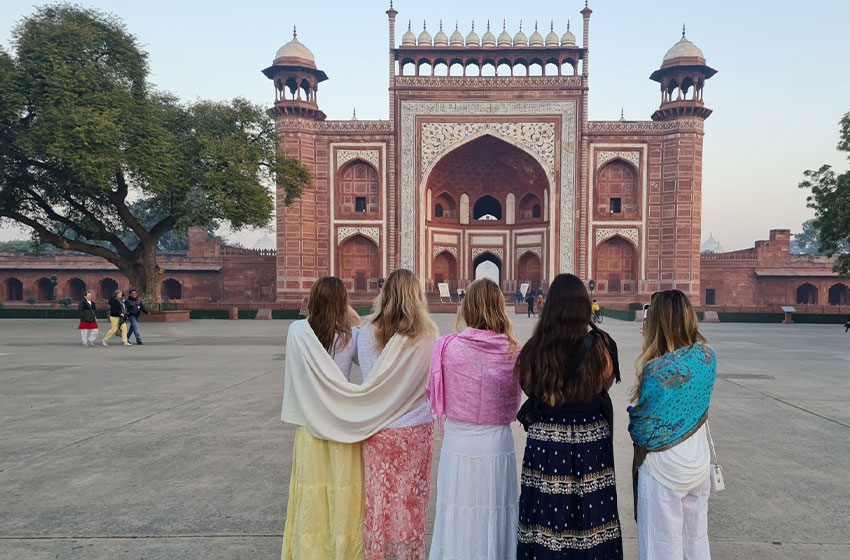
The Taj Mahal is approached through designated visitor entry areas, and vehicles cannot simply drive to the monument's main doorway. Traffic restrictions around the protected zone mean that visitors generally complete the final approach using authorized local transport arrangements or by walking, depending on the gate and current system.
The East Gate of Taj Mahal is commonly used by visitors staying at hotels on the eastern side of Agra and by many organized private tours. The West Gate of Taj Mahal is another major entry point and can become busy because it serves a large number of visitors.
For a senior traveler, the best gate is not automatically the gate that someone online calls the fastest. The right choice depends on the hotel location, current crowd level, vehicle drop-off arrangement and the visitor's mobility.
Reducing unnecessary walking before the security checkpoint should be a priority.
If an elderly person already has difficulty walking, making them cover additional distance simply because a particular gate is popular makes little sense. A private driver and guide can coordinate the approach based on the hotel and current local arrangements.
Crowds are another consideration. Waiting while standing can be more difficult for an elderly traveler than walking slowly. Families should therefore avoid assuming that the shortest geographical route always produces the easiest visit.
Security screening is mandatory. Bags and personal belongings are checked, and prohibited items can create delays. Carrying only essential permitted items can make entry smoother.
For elderly visitors, necessary medication should remain easily accessible. Families should avoid carrying a large sightseeing bag filled with unnecessary items because it makes security slower and creates another item to manage while assisting a wheelchair or senior family member.
A local guide can also assist with identifying the correct queue and keeping the family together during entry.
The objective should be simple: use as little of the elderly visitor's energy as possible before reaching the monument itself.
The best time to visit Taj Mahal with elderly parents depends on the season and the traveler's physical comfort.
The monument normally opens around sunrise and operates until around sunset, while Fridays are generally closed for normal tourist visits. Since sunrise and sunset change throughout the year, visitors should confirm the current opening arrangements close to the travel date rather than relying on an old fixed time found online.
Early morning is popular because temperatures are generally lower and the atmosphere can be calmer than later in the day.
For elderly travelers visiting during warmer months, this temperature advantage can be significant. Heat places additional physical strain on anyone walking long distances, and senior visitors may tire much faster in strong sunshine.
An early entry can therefore make sense in March, April or other warm periods.
Winter requires a different calculation.
December and January mornings in Agra can be cold, and fog is possible. An elderly visitor who is sensitive to cold may not enjoy waiting outside before sunrise simply to enter at the earliest possible moment. A slightly later morning visit may provide a better balance between temperature and crowd levels.
Families should not force a sunrise visit merely because it is considered fashionable.
The best Taj Mahal visit is the one the elderly traveler can actually enjoy.
During very hot conditions, midday and early afternoon can be uncomfortable. Visitors should carry permitted drinking water according to current monument rules, wear appropriate sun protection and keep the sightseeing pace slow.
Monsoon conditions require good footwear because stone surfaces may become wet. A wheelchair also needs more careful handling on slippery areas.
Another factor is the previous day's schedule. If elderly parents have arrived after a long international flight or completed a five-hour road journey the previous evening, waking them at 4:30 a.m. for a sunrise visit may not be sensible.
Rest matters.
A private itinerary allows the family to choose a comfortable visiting time rather than following a coach group's fixed departure.
Ticket arrangements should be checked before the visit because entry fees and ticketing rules can change.
The Taj Mahal uses separate ticket categories, and foreign visitors normally pay a different admission rate from Indian citizens. Access to the main mausoleum may also require an additional ticket beyond the basic monument entry ticket.
Foreign travelers should budget approximately ₹1,100 per adult for standard Taj Mahal entry, with an additional ₹200 for access to the main mausoleum under the commonly applied ticket structure. Since monument prices can be revised, visitors should confirm the current official rate immediately before purchasing rather than relying on an old screenshot or travel forum.
Families should also avoid assuming that age alone automatically provides a special senior-citizen discount for a foreign visitor. Ticket concessions depend on official categories and current regulations, not simply on whether a traveler is elderly.
The safest approach is to check the visitor's nationality and applicable ticket category before arrival.
Online ticket purchase can reduce unnecessary time spent dealing with ticket counters, particularly when traveling with someone who cannot stand comfortably for long periods.
A private guide can also help the family understand the correct ticket category and entrance procedure.
The Taj Mahal main mausoleum ticket deserves particular consideration for wheelchair users and travelers with serious mobility limitations. Paying for mausoleum access makes sense only if the traveler intends and is physically able to use that portion of the visit under the current accessibility arrangements.
An elderly visitor can still have an excellent Taj Mahal experience without entering the interior chamber. The exterior architecture, gardens, mosque, guest building, river-facing setting and classic views form a substantial part of the experience.
Families should not make an older traveler uncomfortable simply because everyone else wants to say they entered every possible section.
Visitors frequently underestimate the physical size of the complex.
A Taj Mahal walking tour involves much more than walking from an entrance to one famous photograph. There is the approach from the visitor transport area, security screening, entry courtyard, main gateway, gardens, reflecting pool, marble platform and return journey.
Someone who normally manages a short walk to a restaurant may still struggle with several hours of sightseeing.
For elderly travelers, distance is only one part of the problem. Standing in queues, climbing steps, walking over stone and remaining outdoors can increase fatigue.
The family should therefore build breaks into the visit before they become necessary.
There are areas within the complex where visitors can pause, but seating should not be assumed to be available exactly when or where the traveler wants it. A guide who knows the monument can structure the route so that the group moves gradually rather than repeatedly crossing the complex.
Photography also consumes time and energy. Families often stop at numerous viewpoints, wait for other visitors to move and take multiple photographs. A visit that appears to involve a straightforward walk can therefore become several hours on the feet.
For a senior traveler, a wheelchair at the Taj Mahal can conserve energy even if the person is capable of walking short distances.
The group should also resist the temptation to combine too many Agra monuments without a proper break.
A young visitor may comfortably see the Taj Mahal, Agra Fort, another monument and local markets in one continuous day. An elderly traveler may have a much better experience seeing the Taj Mahal in the morning, returning to the hotel for rest and visiting Agra Fort later.
Quality matters more than the number of attractions checked off a list.
The main mausoleum is the most physically demanding part of the Taj Mahal experience for some mobility-limited visitors.
The structure stands on a raised platform. Heritage architecture naturally involves changes in level, and access to historic sections cannot always be modified in the same way as a modern building.
Visitors who can transfer from a wheelchair and walk a limited distance may find some sections manageable with assistance. Someone who cannot manage steps or uneven surfaces should verify current accessibility before purchasing additional mausoleum access.
Crowds also matter.
The interior can become busy, and movement may be slow. Elderly travelers who are uncomfortable in tightly packed spaces should take this into account.
There is no requirement to enter the mausoleum to appreciate the Taj Mahal.
In fact, much of the architectural impact comes from seeing the building from the garden, moving gradually closer and viewing the marble exterior. Visitors interested in photography may spend more time outside than inside.
For an elderly traveler, stopping at the most comfortable accessible viewpoint can be a perfectly complete visit.
A good private guide should never pressure a visitor to climb or walk beyond their comfort simply to follow a standard route.
Families often want to combine the Taj Mahal with Agra Fort, which is entirely reasonable, but the two monuments together create a substantial sightseeing day.
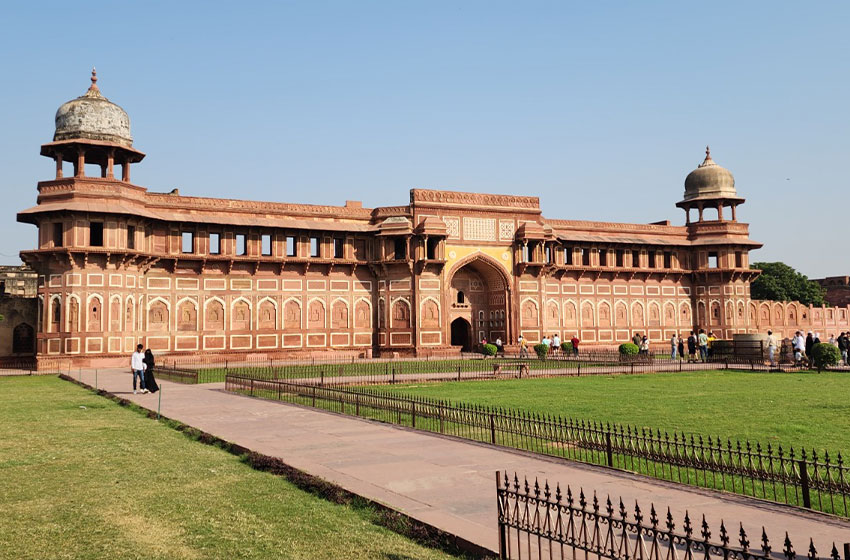
Agra Fort is enormous. Visitors pass through historic gates, courtyards, palace sections and elevated areas, and walking distances can add up quickly.
For an elderly traveler, attempting both monuments without a break can be tiring.
A comfortable schedule might involve the Taj Mahal first, followed by breakfast or lunch and a period of rest before visiting Agra Fort. The exact order depends on the season and preferred Taj Mahal entry time.
Agra Fort also contains historic surfaces and changes in level. Wheelchair accessibility should therefore be assessed according to the sections the visitor intends to see rather than assuming the entire fort is step-free.
A private guide can concentrate on the most significant accessible sections instead of following an unnecessarily long standard circuit.
This is where private Agra sightseeing with elderly parents has a major advantage over a group tour.
A group normally follows the same pace regardless of individual mobility. A private visit can stop when someone needs to sit, shorten a monument visit, return to the hotel or remove an attraction completely if the traveler becomes tired.
Transportation should be arranged around the senior traveler.
A private car for Taj Mahal sightseeing allows direct hotel pickup, controlled air conditioning and a comfortable place to rest between attractions. It also eliminates the need to negotiate repeatedly with local taxis after each monument visit.
Vehicle selection matters if the traveler has difficulty getting into or out of cars.
A low sedan may be comfortable for some passengers but difficult for someone with knee problems. A larger vehicle such as an SUV or MPV can offer more space, although the step into a taller vehicle may create a different challenge.
Families should choose according to the passenger's mobility rather than automatically booking the largest vehicle.
The wheelchair must also fit comfortably with the luggage if the family is traveling between cities.
For a Delhi-Agra journey, an overnight stay can be particularly helpful. Instead of leaving Delhi extremely early and expecting an elderly traveler to complete a full sightseeing day immediately afterward, the family can arrive in Agra, rest and visit the Taj Mahal the following morning.
India Agra Tours can arrange a private Taj Mahal tour for senior travelers with hotel pickup, chauffeur-driven transportation and a private guide. The sightseeing pace can be adjusted according to walking ability, weather and the amount of time the family wants to spend inside the complex.
Comfort should take priority over fitting every attraction into one day.
Before leaving the hotel, make sure essential medication is easily accessible. The traveler should have eaten appropriately according to their normal medical and dietary routine, and family members should know whether long periods without food are a problem.
Choose comfortable footwear with good grip.
Use a wheelchair when it reduces fatigue, even if the traveler can walk independently for short distances.
Avoid the hottest part of the day during warm months.
During winter, carry layers because an early Agra morning can be much colder than the afternoon.
Keep the sightseeing bag small and limited to permitted essentials.
Allow extra time for security and entry.
Do not create a schedule dependent on the elderly traveler walking at the same pace as younger family members.
Most importantly, ask the traveler how they feel throughout the visit. Families sometimes become so focused on completing the sightseeing schedule that they fail to notice when an older parent has stopped enjoying it.
The Taj Mahal is not a race.
A ninety-minute comfortable visit can be far more meaningful than a three-hour visit that leaves someone exhausted.
Important parts of the Taj Mahal complex can be visited with wheelchair assistance, and accessibility measures are available in protected monuments where feasible. However, the entire historic complex should not be assumed to be completely step-free, particularly around raised and historic sections.
Wheelchair facilities have been associated with visitor accessibility at protected monuments, including the Taj Mahal. Availability and collection arrangements can change, so travelers who depend on a wheelchair should confirm the current facility before arrival or arrange their own suitable mobility equipment.
Yes. A Taj Mahal tour for elderly visitors can be comfortable when the visit is kept slow, appropriate transportation is arranged and unnecessary walking is reduced. Using a wheelchair for longer distances can also help conserve energy.
There is no single gate that is always best for every senior traveler. The East or West Gate may be suitable depending on hotel location, crowd levels and current vehicle drop-off arrangements. Minimizing unnecessary walking should be the priority.
The complex is large, and a complete visit can involve considerable walking and standing. The exact distance depends on the entrance, route and sections visited. Elderly travelers who tire easily should consider wheelchair assistance.
Foreign visitors should budget around ₹1,100 for standard Taj Mahal entry, with approximately ₹200 additional admission for the main mausoleum under the commonly used ticket structure. Visitors should verify the current official price before purchasing because fees can change.
Visitors should not assume that age automatically qualifies a foreign tourist for discounted entry. Ticket categories and concessions are determined by official rules, so the current applicable category should be checked before purchase.
Early morning can be comfortable during warmer months, while very early winter visits can be cold or foggy. The best time depends on temperature, mobility and the senior traveler's normal routine rather than simply choosing sunrise.
Yes. The gardens and exterior viewpoints provide the classic Taj Mahal experience. A visitor with limited mobility can still appreciate the monument without entering every section of the main mausoleum.
Yes. India Agra Tours can arrange a private Taj Mahal tour with car, driver and guide for families traveling with elderly parents or visitors with limited mobility. The schedule can be kept slower, hotel pickup can be coordinated with the most practical entrance, and additional Agra sightseeing can be adjusted according to the traveler's comfort.