Taj Mahal Entry Fee for Foreigners (Complete Guide)
13 May 2025

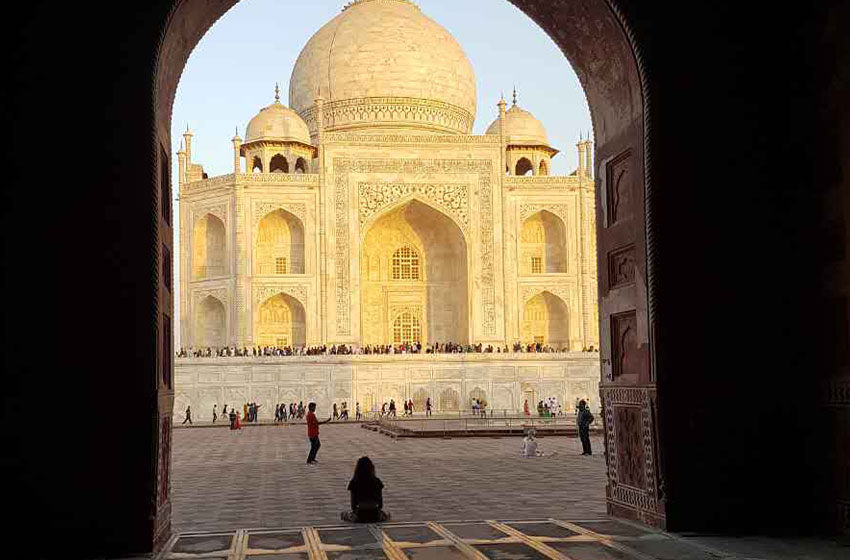
The Taj Mahal is at the top of almost every India travel list. Each year, visitors from around the world travel to Agra to see this white marble tomb built by Emperor Shah Jahan in memory of his wife, Mumtaz Mahal.
If you are visiting from outside India, a few things work differently for you. The ticket price is higher, you need your passport, and card payments can sometimes be tricky. This guide explains everything a foreign tourist needs to know in 2026, from the entry fee to the best time to visit.

The Archaeological Survey of India (ASI) sets Taj Mahal ticket prices based on nationality. Foreign tourists pay a separate rate from Indian and regional visitors.
| Visitor Category | Base Entry (INR) | Mausoleum Add-on (INR) | Total (INR) | Approx. USD ($) | Approx. EUR (€) | Approx. GBP (£) |
|---|---|---|---|---|---|---|
| Foreign Tourists | ₹1,100 | ₹200 | ₹1,300 | $16 | €15 | £13 |
| SAARC / BIMSTEC Nationals | ₹540 | ₹200 | ₹740 | $6.5 | €6 | £5.2 |
| Indian Nationals | ₹50 | ₹200 | ₹250 | $3 | €3 | £2.5 |
| Children under 15 | Free | Free | Free | Free | Free | Free |
The full visit for a foreign adult costs ₹1,300, which is roughly US$15 to 16, depending on the exchange rate.
SAARC and BIMSTEC countries include Bangladesh, Nepal, Bhutan, Sri Lanka, Pakistan, Afghanistan, Maldives, Myanmar and Thailand. Citizens of these countries pay the lower regional rate.
Online discount: Foreign visitors save ₹50 per ticket when they book online.
Why do foreigners pay more? India uses a two-tier pricing system at most major monuments. Lower prices keep heritage sites affordable for local visitors, while higher foreign fees help fund conservation. It is an official policy, not a scam.
Prices can change, so always check the official ASI portal before you pay.
Your foreign tourist ticket covers more than just entry. Here is what you get.
The base ticket (₹1,100) includes:
The mausoleum ticket (₹200) adds:
Is the mausoleum ticket worth it? For most first-time visitors, yes. The inlay work and carvings inside are hard to appreciate from outside. You spend only a few minutes in the chamber, but it completes the experience.
The Taj Mahal follows a sunrise-to-sunset schedule. It opens 30 minutes before sunrise and closes 30 minutes before sunset.
Because sunrise changes through the year, timings shift with the season:
The Taj Mahal is closed every Friday. On Fridays, only local worshippers can enter the mosque for prayers.
This is the most common mistake foreign travelers make. If your India itinerary is tight, make sure your Agra day does not fall on a Friday.
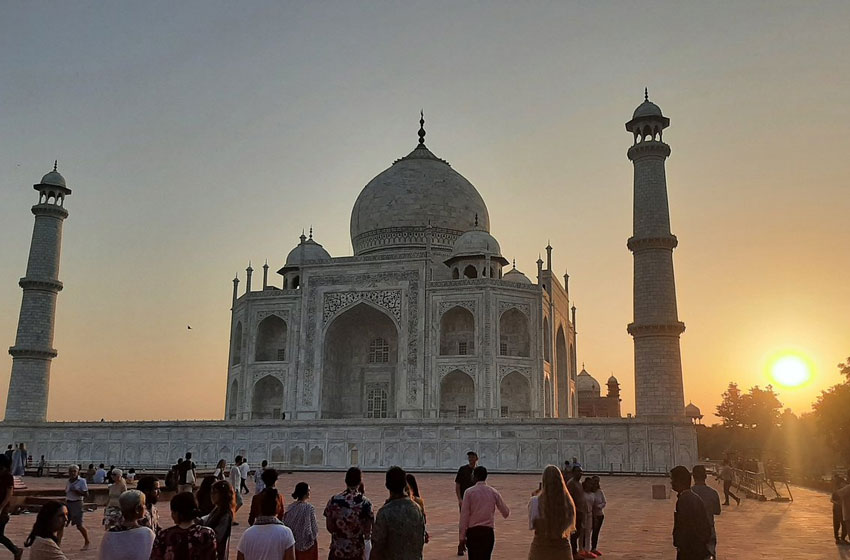
Sunrise is the best time for foreign visitors. Here's why:
Late afternoon is a good second choice for warm, golden light, though it is busier.
Avoid midday, especially from April to June, when the sun is harsh and the marble floor gets very hot.
Booking online is the easiest option. It saves time at the gate and gives you a ₹50 discount per ticket.
Follow these steps:
Payment tips for foreign visitors:
You can also buy tickets at the monument. Ticket counters are available at:
Counters open one hour before sunrise and close 45 minutes before sunset.
Keep these points in mind:
Foreign visitors must carry a valid passport when visiting the Taj Mahal.
The Taj Mahal has three gates:
There are separate queues for Indian and foreign visitors. The foreigner line is usually shorter and moves faster.
Petrol and diesel vehicles are not allowed near the monument to protect the marble from pollution. From the parking areas, you can walk, take a battery-operated vehicle or ride an electric rickshaw to the gate.
Every visitor goes through a security check. Pack light to save time.
Allowed items:
Restricted items:
Cloak rooms are available at the gates if you need to store your bag.
Seeing the Taj Mahal under moonlight is a rare experience. Foreign visitors can book it too, but the rules are strict.
When is it allowed?
How does it work?
How to book:
Night viewing prices are separate from day tickets. Check the current rates with ASI before your visit.
A licensed guide can make your visit far more meaningful. You'll learn the love story behind the Taj, its history and the details most visitors miss.
Tips for foreign travelers:
Tour packages are a good choice if you want a smooth visit. A planned tour usually includes hotel pickup, a licensed guide, ticket help and visits to nearby monuments like Agra Fort.
The Taj Mahal offers basic facilities for a comfortable visit.
For visitors with limited mobility:
Other facilities:
Many foreign travelers visit the Taj Mahal on a day trip from Delhi, often as part of the Golden Triangle route (Delhi, Agra and Jaipur).
Getting to Agra from Delhi:
A simple one-day plan:
Tips:
Also read: Same Day Agra Tour from Delhi
Agra's weather can feel extreme to many foreign visitors, so choose your season with care.
October to March (best season):
Pleasant days and cool mornings. This is peak season, so book early. December and January mornings can be foggy, which may hide the Taj at sunrise.
April to June (summer):
Very hot, often above 40°C (104°F). Visit only at sunrise, wear light clothing and drink plenty of water.
July to September (monsoon):
Fewer crowds and green gardens. The marble can get slippery, so wear shoes with good grip and carry an umbrella.
In every season, carry sunscreen, sunglasses and a hat.
The Taj Mahal is a tomb and a place of deep respect. Foreign visitors should keep these simple rules in mind:
Allowed:
Not allowed:
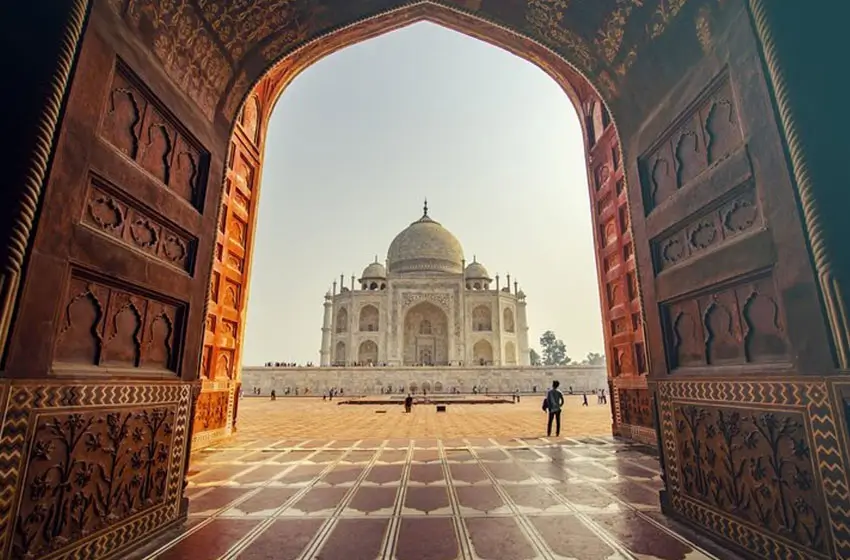
Best photo spots:
For the best light and fewest people, take photos in the first hour after opening.
A little planning makes your Taj Mahal visit smooth and stress-free. Use this quick checklist:
With these details sorted, you can relax and enjoy one of the most beautiful buildings in the world.
Planning your trip to India? Our Taj Mahal tour packages include hotel pickup, an English-speaking licensed guide and help with tickets, so you can focus on the experience.
Foreign tourists pay ₹1,100 for entry. With the ₹200 mausoleum ticket, the total is ₹1,300, roughly US$15 to 16.
India uses an official two-tier pricing system. Lower fees keep monuments affordable for locals, while higher foreign fees help pay for conservation.
They pay ₹540 for entry, or ₹740 with the mausoleum ticket.
Children under 15 enter free, whatever their nationality.
Yes. Book through the official ASI website, select the Foreign Tourist category and pay with an international card.
Yes. Foreign visitors save ₹50 per ticket when they book online.
No. Counters accept Indian rupees and cards. Foreign currency is not accepted.
Yes. Carry your original passport, as staff may ask for it to confirm your nationality.
No. It is closed every Friday for general visitors.
It opens 30 minutes before sunrise and closes 30 minutes before sunset.
Yes. Foreign visitors have a separate queue, which is usually shorter.
No official skip-the-line ticket exists. Booking online, arriving at opening time and using the East Gate are the best ways to save time.
Yes, on five nights around the full moon, except Fridays and Ramzan. Book at the ASI office on Mall Road, Agra, at least 24 hours in advance.
Modest clothing that covers the shoulders and knees, plus comfortable walking shoes.
Photos are allowed in the gardens and outer areas, but not inside the main tomb chamber. Tripods and drones are not allowed.
Yes. Fast trains take about 2 hours, and the drive takes around 3 to 4 hours. Leave early to reach by sunrise.
No. Once you exit, you need a new ticket to enter again.
There is no strict dress code, but modest clothing that covers the shoulders and knees is recommended, as the Taj Mahal is a tomb and a place of respect.