Taj Mahal Entry Fee for Foreigners (Complete Guide)
13 May 2025
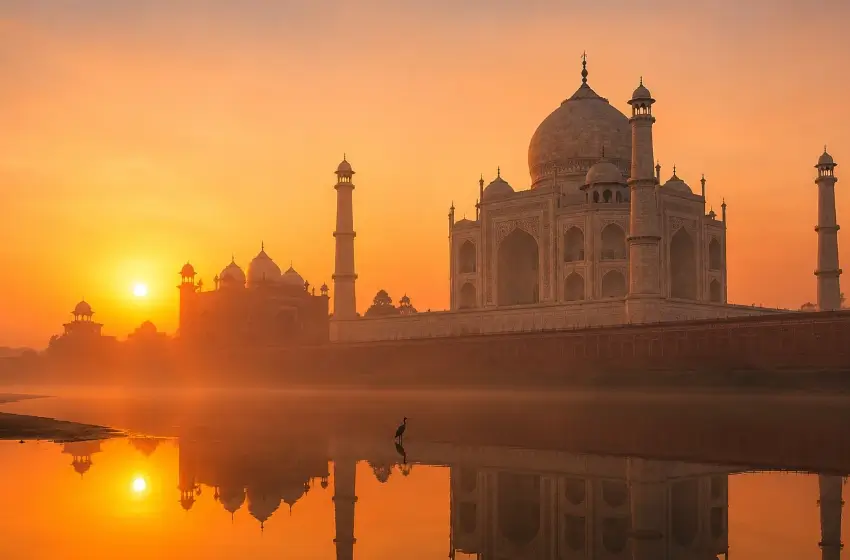
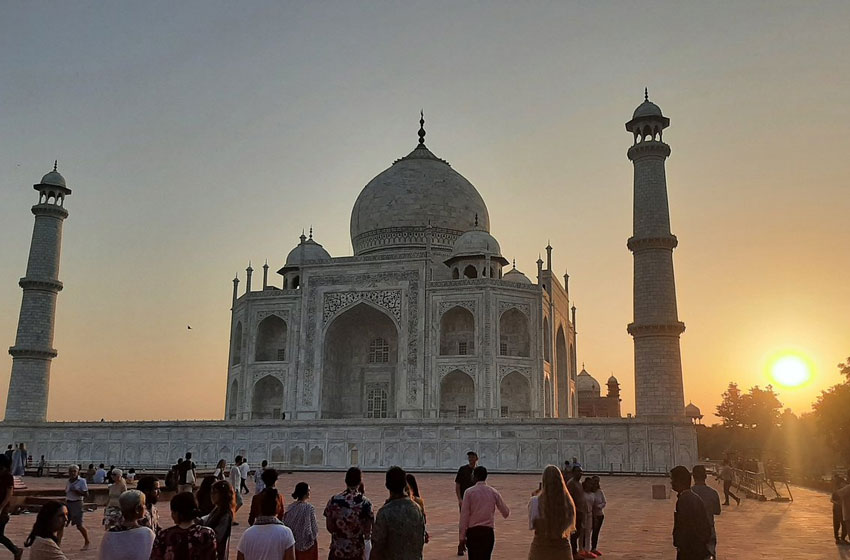
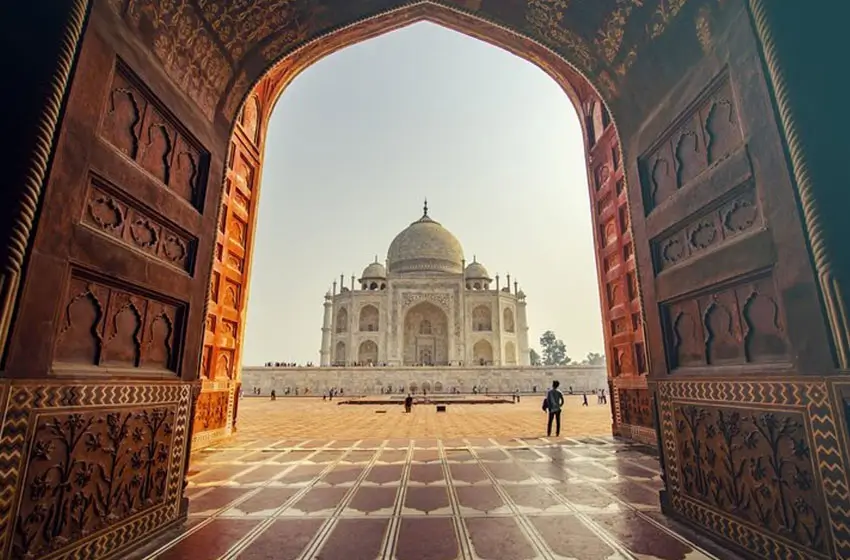
A Taj Mahal sunrise visit is one of the most popular ways to see India's most famous monument, particularly for international travelers spending a night in Agra or taking a private early-morning tour. The attraction is easy to understand. Temperatures are usually cooler than later in the day, morning light can be softer, and visitors arriving around opening time may enter before the larger daytime crowds build up. The first view of the Taj Mahal through the monumental entrance gate can also feel very different in the quiet light of early morning.
However, sunrise at the Taj Mahal is often misunderstood. The monument does not suddenly appear beneath a guaranteed orange sky every morning, and arriving at the gate at the exact published opening time does not necessarily mean walking straight inside. Visitors must account for security screening, ticket preparation, the final approach to the entrance and other travelers who may already be waiting.
Weather is another major factor. Winter can bring fog and haze to Agra, while monsoon months can bring cloud and rain. Even on a clear day, the position and strength of the morning light vary with the season. A sunrise visit should therefore be chosen because the visitor wants an early, cooler and potentially quieter Taj Mahal experience, not because anyone can guarantee a particular photograph.
Timing also changes throughout the year because the Taj Mahal's opening schedule is connected with sunrise rather than one identical clock time every month. Visitors should verify the current official opening time shortly before their date and aim to reach the appropriate entrance before opening.
The Taj Mahal is normally closed to general tourists on Fridays, so a sunrise visit should be scheduled between Saturday and Thursday. This is especially important for travelers staying only one night in Agra.
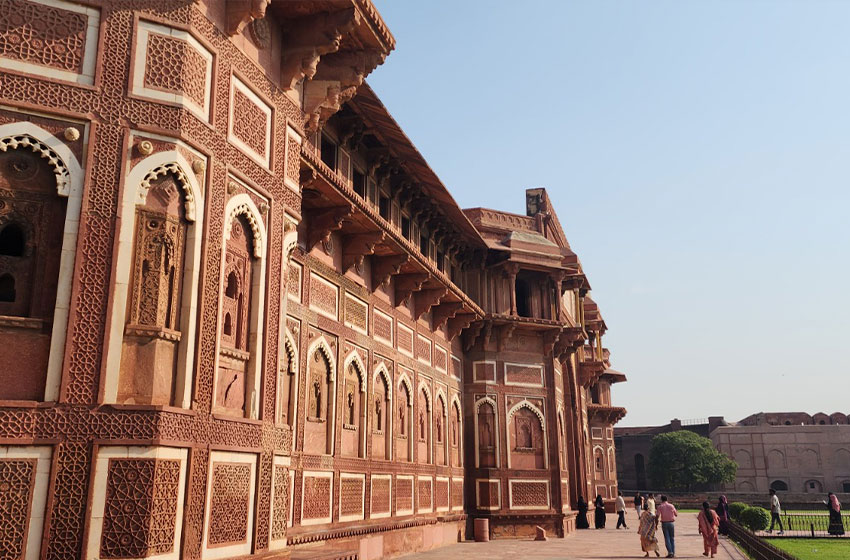
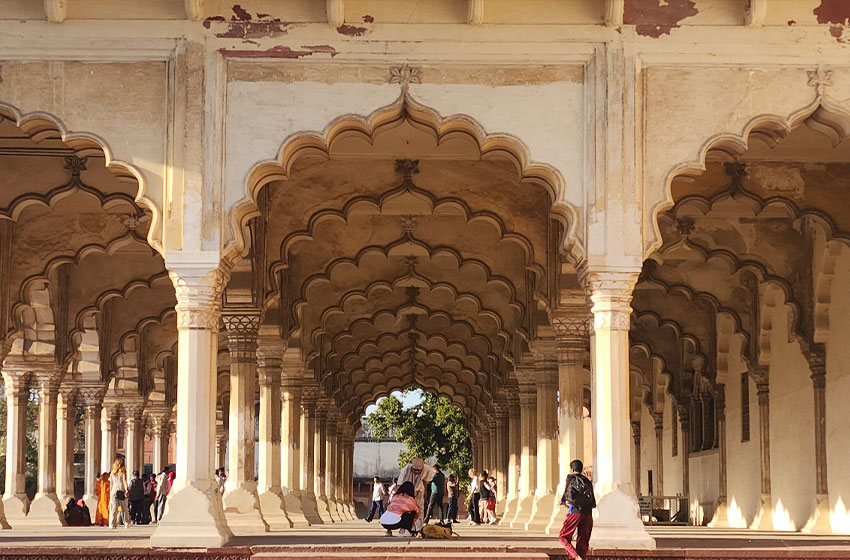
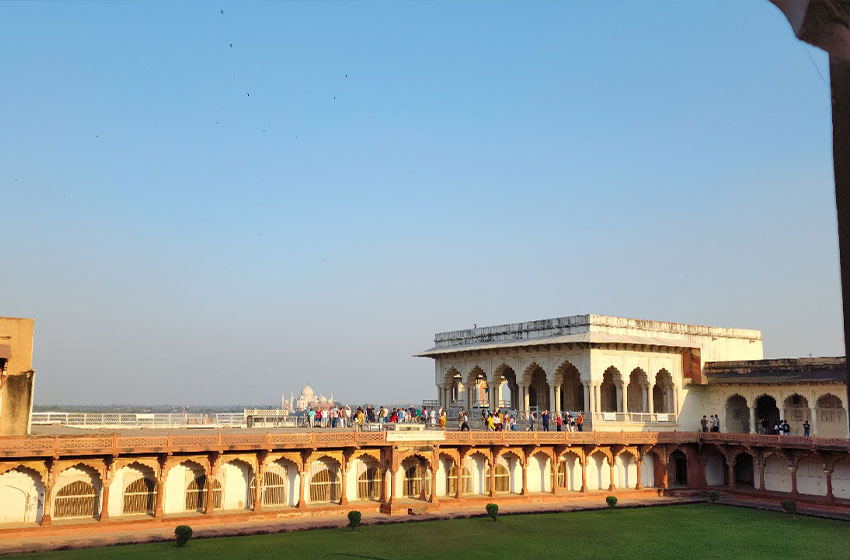
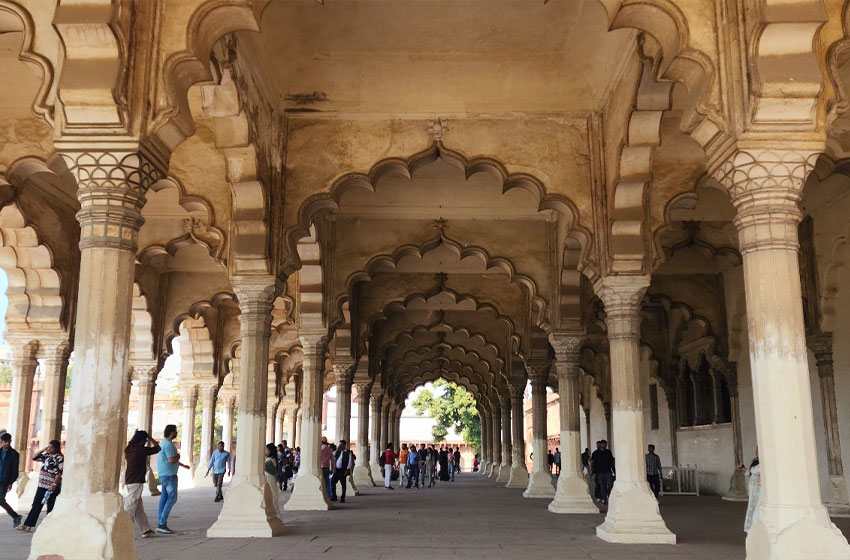
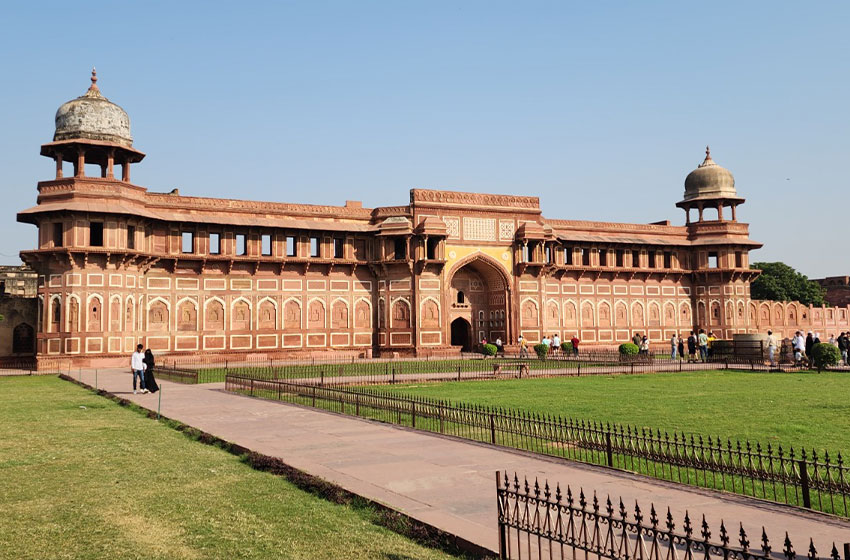
For guests traveling with India Agra Tours, a private Taj Mahal sunrise visit can include early hotel pickup, assistance with the appropriate entrance, a private local guide and onward sightseeing at Agra Fort after breakfast or later in the morning.
The strongest reason for visiting at sunrise is not simply photography. It is the overall combination of temperature, light and visitor flow.
Agra can become extremely hot during the warmer part of the year. Walking through the Taj Mahal complex in the middle of a hot day can be tiring because visitors spend substantial time outdoors. Entering around sunrise allows much of the visit to take place before the strongest daytime heat develops.
This can make a significant difference during spring and early summer.
The second advantage is light. The Taj Mahal is built primarily from white marble, and its appearance changes according to surrounding light. In the early morning, the marble may appear cooler, softer or slightly warm depending on atmospheric conditions. As the sun rises higher, the appearance becomes brighter and shadows become stronger.
This gradual change is more interesting than expecting one exact "sunrise moment."
Crowds are another reason people choose early entry.
The Taj Mahal is one of India's most visited monuments, so visitors should never assume they will have it entirely to themselves. Even before opening, other tourists may already be waiting. However, entering early can provide a different atmosphere from arriving after large tour groups and day visitors have reached Agra.
Early visitors may also have more flexibility at the famous photography positions around the central reflecting pool.
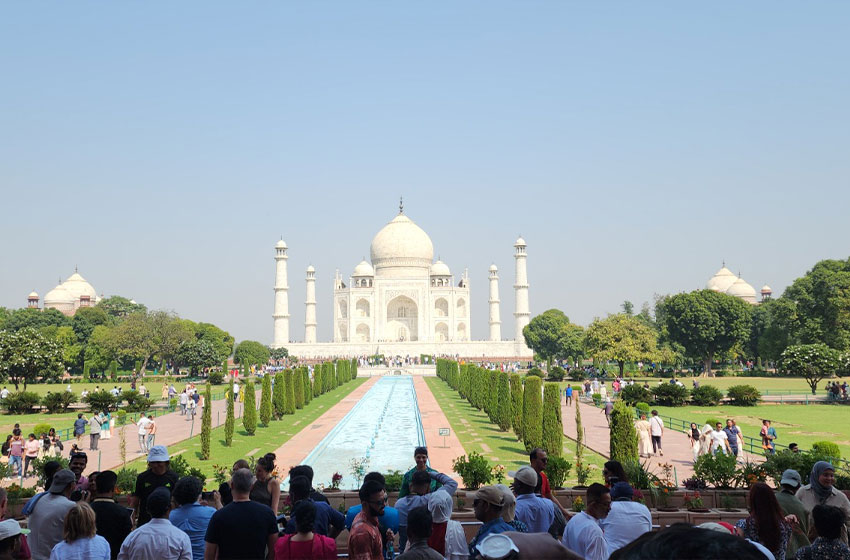
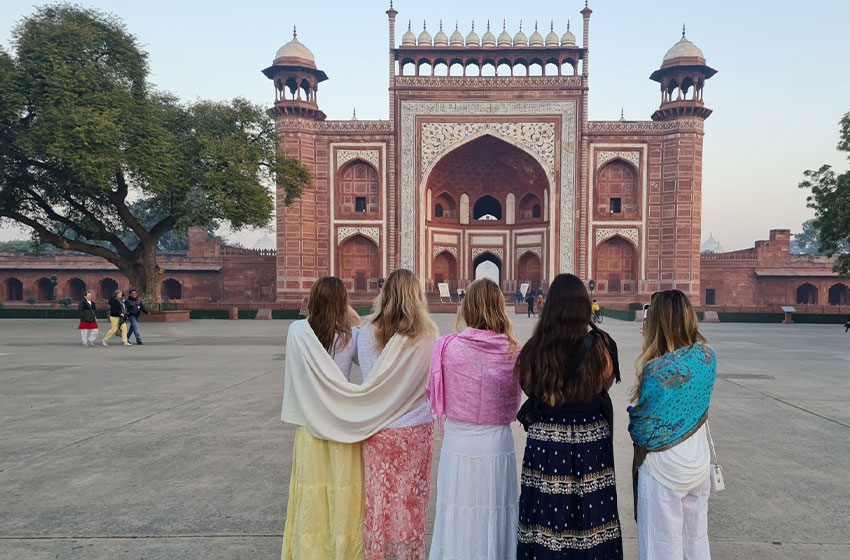
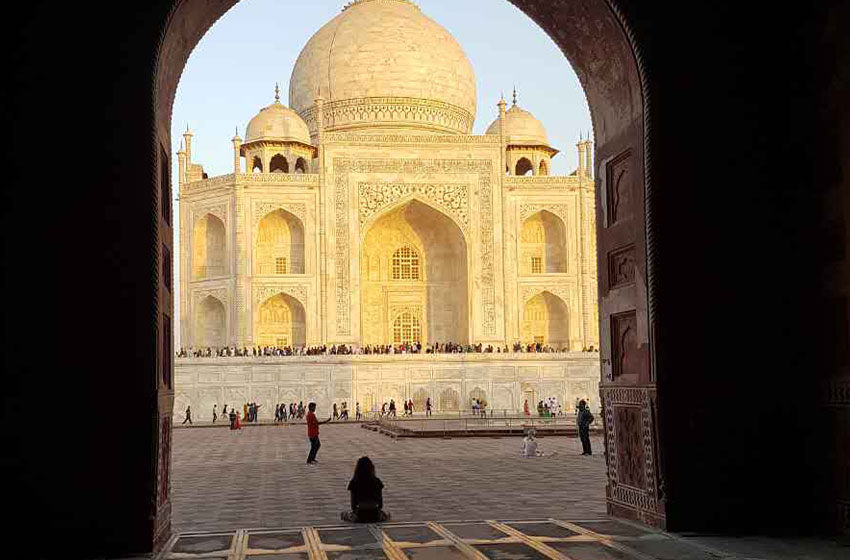
The experience begins before reaching the marble mausoleum. Visitors pass through the red sandstone gateway, where the Taj Mahal gradually comes into view. The contrast between the darker gateway and white marble beyond it creates one of the most recognizable architectural frames in India.
Instead of rushing directly toward the main platform, visitors should spend time in the garden while the morning light changes.
A sunrise tour of Taj Mahal works particularly well for photographers, couples, honeymoon travelers and first-time international visitors, but it can also be excellent for families who prefer avoiding afternoon heat.
There is no single arrival time that works throughout the entire year because sunrise changes seasonally.
The Taj Mahal generally opens approximately around sunrise, subject to the current operational schedule. Instead of memorizing one permanent time such as 6:00 a.m., visitors should check the expected sunrise and current monument opening arrangements for their specific date.
As a practical rule, arriving at the selected gate approximately 30 to 45 minutes before the expected opening time can work well for travelers who want to be among the earlier visitors.
During especially busy tourism periods, some travelers may prefer arriving even earlier.
The objective is not to stand outside unnecessarily for an hour. The objective is to complete the approach and be ready when entry begins.
For example, if the monument is expected to begin admitting visitors shortly after 6:00 a.m., reaching the gate around 5:20 to 5:30 a.m. may be sensible. If seasonal sunrise is later, the entire schedule shifts accordingly.
Foreign tourists staying in Agra should calculate hotel pickup separately.
A hotel described as "near the Taj Mahal" may still require a drive to the visitor drop-off area followed by the final approach. Security queues also require time.
A private guide normally coordinates pickup so the visitor does not have to calculate every stage independently.
Travelers should resist the temptation to arrive extremely late simply because they already have an online ticket. A ticket removes one potential delay but does not eliminate security screening or other visitors.
The best time to reach Taj Mahal for sunrise is therefore before opening, with the ticket ready and unnecessary belongings left at the hotel or in another appropriate secure location.
The East Gate and West Gate are the principal approaches foreign tourists generally consider for a sunrise visit.
Neither gate produces a different Taj Mahal once the visitor is inside. The decision should be based primarily on hotel location, current entry operations, transportation arrangements and expected crowd flow.
The Taj Mahal East Gate is convenient for many travelers staying around Taj East Gate Road and the eastern hotel zone. Several properties popular with international visitors are located on this side, making the early-morning transfer straightforward.
The West Gate is another major entrance and may be more convenient for visitors staying or arriving from the western side.
Travelers sometimes read that one particular gate is always less crowded. Such claims should be treated cautiously.
Crowd patterns change according to season, weekday, Indian holidays, tour-group schedules and local conditions. An entrance that was quiet for one visitor may be busy on another morning.
For sunrise, arriving early is generally more important than driving across Agra purely to use the gate someone described online as faster.
The South Gate should not automatically be treated as a normal alternative entry point based on older online information. Visitor arrangements have changed over time, and travelers should rely on current access rules.
For guests using a private Taj Mahal sunrise tour, the guide and driver can coordinate the most practical entrance according to the hotel and current arrangements.
This removes one of the most unnecessary sources of stress for first-time visitors.
Arriving early does not mean visitors immediately walk through the gardens.
There may already be people waiting near the entrance. Visitors need to be ready with their tickets and identification according to the current requirements, and everyone passes through security screening.
This is where preparation makes a major difference.
Carry as little as possible.
A small bag with necessary permitted items is easier than a large backpack containing objects that need additional inspection. Large luggage should not be brought to the Taj Mahal entrance.
Visitors should check current prohibited-item rules before leaving the hotel.
The Taj Mahal has stricter security than an ordinary tourist attraction, and an object accepted elsewhere in India may not necessarily be allowed inside the complex.
Foreign visitors should also keep their passport or other required identification available if needed for the ticket category purchased.
Once security is completed, visitors enter the outer section and move toward the monumental gateway.
The first clear view through the gateway is one of the highlights of a Taj Mahal early morning tour.
Many people immediately stop for photographs here, which can create congestion. Visitors should be patient rather than trying to push toward one exact spot.
There are numerous excellent photography locations further inside.
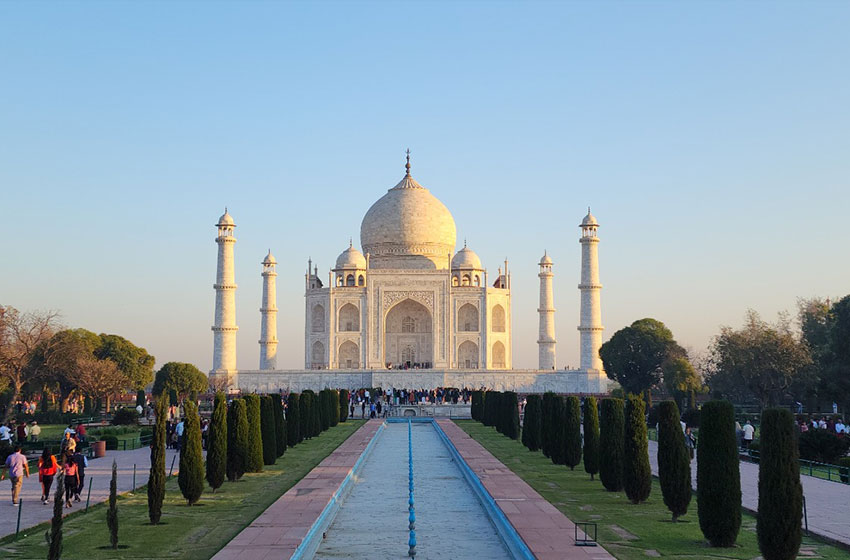
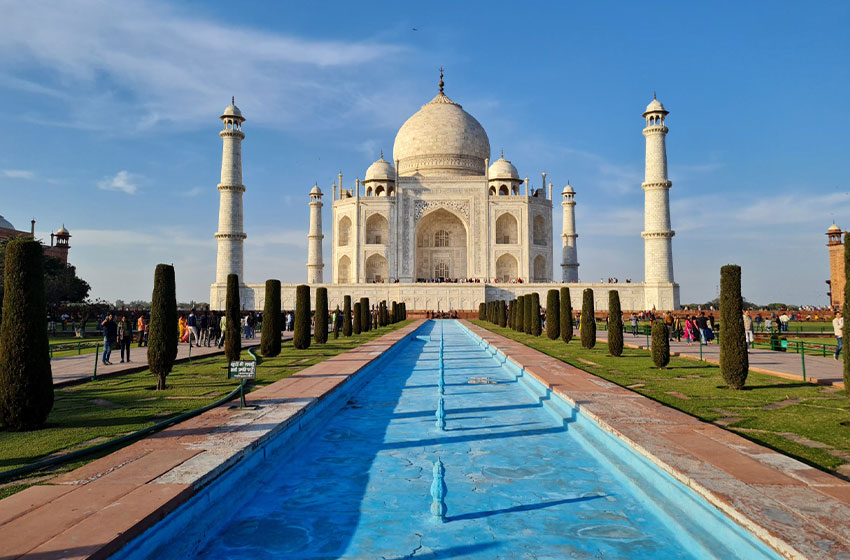
After passing through the gateway, the full garden and central water channel become visible. The Taj Mahal sits at the far end, creating the famous symmetrical composition.
This is when arriving early becomes particularly rewarding.
Instead of immediately walking toward the mausoleum, spend some time photographing the monument from the garden while the light continues to change.
October marks the beginning of one of the most attractive periods for North India sightseeing. The monsoon has generally withdrawn, temperatures become more comfortable and mornings can be pleasant for walking.
A Taj Mahal sunrise in October can therefore be an excellent choice.
November also brings cooler conditions, making an early visit comfortable from a temperature perspective. However, atmospheric haze and air-quality conditions can sometimes affect long-distance clarity across North India.
This does not mean every November morning will be hazy.
Conditions can change from day to day. Travelers should check the local weather and air-quality situation close to their visit instead of assuming that the entire month will look the same.
November also falls within a popular tourism period, so early arrival remains useful for crowd management.
Travelers combining Agra with Delhi and Jaipur should remember that sunrise times and morning temperatures differ slightly between cities. A Golden Triangle tour with Taj Mahal sunrise should therefore be arranged according to each destination rather than following one identical daily start time.
December and January require the most realistic expectations.
These months provide cool daytime temperatures that are excellent for sightseeing, but winter fog in Agra can occasionally affect early-morning visibility.
On a clear winter morning, sunrise at the Taj Mahal can be beautiful.
On a foggy morning, the experience can be completely different. Visitors may enter the complex and initially see only a faint outline of the monument. In denser fog, visibility can be substantially reduced.
The important point is that fog can change as the morning progresses.
Visitors should not automatically leave after ten minutes simply because the Taj Mahal is not perfectly clear at opening. Conditions may improve as temperatures rise, although this cannot be guaranteed.
Winter visitors should also dress appropriately.
Agra can feel surprisingly cold before sunrise, particularly for travelers arriving from tropical destinations. A jacket, sweater or layered clothing can make waiting outside much more comfortable.
Elderly travelers require special consideration.
Standing in the cold for a long time merely to enter a few minutes earlier may not be worthwhile. For senior visitors, a slightly later morning entry can sometimes provide a better balance between comfort and crowd levels.
Foreign tourists taking a Delhi to Taj Mahal sunrise tour during winter should also think carefully about road conditions. Dense fog can reduce visibility on the highway and increase driving time.
An overnight stay in Agra is therefore particularly attractive during December and January. Instead of leaving Delhi in the middle of the night, visitors can sleep in Agra and make a short early transfer from the hotel.
February is one of the most comfortable months for an early Agra visit. Mornings can remain cool, while daytime temperatures are generally more suitable for long sightseeing sessions than later in spring.
March becomes warmer but can still offer very pleasant early-morning conditions.
By April, sunrise becomes increasingly valuable because temperatures rise more strongly later in the day.
A Taj Mahal sunrise visit in April allows travelers to complete much of their outdoor sightseeing before midday heat becomes tiring.
Clothing should be selected according to the month.
February visitors may want a light jacket in the morning. By April, lightweight breathable clothing becomes more practical.
Sun protection remains useful even when entering early because most visitors stay inside long enough for the sun to become considerably stronger.
Travelers continuing to Agra Fort after the Taj Mahal may want to stop for breakfast first rather than moving directly between monuments.
A sunrise start creates a long day.
A comfortable breakfast and short rest can make the second monument much more enjoyable.
May and June are among the hottest periods in North India, making sunrise one of the most sensible times for a Taj Mahal visit.
Daytime temperatures can become extremely high, and long periods outdoors around midday may be exhausting for foreign visitors who are not accustomed to the heat.
A Taj Mahal sunrise tour in summer allows visitors to enter during the coolest part of the day.
The morning can still feel warm, particularly as June progresses, but it is generally preferable to beginning the visit several hours later.
Hydration becomes particularly important.
Visitors should follow current rules regarding permitted drinking water and avoid becoming dehydrated simply because they are focused on photography.
Lightweight clothing, comfortable shoes and sun protection are essential.
After the Taj Mahal, visitors can have breakfast and decide whether to see Agra Fort immediately or rest before continuing.
Trying to complete every Agra attraction during the hottest part of the afternoon can make the day unnecessarily tiring.
A private itinerary provides the flexibility to return to the hotel during the strongest heat and continue later if required.
Monsoon months create some of the most unpredictable sunrise conditions.
A Taj Mahal sunrise in monsoon can involve dramatic clouds, soft light, clear periods or rain. There is no reliable way to guarantee a colorful sunrise.
July and August can be humid, although morning temperatures are usually more comfortable than the middle of the day.
September begins moving gradually away from the main monsoon period, but rainfall remains possible.
Photographers may actually enjoy these months because clouds can create more dramatic backgrounds than a completely clear sky.
Rain also changes the appearance of the marble and gardens.
The main practical concern is wet surfaces. Visitors should wear footwear with good grip and carry compact rain protection where permitted.
A heavy shower can slow the approach or temporarily affect photography, but it does not automatically ruin the visit.
Travelers should allow flexibility rather than abandoning the entire morning because rain appears in the forecast.
Most first-time visitors should allow approximately two to three hours at the Taj Mahal.
A rushed one-hour visit may be sufficient for someone who simply wants a few photographs, but it does not allow much time to appreciate the gardens, architecture and changing morning light.
After entering, spend time near the main gateway and central garden.
Walk gradually toward the reflecting pool and photograph the monument from different distances rather than taking every photograph from one location.
As the visitor approaches the main mausoleum, architectural details become easier to see.
Travelers who have purchased the additional mausoleum entry can continue inside according to the current visitor route.
The mosque and matching guest building also contribute to the symmetry of the overall complex and should not be ignored.
Photography enthusiasts may easily spend three hours.
Families with young children or elderly parents may prefer a shorter route with more rest.
The important point is that arriving early should not create pressure to finish early.
Once inside, allow enough time to enjoy the monument.
Good Taj Mahal sunrise photography begins with realistic expectations.
The first mistake is expecting the sky to look exactly like edited photographs seen online. Weather, cloud cover, pollution, haze and season all affect color.
The second mistake is spending the entire visit at one famous photography position.
The Taj Mahal changes dramatically as visitors move through the complex.
Start with the view framed by the main gateway. Then photograph the full monument from the central garden. Move closer to use the reflecting pool and pathways as leading lines.
Architectural details become increasingly important near the marble platform.
Smartphones can produce excellent travel photographs in early morning light, particularly newer devices with good low-light capability.
Traditional cameras offer greater control, but travelers should check current rules concerning tripods and professional equipment.
A small telephoto capability can also be useful for architectural details.
Visitors should avoid blocking pathways or occupying one popular photography location for an excessive amount of time.
Other travelers have also woken early for the same view.
For couples and families, a private guide can assist with photographs while also explaining the monument's history.
For most foreign travelers who consider sunrise a priority, staying overnight in Agra is the more comfortable arrangement.
A same-day journey from Delhi works very well for ordinary daytime sightseeing, but sunrise creates a different schedule.
Reaching Agra from Delhi before the Taj Mahal opens requires a very early departure. Depending on the season, the traveler may need to leave the Delhi hotel in the middle of the night.
That means sacrificing sleep before a full sightseeing day.
Winter fog can also make the road journey slower and less predictable.
An overnight stay eliminates most of this pressure.
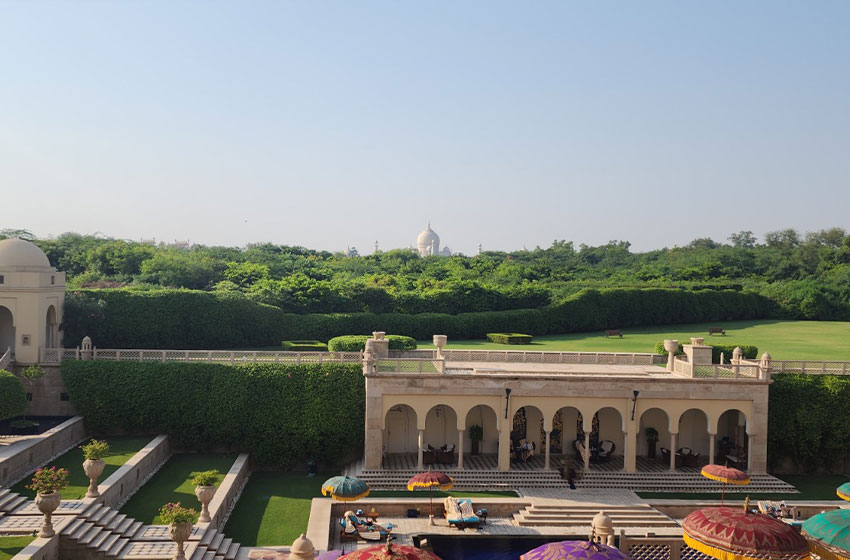
Visitors can arrive in Agra the previous afternoon, check into the hotel, visit Mehtab Bagh for a sunset view if desired, sleep normally and leave for the Taj Mahal shortly before sunrise the next morning.
After the Taj Mahal, they can return for breakfast before visiting Agra Fort.
This creates a much more balanced Agra overnight tour.
It is particularly suitable for honeymoon couples, photographers, elderly travelers and families who do not want an exhausting pre-dawn drive.
Yes, but visitors should understand what it requires.
A same-day Taj Mahal sunrise tour from Delhi usually involves leaving Delhi several hours before sunrise. Depending on the season and pickup location, this can mean departing around the middle of the night.
Road conditions must be considered, especially during winter.
Fog can slow the Delhi-Agra route, and no responsible driver should maintain normal highway speed when visibility is poor.
Travelers should therefore avoid schedules where arriving several minutes late is treated as a disaster.
The Taj Mahal will still be worth visiting after sunrise.
For travelers with limited time, an early private road journey can be practical. After visiting the Taj Mahal, the day can continue with breakfast, Agra Fort and lunch before returning to Delhi.
For travelers who have an additional night available, staying in Agra is generally more relaxed.
India Agra Tours can arrange either a Delhi to Taj Mahal sunrise tour by private car or an overnight Agra itinerary depending on the visitor's available time.
For most first-time visitors, sunrise is worth considering, but it is not mandatory for having a memorable Taj Mahal visit.
The biggest advantages are cooler temperatures, softer early light and the possibility of entering before peak daytime crowds.
These benefits are particularly valuable during warmer months.
Photographers also gain access to changing morning light rather than the stronger overhead light found later in the day.
However, sunrise has disadvantages.
Visitors must wake early. Winter mornings can be cold and foggy. Cloud can hide the sunrise. Popular travel periods can still produce queues before opening.
Someone who dislikes waking early or has elderly family members who struggle with cold mornings should not feel that a later visit is somehow inferior.
The Taj Mahal remains extraordinary throughout the day.
The best time to visit Taj Mahal is ultimately the time that fits the traveler's season, health, schedule and priorities.
For travelers who enjoy early starts and want the atmosphere of the monument gradually becoming brighter with the morning, sunrise is one of the strongest options.
A well-paced morning should begin with hotel pickup early enough to reach the selected gate before opening.
After security, visitors enter the gardens and spend approximately two to three hours at the Taj Mahal.
Instead of immediately rushing to the next attraction, breakfast can follow.
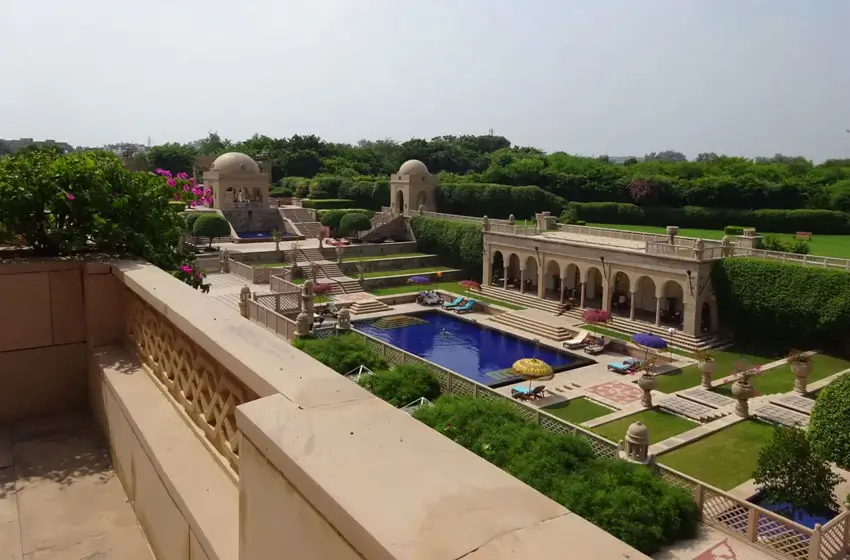
Travelers staying at a good Agra hotel may prefer returning to the property for breakfast and a short rest. Others can stop at a suitable restaurant before continuing.
Agra Fort can then be visited for approximately 1.5 to two hours.
After lunch, visitors can either rest, continue to another Agra attraction or prepare for the onward journey to Jaipur or Delhi.
Travelers staying another night can keep Mehtab Bagh for sunset, creating a complete day that begins and ends with different views of the Taj Mahal.
India Agra Tours can arrange this as a private Agra tour with Taj Mahal sunrise, Agra Fort and Mehtab Bagh, with the pace adjusted according to the traveler's interests.
The advantage of private sightseeing is that the morning does not have to follow a large group's fixed schedule. Visitors can spend longer photographing the Taj Mahal, return to the hotel for breakfast or shorten later sightseeing if the early start becomes tiring.
Visitors should generally aim to reach the selected entrance around 30 to 45 minutes before the expected opening time. Because opening is connected with seasonal sunrise and current monument operations, the exact clock time should be checked for the specific travel date.
The East Gate or West Gate can both be suitable. The better choice usually depends on hotel location and current access conditions. Arriving early is generally more important than crossing Agra simply to use a particular gate.
The Taj Mahal normally opens around sunrise from Saturday through Thursday, subject to current operating rules. It is generally closed to regular tourists on Fridays.
For travelers who value cooler temperatures, softer light and potentially lighter early crowds, yes. However, sunrise is not essential, and travelers who dislike very early starts can still have an excellent visit later in the day.
Most first-time visitors should allow approximately two to three hours. Photography enthusiasts may prefer longer, while elderly visitors or families with young children may choose a shorter visit.
It can be, but winter fog and haze may sometimes reduce visibility. Conditions vary by day, and the monument may become clearer later in the morning if fog begins to lift.
Yes. Sunrise is one of the best times for a summer Taj Mahal visit because temperatures are lower than during midday and afternoon.
Yes. A comfortable schedule is to visit the Taj Mahal at sunrise, have breakfast and then spend around 1.5 to two hours at Agra Fort later in the morning.
An overnight stay is usually the most comfortable choice, particularly during winter. It avoids a middle-of-the-night departure from Delhi and reduces dependence on pre-dawn highway conditions.
Yes. India Agra Tours can arrange a private Taj Mahal sunrise tour with car, driver and local guide, including early hotel pickup in Agra or a private journey from Delhi. The itinerary can also include Agra Fort, Mehtab Bagh and onward travel according to the visitor's schedule.