Taj Mahal Entry Fee for Foreigners (Complete Guide)
13 May 2025
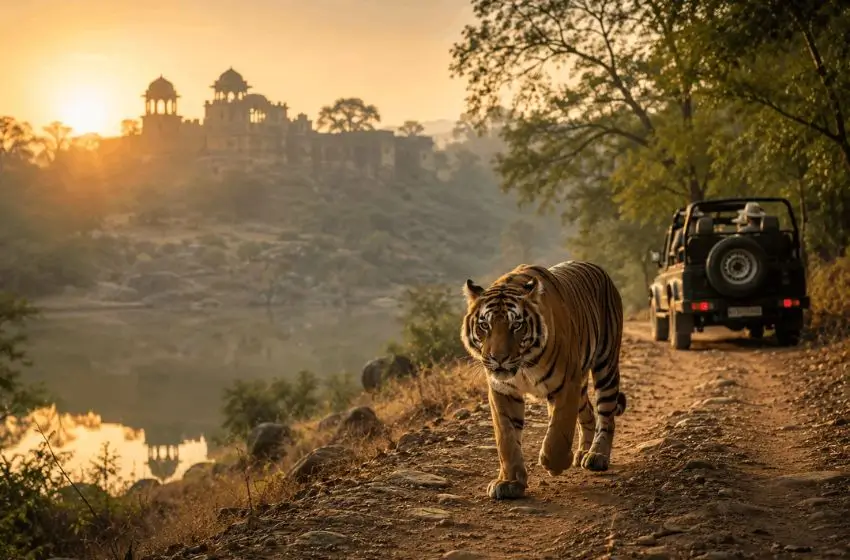
For many international travelers visiting India, seeing a tiger in the wild ranks alongside visiting the Taj Mahal as one of the country's most unforgettable experiences. While India offers countless cultural, historical, and architectural attractions, few experiences generate the same level of excitement as entering a national park at sunrise and searching for the world's largest big cat in its natural habitat.
Among all wildlife destinations in India, Ranthambore National Park remains one of the most famous.
Located in Rajasthan, Ranthambore combines extraordinary wildlife with dramatic landscapes, ancient ruins, lakes, and one of India's most photographed tiger populations. Unlike some national parks where dense vegetation can make wildlife viewing difficult, Ranthambore's mix of open terrain, rocky hills, grasslands, and historic structures often creates excellent opportunities for photography and animal sightings.
As a result, thousands of visitors from around the world include Ranthambore in their India itineraries every year.
However, first-time visitors quickly discover that planning a safari involves more than simply arriving at the park entrance. Questions about safari zones, booking procedures, vehicle types, timing, accommodation choices, and transportation arrangements can become confusing.
Should you choose a morning safari or an afternoon safari? Which safari zone is best? How far in advance should bookings be made? Is one safari enough? How do private transfers fit into the overall itinerary?
Understanding these details before arrival helps travelers maximize both their time and their chances of enjoying a rewarding wildlife experience.
India is home to numerous tiger reserves, including well-known parks such as Bandhavgarh, Kanha, Pench, Tadoba, and Jim Corbett.
Yet Ranthambore occupies a special position among them.
One reason is accessibility. The park fits naturally into many Rajasthan and Golden Triangle itineraries. Travelers visiting Delhi, Agra, and Jaipur can often include Ranthambore without dramatically altering their route.
Another reason involves scenery.
Many wildlife destinations focus exclusively on animals. Ranthambore offers something more. Ancient temple ruins, historic structures, dramatic cliffs, lakes, and the iconic Ranthambore Fort create an environment that feels uniquely photogenic.
Even travelers who do not encounter a tiger often leave with remarkable photographs and memorable experiences.
The park also has a long history of tiger conservation and wildlife tourism. Several famous tigers have become internationally recognized through wildlife documentaries, photography, and conservation efforts.
For many foreign tourists, Ranthambore provides an ideal introduction to Indian wildlife because it combines cultural heritage with safari experiences in a way few other destinations can match.
One misconception that occasionally creates unrealistic expectations is the belief that booking a safari guarantees a tiger sighting.
No ethical wildlife destination can make such a promise.
Tigers are wild animals moving freely through large natural habitats. Their behavior changes daily according to weather, prey movements, territorial patterns, and countless other factors.
What a safari booking guarantees is access to the park and the opportunity to search for wildlife with experienced naturalists and drivers.
This distinction is important because expectations strongly influence satisfaction.
Travelers who view the safari as a wildlife experience often enjoy the park regardless of whether they see a tiger. They appreciate the landscape, birdlife, deer, monkeys, crocodiles, and overall atmosphere.
Those who focus exclusively on tiger sightings sometimes overlook the many other reasons Ranthambore remains such a rewarding destination.
Ironically, travelers who approach the experience with patience often enjoy it the most.
A tiger sighting becomes an extraordinary bonus rather than the sole measure of success.
One topic that confuses many first-time visitors is the park's zone system.
Ranthambore National Park is divided into multiple safari zones. Each zone represents a specific area of the reserve where safari vehicles are permitted to operate.
The purpose of the zone system is to manage visitor numbers, reduce environmental pressure, and distribute tourism throughout the park.
When travelers book a safari, they are typically assigned to a particular zone rather than receiving unrestricted access to the entire reserve.
This often leads to the next question:
"Which zone is the best?"
The answer is more complicated than many people expect.
Wildlife moves constantly. A zone that produces excellent tiger sightings one month may be quieter during another period. Historical tiger territories, prey availability, seasonal conditions, and natural animal movements all influence sighting patterns.
Experienced wildlife professionals generally avoid guaranteeing specific results based solely on zone selection.
The reality is that memorable wildlife encounters can occur in many different areas of the park.
Many first-time visitors initially book a single safari because it appears sufficient.
However, experienced wildlife travelers often recommend multiple safaris whenever possible.
The reason is simple.
Every safari is different.
Wildlife sightings depend on countless variables that change daily. Weather conditions, animal movements, vegetation, and timing all influence what visitors experience.
A traveler may encounter exceptional tiger activity during the first safari or see very little. The following safari could produce completely different results.
Photographers, in particular, often appreciate having multiple opportunities because changing light conditions create different photographic possibilities.
Morning safaris and afternoon safaris also provide different experiences. Animals behave differently throughout the day, and the atmosphere of the park changes significantly between sunrise and sunset.
While a single safari can certainly be rewarding, additional drives generally increase opportunities for wildlife observation and create a more complete understanding of the park.
Many visitors who initially book one safari later wish they had scheduled more.
One of the most common booking decisions involves choosing between morning and afternoon departures.
Both options offer unique advantages.
Morning safaris provide cooler temperatures, beautiful sunrise lighting, and a sense of anticipation as the park awakens for the day. Photographers often appreciate the soft light and atmospheric conditions available during the early hours.
The experience of entering the reserve shortly after sunrise creates a feeling that many wildlife enthusiasts find particularly exciting.
Afternoon safaris offer a completely different atmosphere.
As temperatures begin to decrease later in the day, animals often become more active. The warm evening light can create excellent photography conditions, and sunsets within the park are often spectacular.
Many experienced wildlife travelers enjoy combining both options because they reveal different aspects of the reserve.
Rather than viewing one as superior to the other, it is often more useful to think of them as complementary experiences.
The best choice depends on individual schedules, interests, and overall itinerary plans.
One of the biggest mistakes travelers make is assuming that safari permits can always be obtained at the last minute.
Ranthambore is one of India's most popular wildlife destinations, and demand can be extremely high during peak travel periods.
Safari permits, vehicle allocations, and accommodation inventory all operate within finite limits.
During busy seasons, availability can disappear surprisingly quickly.
Travelers planning visits during holidays, peak winter months, or major tourism periods generally benefit from arranging bookings well in advance.
Early planning also provides more flexibility regarding safari timings, accommodation choices, and transportation arrangements.
Waiting until arrival may limit options significantly.
For visitors traveling internationally, advance booking often reduces stress and allows the entire experience to proceed more smoothly.
Preparation creates more choices.
Ranthambore rarely exists in isolation.
Most visitors include the park as part of a larger Rajasthan or Golden Triangle itinerary.
A common route involves Delhi, Agra, Ranthambore, Jaipur, and sometimes Udaipur or Jodhpur.
Because of this, transportation becomes an important consideration.
Many international travelers choose private drivers because they provide flexibility, comfort, and convenience throughout the journey.
Instead of coordinating multiple trains, taxis, or transfers, travelers enjoy a continuous experience with a professional chauffeur.
Private transportation also allows flexibility before and after safari activities. Departure times can be adjusted according to safari schedules, and travelers avoid the uncertainty associated with arranging transportation independently.
For families, photographers, luxury travelers, and visitors carrying significant luggage, this convenience often becomes particularly valuable.
The journey between destinations becomes part of the holiday rather than simply a logistical requirement.
Many first-time visitors spend months thinking about tiger sightings but surprisingly little time thinking about the safari itself.
The experience begins early.
Guests typically arrive at designated departure points before entering the reserve. As the vehicle moves deeper into the park, excitement gradually builds.
Unlike zoos or wildlife parks, nothing is guaranteed.
Visitors search actively for clues. Alarm calls from deer or monkeys may indicate the presence of predators. Fresh tracks on roads provide additional information. Guides and drivers continuously interpret signs throughout the journey.
This sense of uncertainty is precisely what makes the experience so exciting.
Every turn in the road carries possibility.
Whether travelers encounter a tiger, leopard, crocodile, sloth bear, or simply enjoy the landscape, the safari experience itself often becomes the highlight.
The anticipation, the scenery, and the feeling of being immersed in a wild environment create memories that remain long after the trip has ended.
One of the most common questions first-time visitors ask while planning a Ranthambore safari concerns vehicle choice.
Travelers usually encounter two primary options: the Jeep Safari and the Canter Safari.
At first glance, many people assume that both options provide exactly the same experience because they enter the same national park. While both vehicles operate within the reserve, the overall experience can feel quite different.
A jeep typically accommodates a smaller number of guests. Because of its size, the experience tends to feel more personal and flexible. Wildlife photographers often prefer jeeps because they provide better opportunities for photography and allow guests to communicate more easily with guides and drivers.
Many luxury travelers and wildlife enthusiasts choose jeep safaris specifically because of the smaller group environment.
Canters, by contrast, accommodate larger groups. They remain a popular option for visitors who wish to experience the park at a lower overall cost while still enjoying access to the same wildlife areas.
The choice is not necessarily about right or wrong. It is about personal preferences.
Some travelers prioritize a more intimate wildlife experience and therefore select a jeep. Others are perfectly comfortable in a larger shared vehicle.
The important point is understanding the difference before booking rather than assuming both options feel identical.
Ranthambore can be visited during much of the tourism season, but conditions change significantly throughout the year.
The period between October and March remains particularly popular among international travelers. Temperatures are generally comfortable, making both sightseeing and wildlife viewing enjoyable.
During these months, many visitors combine Ranthambore with the Golden Triangle and Rajasthan routes because weather conditions throughout northern India are favorable.
As temperatures begin increasing later in the season, wildlife behavior often changes. Some experienced photographers actually enjoy warmer months because animals may visit water sources more frequently, creating unique viewing opportunities.
However, hotter temperatures can also make safari conditions more demanding for some travelers.
The monsoon season creates a different atmosphere altogether. Landscapes become greener, and the park environment changes noticeably.
The best time ultimately depends on travel style, photography goals, weather preferences, and overall itinerary plans.
Professional travel planners can help visitors select dates that align with their expectations and broader travel objectives.
Accommodation plays a larger role in the Ranthambore experience than many travelers initially realize.
Unlike city destinations where hotels often function primarily as places to sleep, wildlife lodges frequently become an important part of the overall experience.
Many guests spend time relaxing between safaris, reviewing photographs, enjoying meals, and discussing wildlife sightings with fellow travelers.
Luxury wildlife lodges often provide beautiful natural surroundings, personalized service, excellent dining, and facilities designed specifically for safari travelers.
Some visitors choose properties focused on comfort and relaxation, while others prioritize proximity to safari departure points.
Families may look for larger accommodations and recreational facilities. Photographers often appreciate lodges that understand wildlife schedules and early morning departures.
The right accommodation can significantly enhance the overall safari experience.
For many travelers, the lodge becomes almost as memorable as the wildlife itself.
Choosing carefully helps ensure that the time spent outside the park remains just as enjoyable as the safaris.
Ranthambore attracts photographers from around the world, but many visitors arrive without fully understanding the realities of wildlife photography.
One common misconception is that every safari automatically produces close-up tiger photographs.
Wildlife photography requires patience.
Animals appear according to their own schedules, not according to photographic expectations.
Visitors often achieve better results when they focus on the broader experience rather than chasing a specific image. Landscapes, birds, deer, monkeys, crocodiles, trees, ruins, and environmental scenes frequently create excellent photographic opportunities.
Lighting conditions also matter. Morning and late afternoon often provide the most attractive natural light.
Many photographers bring telephoto lenses for wildlife but discover that wider lenses become equally useful for capturing the unique character of the park.
Perhaps the most important advice is to remain present in the experience.
Sometimes the most memorable wildlife encounter is not the one captured perfectly on camera but the one simply observed and appreciated in the moment.
No topic generates more discussion among Ranthambore visitors than tiger sightings.
It is important to approach the experience realistically.
Ranthambore offers some of India's most famous tiger-viewing opportunities, but it remains a genuine wilderness environment. Tigers are not placed on display for visitors. They move freely through large territories according to natural patterns.
Some travelers see multiple tigers during a single visit. Others may not encounter one at all.
This unpredictability is part of what makes wildlife experiences authentic.
Professional guides and drivers work hard to maximize opportunities, but no responsible operator can guarantee sightings.
Travelers who arrive expecting certainty sometimes miss the many other rewards the park offers.
Those who approach the safari as a wildlife experience rather than a tiger checklist often enjoy it far more.
A tiger sighting is extraordinary.
The safari itself is valuable regardless of the outcome.
Understanding this distinction creates a more rewarding experience for most visitors.
Families frequently wonder whether children will enjoy a tiger safari.
In most cases, the answer is yes.
Many children find wildlife experiences far more engaging than traditional sightseeing. The possibility of seeing a tiger creates excitement that often lasts throughout the safari.
The experience also provides educational value. Young travelers learn about conservation, ecosystems, animal behavior, and the importance of protecting wildlife habitats.
Parents often appreciate the opportunity to share a genuinely memorable outdoor experience with their children.
However, expectations should remain realistic.
Safaris require patience and observation. Some children enjoy this immediately, while others may need encouragement to appreciate the slower pace compared to more active attractions.
Choosing appropriate accommodation, maintaining flexible schedules, and preparing children for the realities of wildlife viewing usually leads to a more successful experience.
Many families later describe Ranthambore as one of the highlights of their India holiday.
Many senior visitors initially wonder whether safari experiences will be physically demanding.
The good news is that Ranthambore remains accessible to many travelers who are comfortable with vehicle-based sightseeing.
Most wildlife viewing occurs from safari vehicles rather than through long hikes or strenuous physical activities.
Private transportation between destinations can further enhance comfort by eliminating the need to coordinate multiple transportation arrangements.
Accommodation choice becomes particularly important for senior travelers. Selecting a comfortable lodge with appropriate facilities helps create a more relaxed overall experience.
Additional safari drives can also be scheduled according to individual energy levels and interests.
Many older travelers appreciate the combination of wildlife, scenery, history, and photography opportunities that Ranthambore provides.
With proper planning, the destination can be enjoyed comfortably by visitors across a wide range of ages.
One of the most common mistakes is waiting too long to book.
Because safari permits and accommodation availability are limited, last-minute planning often reduces options significantly.
Another mistake involves booking only one safari when the itinerary allows more. Multiple safaris generally provide a richer wildlife experience and increase opportunities for sightings.
Some visitors focus excessively on zone selection while overlooking other factors such as guide quality, timing, accommodation, and overall itinerary design.
Others arrive expecting guaranteed tiger encounters and therefore fail to appreciate the broader wildlife experience.
Another common error is treating Ranthambore as a quick stop rather than a destination worthy of dedicated time.
Travelers who allow themselves enough time usually enjoy the experience more thoroughly.
Good planning, realistic expectations, and flexibility contribute greatly to a successful safari visit.
Before confirming safari arrangements, travelers should consider several important questions.
How many safaris would you like to include?
Do you prefer a jeep or canter experience?
Have safari permits been secured?
Have transportation arrangements been finalized?
Does your accommodation match your comfort expectations?
Have you allowed enough time within the itinerary to enjoy the destination properly?
Do you understand that wildlife sightings cannot be guaranteed?
Addressing these questions early helps create a smoother and more enjoyable experience.
Preparation reduces uncertainty and allows travelers to focus on enjoying the destination itself.
The more organized the planning process, the more rewarding the safari experience tends to become.
A Ranthambore Tiger Safari is often one of the most exciting experiences in an India itinerary. Whether you are a wildlife enthusiast, photographer, family traveler, luxury traveler, or first-time visitor, proper planning helps maximize both comfort and enjoyment.
From safari permits and lodge recommendations to private driver transfers and complete Rajasthan itineraries, experienced travel planning can make the process significantly easier.
For customized wildlife tours, private transportation, luxury safari lodges, Rajasthan itineraries, and personalized travel assistance, you can contact Mr. Raja and the team at India Agra Tours.
Many travelers prefer jeeps because they offer a smaller and more personal wildlife-viewing experience.
Two to four safaris generally provide a more complete wildlife experience than a single drive.
No. Tigers are wild animals, and sightings can never be guaranteed.
As early as possible, especially during peak tourism months.
Yes. Many families consider it one of the highlights of their India trip.
Yes. Ranthambore offers a wide range of premium wildlife lodges and resorts.
October through March is particularly popular among international travelers.
Yes, provided accommodations and transportation are selected appropriately.
Absolutely. It is one of the most popular itinerary combinations in India.
Because every safari is different, and multiple drives provide more opportunities for wildlife sightings and photography.