Taj Mahal Entry Fee for Foreigners (Complete Guide)
13 May 2025
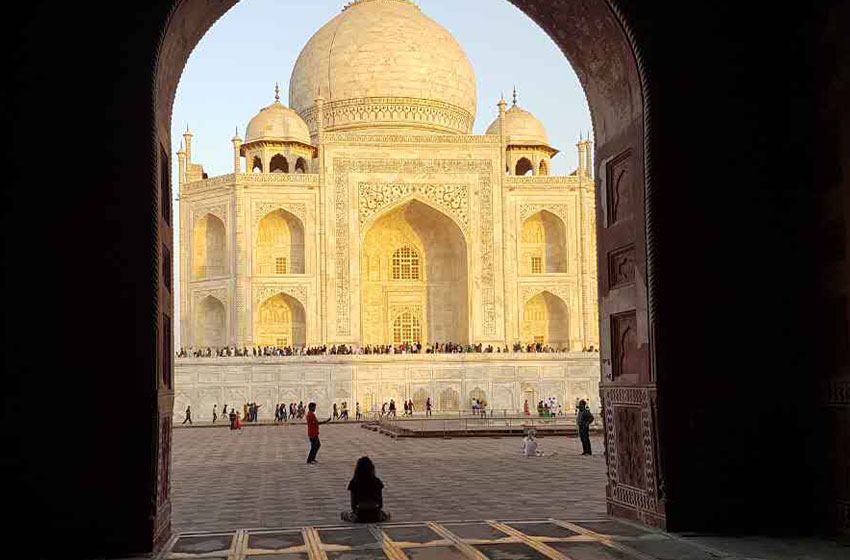
Hiring a knowledgeable private guide at the Taj Mahal is one of the most useful additions to an Agra visit for foreign travelers who want more than a quick photograph in front of the monument. The Taj Mahal complex contains far more than the famous white-marble mausoleum. Its main gateway, mosque, guest house, gardens, calligraphy, decorative inlay work, architectural symmetry and relationship with the Yamuna River are all part of the experience.
The cost of a private guide can vary significantly according to the length of the visit, guide experience, language, group size and whether the service covers only the Taj Mahal or continues to Agra Fort, Itmad-ud-Daulah, Mehtab Bagh or other Agra attractions.
For a focused Taj Mahal private guide, foreign travelers can reasonably budget around ₹1,800–₹3,000 for approximately two hours. A broader half-day service covering the Taj Mahal and another major Agra monument can cost around ₹2,500–₹4,500 per group, while a full-day private guide in Agra can reasonably cost approximately ₹4,000–₹6,500 per group. Highly experienced specialists and guides working in less common foreign languages may cost more.
Current market examples support this range. One Agra guide operator advertises licensed Taj Mahal guiding from about ₹1,800 for up to five guests for a 1.5–2 hour visit, while Taj Hotels lists a ₹2,100 guide fee for groups of one to five guests on one of its Taj Mahal experiences.
The guide fee normally covers the guide's professional service only. Foreign-tourist monument tickets, the additional main-mausoleum ticket, private car, chauffeur, meals and gratuities are usually separate.
For visitors who may see the Taj Mahal only once in their lives, spending a reasonable amount on a competent licensed Taj Mahal guide can add far more value than selecting the cheapest person available outside the monument.
The amount foreign visitors should pay depends heavily on the amount of time they want with the guide.
A short Taj Mahal visit is very different from a half-day Agra service that combines the Taj Mahal and Agra Fort. A full-day guide who remains with guests for eight hours also cannot reasonably be compared with someone providing a ninety-minute introduction at one monument.
A useful higher-side private-guide budget is:
|
Guide Service |
Practical Guide Fee |
|---|---|
|
Taj Mahal only, 1.5–2 hours |
₹1,800–₹3,000 |
|
Extended Taj Mahal visit |
₹2,200–₹3,500 |
|
Taj Mahal sunrise guide |
₹2,500–₹4,000 |
|
Taj Mahal + Agra Fort half day |
₹2,500–₹4,500 |
|
Taj Mahal + Agra Fort + additional Agra sightseeing |
₹3,500–₹5,500 |
|
Full-day private Agra guide |
₹4,000–₹6,500 |
|
Premium senior guide |
₹5,500–₹8,000 |
|
Foreign-language private guide |
₹4,500–₹8,500+ |
|
Specialist history / architecture guide |
₹6,000–₹10,000+ |
These are practical private-tour budgets, not one official compulsory tariff.
The official Taj Mahal tourism website specifically advises visitors to hire a government-approved guide and states that travelers can ask the guide to show an identity card. It also provides contact details for the U.P. Tourism and India Tourism offices in Agra for visitors seeking approved guides.
That advice is particularly useful because visitors may be approached by multiple people offering guiding services around Agra.
The cheapest guide may be perfectly competent, but foreign visitors should be cautious about choosing solely by price. A professional guide should be able to explain the monument clearly, answer follow-up questions, manage the pace of the visit and respect the traveler's preferences.
The fee is normally per guide or private group, not per person.
If a couple hires one guide for ₹2,500, the total guide fee is usually ₹2,500. They do not each pay ₹2,500.
For families, the value becomes even stronger. A family of four paying ₹3,000 for a private guide effectively spends ₹750 per traveler for personalized commentary.
Group size can still affect the rate because larger private groups may require different coordination, audio equipment or another guide depending on the arrangement.
The timing also matters. A sunrise Taj Mahal guide may cost more because the professional must begin work very early. Seasonal sunrise timing changes through the year, so the meeting time can be before normal daytime working hours.
A visitor staying at an Agra hotel might meet the guide around 5:30–6:00 AM on some mornings, depending on the season and official opening time.
That early reporting requirement can justify a higher guide fee than a conventional 9:00 AM visit.
Foreign-language guides also cost more because supply is smaller. English-speaking guides are widely available in Agra. French, Spanish, German, Italian, Japanese and other language professionals may need to be reserved earlier and may command a premium.
The strongest value normally comes from matching the guide to the traveler's interest. Visitors interested mainly in good photographs and basic history do not necessarily need the most expensive specialist. Travelers deeply interested in Mughal architecture, decorative arts or Indian history may receive substantial value from paying more for a highly experienced professional.
A half-day Agra private guide is often the best fit for foreign visitors because the Taj Mahal and Agra Fort can comfortably form one strong sightseeing session without requiring a full working day.
A focused Taj Mahal visit generally requires around 1.5 to 2.5 hours for most travelers. Visitors who enjoy photography, architecture or slower sightseeing may spend longer.
A good guide should begin providing context before the traveler reaches the main mausoleum.
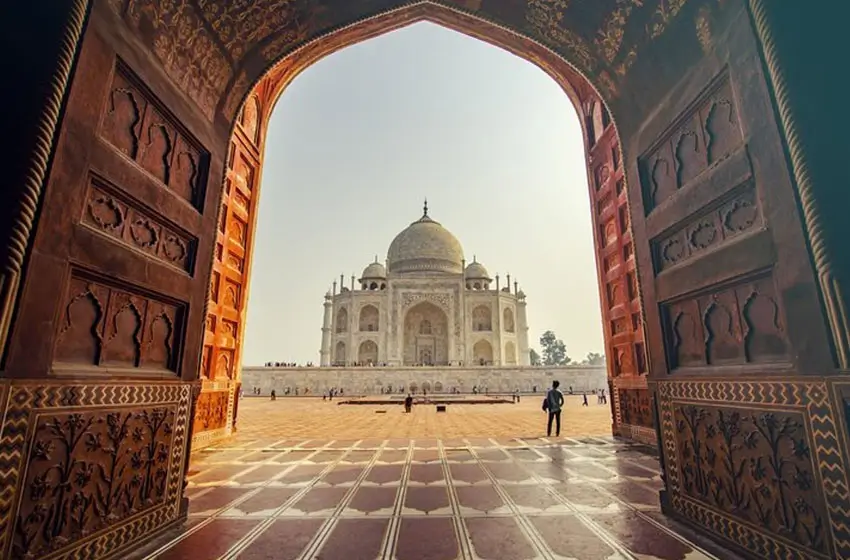
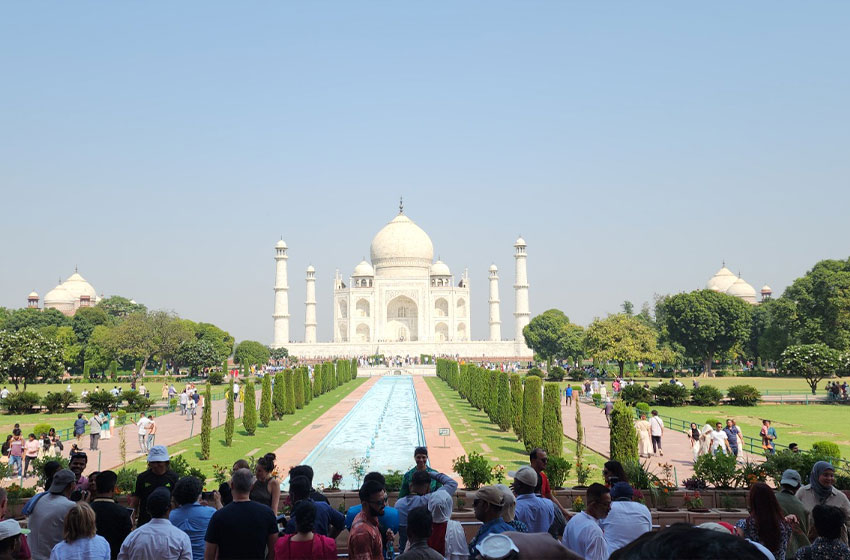
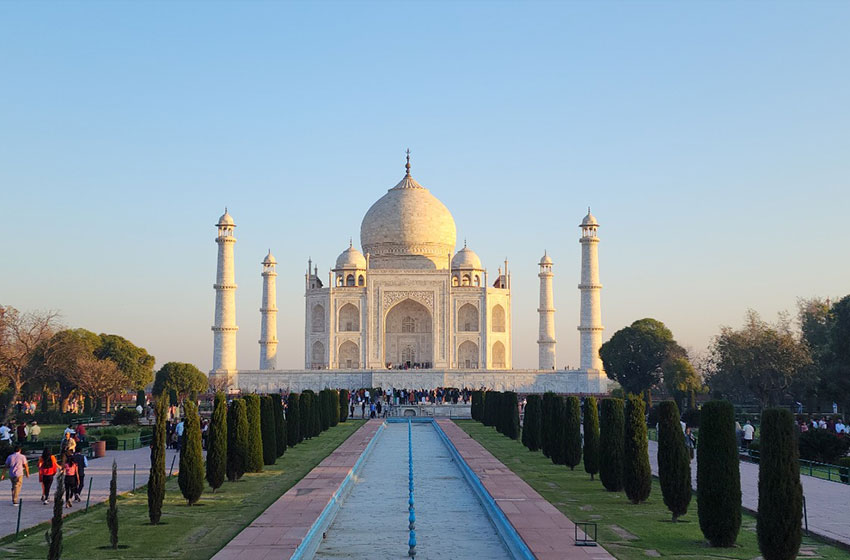
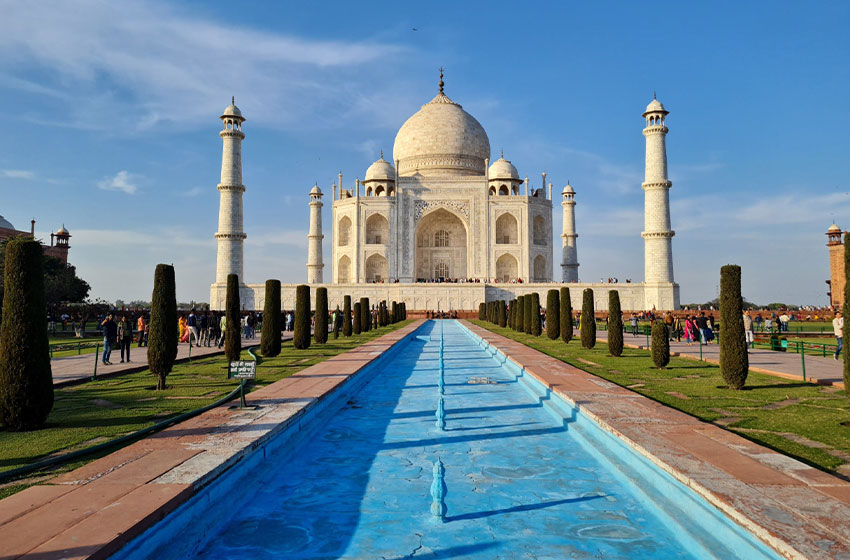
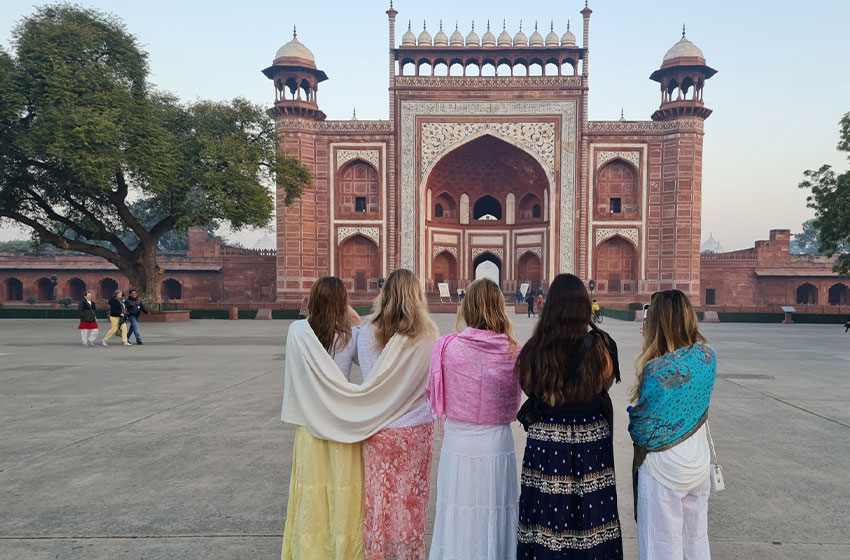
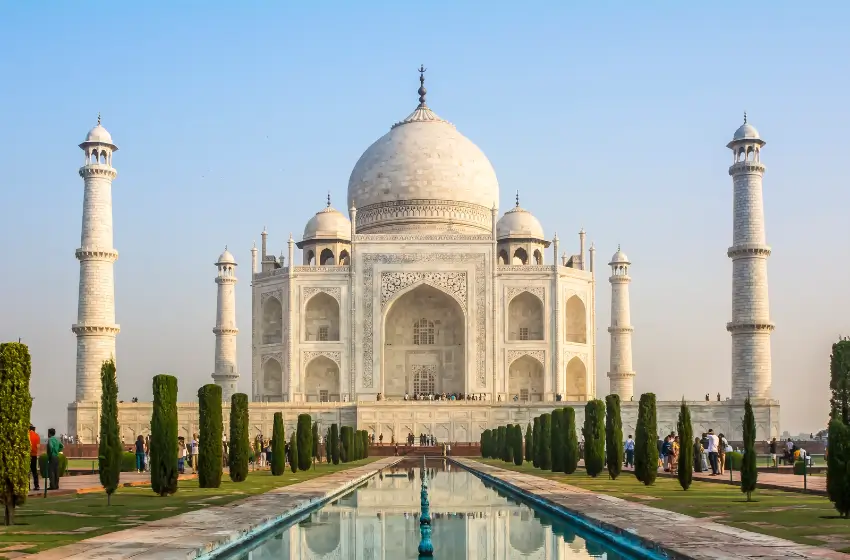
The first impression usually comes through the monumental gateway, where the guide can explain the overall layout and the deliberate symmetry of the complex. Once inside, guests can see how the garden, central water channel, mosque, guest house and main mausoleum relate to one another.
A competent Taj Mahal tour guide should explain the architectural and artistic features without drowning the guest in memorized dates.
The visitor should come away knowing who commissioned the monument, for whom it was built, how its major components fit together and what makes the decorative work distinctive.
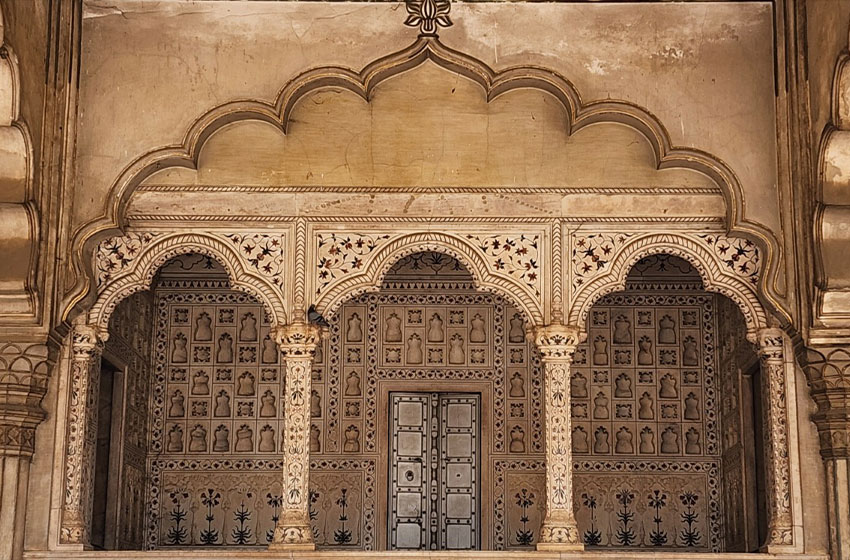
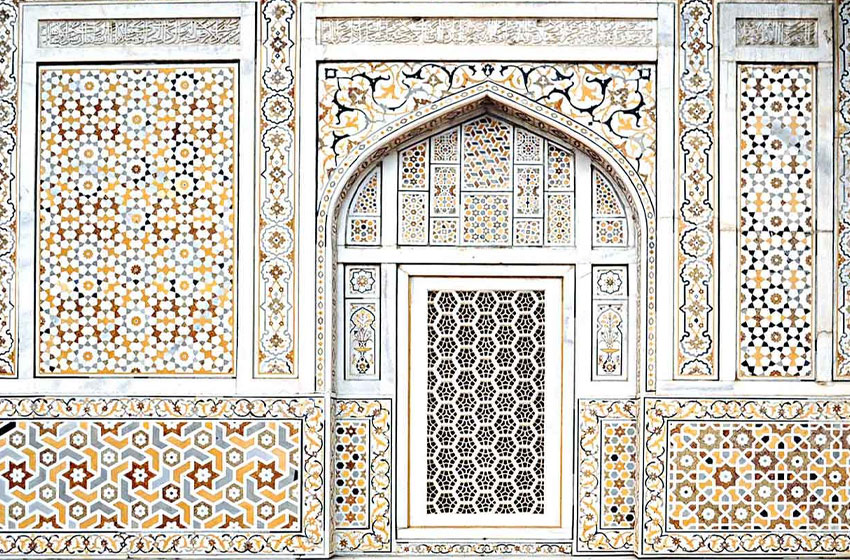
A strong guide may also point out details in the calligraphy and marble inlay that visitors easily miss when concentrating only on taking photographs.
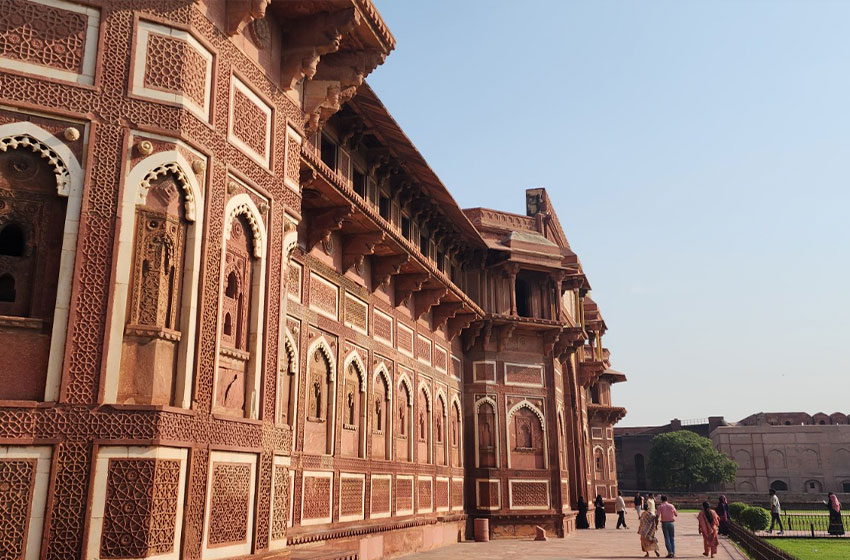
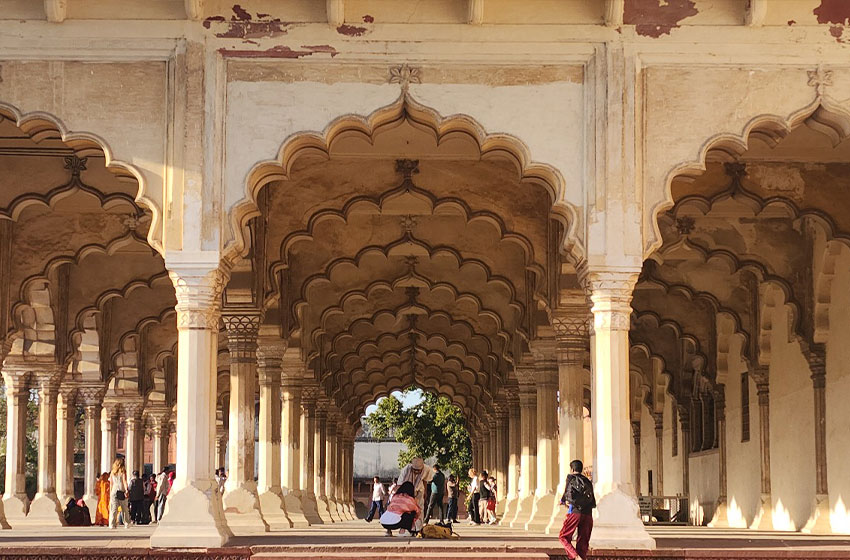
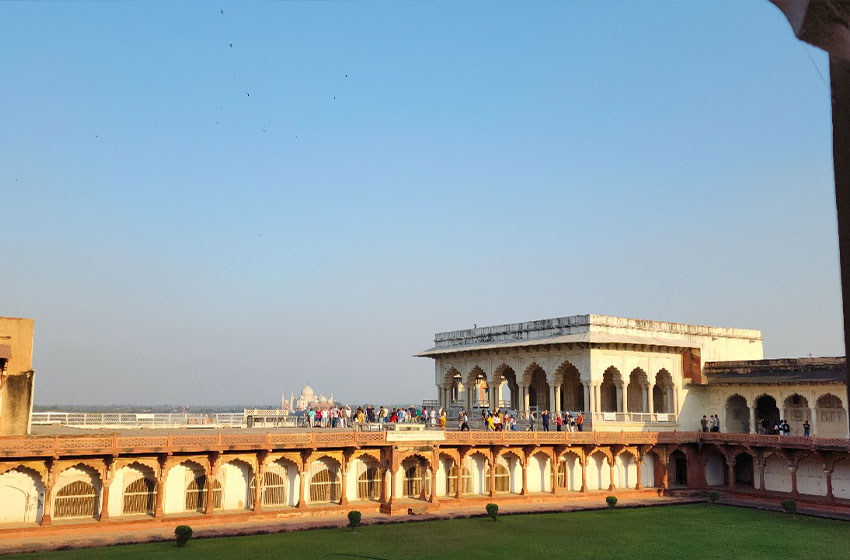
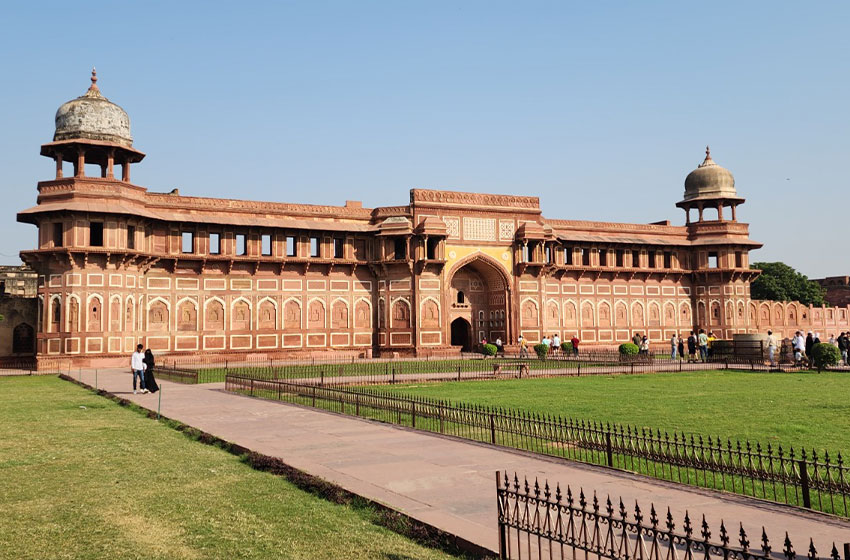
A half-day service can then continue to Agra Fort, which adds important historical context. The fort is not merely another red-stone monument added to fill the itinerary. It is closely associated with the Mughal court and provides a broader perspective on the period in which the Taj Mahal was created.
A Taj Mahal and Agra Fort private guide costing around ₹2,500–₹4,500 can therefore provide better overall value than paying a small amount for a rushed Taj-only explanation.
A full-day service may add places such as Itmad-ud-Daulah, Mehtab Bagh, Sikandra or other Agra heritage sites depending on the traveler's interests and available time.
A full-day guide typically remains with the traveler for roughly eight hours.
For this longer service, ₹4,000–₹6,500 per group is a practical range for a good English-speaking professional. A highly experienced guide can cost more.
The full-day option makes particular sense for travelers staying two nights in Agra or those who want to see the city beyond the Taj Mahal.
Travelers should not add attractions simply to make the itinerary look fuller. A private guide is most valuable when guests have enough time to absorb what they are seeing.
The chauffeur and guide also have different responsibilities during a half-day or full-day service.
The private driver in Agra drops travelers and guide at appropriate points, handles parking and waits with the vehicle. The guide accompanies the travelers into the heritage sites.
This division makes sightseeing much smoother.
The guide should not be expected to act as the chauffeur, and the driver should not automatically be treated as a substitute for a qualified monument guide.
The guide fee is only one part of the cost of visiting the Taj Mahal.
Foreign visitors currently pay ₹1,100 for standard Taj Mahal admission, with an additional ₹200 ticket required to enter the main mausoleum, bringing the usual total to ₹1,300 per foreign adult when mausoleum access is included. Children below 15 years enter without the standard admission fee.
The Taj Mahal is closed every Friday for general tourist visits. The official district information states that normal visiting hours run from approximately 30 minutes before sunrise until 30 minutes before sunset, subject to official operating conditions.
Those timings matter when calculating guide arrangements.
A sunrise visit requires the guide to meet travelers before the monument opens. Depending on hotel location, guests may leave their hotel while it is still dark.
The guide fee can therefore move toward the upper end of the private range.
The official Taj Mahal tourism site also states that foreigners receive facilities such as shoe covers and a water bottle with their entry ticket, while visitors should carry government-issued identification. Drone cameras are prohibited.
Foreign travelers should buy tickets through official channels or have their operator handle the ticketing process through legitimate channels.
A guide may assist with ticket procedures but should not claim that an unofficial payment can bypass mandatory security or entry requirements.
Security screening applies to all visitors.
The main mausoleum ticket deserves special attention because some travelers mistakenly believe the standard foreigner ticket automatically includes access to the central interior. It does not. The additional ₹200 payment is required for visitors who want to enter the main mausoleum.
Whether this extra access is worthwhile depends on the traveler. Some guests care greatly about entering the interior chamber; others are more interested in the external architecture and gardens.
The guide should explain the difference without pushing the guest into an unnecessary purchase.
Agra Fort has a separate foreign-tourist ticket. The official Taj Mahal tourism ticket page currently lists the standard foreigner rate for Agra Fort at ₹650 on normal weekdays. Fatehpur Sikri is listed at ₹610 for foreign visitors.
This means a couple taking a half-day Taj Mahal and Agra Fort tour could pay approximately:
|
Expense |
Cost for Two Foreign Adults |
|---|---|
|
Taj Mahal standard admission |
₹2,200 |
|
Main mausoleum access |
₹400 |
|
Agra Fort tickets |
₹1,300 |
|
Private guide |
₹2,500–₹4,500 |
|
Total before car and gratuity |
₹6,400–₹8,400 |
A private car, chauffeur and parking would be additional unless the service is sold as one package.
This example is useful because it shows that the Taj Mahal guide fee is only part of the sightseeing budget.
Travelers staying in Delhi and visiting Agra on a same-day private trip must also consider the Delhi–Agra–Delhi vehicle cost, expressway tolls and a very early departure.
Guests already staying in Agra have a much lower transportation cost because the major monuments are within the city.
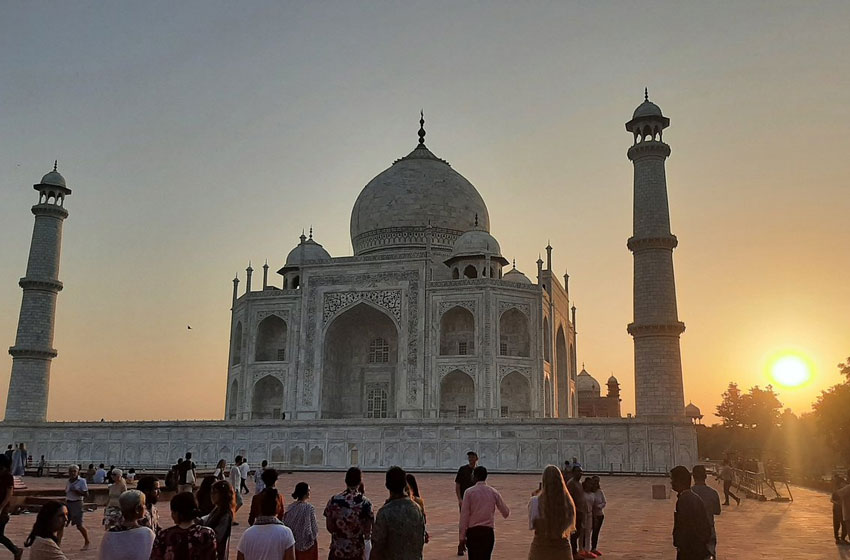
Sunrise is one of the most requested times to visit the Taj Mahal because the temperature can be more comfortable and the early light can be particularly attractive for photography.
A private sunrise guide at the Taj Mahal usually costs around ₹2,500–₹4,000, depending on the professional, duration and whether other Agra sightseeing is added afterward.
The guide should meet the guests early enough to reach the appropriate entrance before opening.
Visitors should remember that “sunrise tour” does not mean the monument is guaranteed to be empty.
The Taj Mahal is internationally famous, and busy dates can still attract significant early-morning crowds. A guide can help manage the visit efficiently but cannot guarantee a private monument.
Foreign travelers should be suspicious of unrealistic claims such as guaranteed no crowds, secret unrestricted entrances or skipping mandatory security.
A licensed guide should work within official visitor procedures.
The official Taj Mahal website advises tourists to use government-approved guides and to ask to see the guide's identification if they have concerns.
The guide's professional quality matters more than simply holding a badge, however.
A good licensed Taj Mahal guide should be able to answer questions rather than merely repeat a memorized presentation.
If a traveler asks about the marble inlay, Mughal architecture, the garden design or another aspect of the monument, the guide should be able to respond clearly.
The professional should also know when to remain quiet.
Foreign visitors often want time to stand in front of the Taj Mahal, take photographs or simply absorb the setting. A guide who talks constantly for two hours can reduce the experience rather than improve it.
Photography is another area where guides can help without turning into aggressive unofficial photographers.
Many guides know the common photo locations and can take good pictures with the guest's phone. That can be useful for couples and solo travelers.
However, guests should not be pushed into paying for unrelated photography services they did not request.
Shopping pressure is another issue that deserves direct attention.
Agra has marble inlay workshops, carpet shops, jewelry businesses, leather shops and handicraft stores. Genuine crafts can be interesting, but some guides and drivers receive commissions from particular businesses.
There is nothing inherently wrong with a commercial relationship if the traveler genuinely wants to shop.
The problem begins when a private Taj Mahal tour that was supposed to focus on heritage turns into a series of showroom stops.
Foreign visitors who do not want shopping should say so clearly before sightseeing begins.
A professional guide should respect that decision.
Travelers who are interested in marble inlay work can request a workshop visit, but they should remember that demonstration and retail sales frequently exist together.
Purchases should never be made under pressure.
A fair guide fee can help keep the professional relationship centered on guiding rather than commissions, although travelers should still select the guide carefully.
A good guide should also understand physical comfort.
The Taj Mahal requires walking, security checks and time outdoors. Older travelers or visitors with mobility concerns should tell the guide beforehand. The professional can then maintain a more appropriate pace and coordinate with the chauffeur.
Families with children may need a shorter explanation style and more breaks.
A private guide who adapts the visit to the guest is far more valuable than someone who rigidly follows a standard script.
Consider a foreign couple staying overnight in Agra and visiting the Taj Mahal at sunrise followed by Agra Fort.
They hire an experienced English-speaking guide for ₹3,500 for the half-day service.
Their Taj Mahal tickets cost ₹1,100 each plus ₹200 each for main-mausoleum access, giving a total Taj Mahal ticket bill of ₹2,600 for two adults.
Their Agra Fort tickets add another ₹1,300.
A private local car with driver costs approximately ₹4,500 for the required morning service.
Their basic sightseeing expenses are:
|
Expense |
Couple Cost |
|---|---|
|
Half-day private guide |
₹3,500 |
|
Taj Mahal admission |
₹2,200 |
|
Main mausoleum access |
₹400 |
|
Agra Fort admission |
₹1,300 |
|
Private car and driver |
₹4,500 |
|
Total before gratuities |
₹11,900 |
If the couple gives the guide a ₹700 gratuity and the driver ₹500, their total rises to ₹13,100.
That equals approximately ₹6,550 per traveler for a private guided morning including transportation and the major monument tickets.
A family of four would pay more for entrance tickets but might still use the same guide and vehicle, depending on luggage and seating requirements. This means the private guide cost per person becomes lower as the small private group grows.
A traveler who wants only the Taj Mahal could spend much less.
For example, two foreign visitors could hire a guide for approximately ₹2,000–₹3,000, pay their Taj Mahal entry and mausoleum tickets, and use a hotel transfer or local vehicle. Their complete sightseeing cost could remain well below the broader half-day package.
A luxury traveler can spend more by selecting a premium chauffeur car, senior specialist guide and hotel-arranged services.
The important point is that paying the highest guide fee is not necessary for everyone.
The strongest value comes from choosing a professional who matches the traveler's interests and can provide the right amount of detail.
A visitor interested mainly in the iconic experience, photography and a clear introduction may be perfectly satisfied with a good standard licensed guide.
A traveler fascinated by Mughal history or architecture should spend more for specialist knowledge rather than trying to save a small amount.
The Taj Mahal is not a place where the guide should become the center of attention.
The guide's job is to make the monument more meaningful while allowing the traveler enough space to experience it personally.
A focused Taj Mahal private guide commonly costs around ₹1,800–₹3,000 for approximately 1.5–2 hours. Longer visits, sunrise service and premium guides can cost more.
A half-day guide covering the Taj Mahal and Agra Fort can reasonably cost around ₹2,500–₹4,500 per group, depending on guide experience and language.
A good full-day English-speaking private guide can cost approximately ₹4,000–₹6,500 per group. Senior specialists and foreign-language guides can charge more.
A sunrise Taj Mahal guide can cost approximately ₹2,500–₹4,000, depending on duration and whether the service continues to additional Agra attractions.
Usually not. Private guide fees are generally charged per guide or private group. Couples and families therefore share the professional guide cost.
The official foreign-tourist admission is currently ₹1,100 per adult, with an additional ₹200 required for main-mausoleum access.
The official district information states that the Taj Mahal generally opens approximately 30 minutes before sunrise and closes 30 minutes before sunset. It is closed to general tourists on Fridays.
Yes. The official Taj Mahal tourism website advises visitors to hire a government-approved guide and says travelers can ask to see the guide's identity card.
Normally not. Guide fees and monument entrance tickets are separate unless the booking explicitly includes both. Foreign-tourist admission to Agra Fort is currently listed at ₹650 on normal weekdays.
For a good focused or half-day service, approximately ₹500–₹1,000 per group is a practical gratuity range. For a longer full-day guide, around ₹800–₹1,500 can be reasonable. Tipping remains voluntary.