Taj Mahal Entry Fee for Foreigners (Complete Guide)
13 May 2025
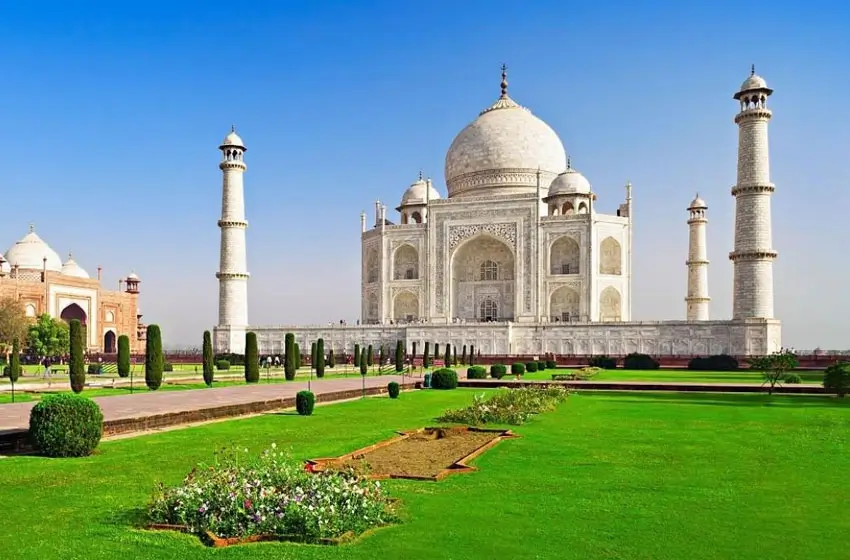
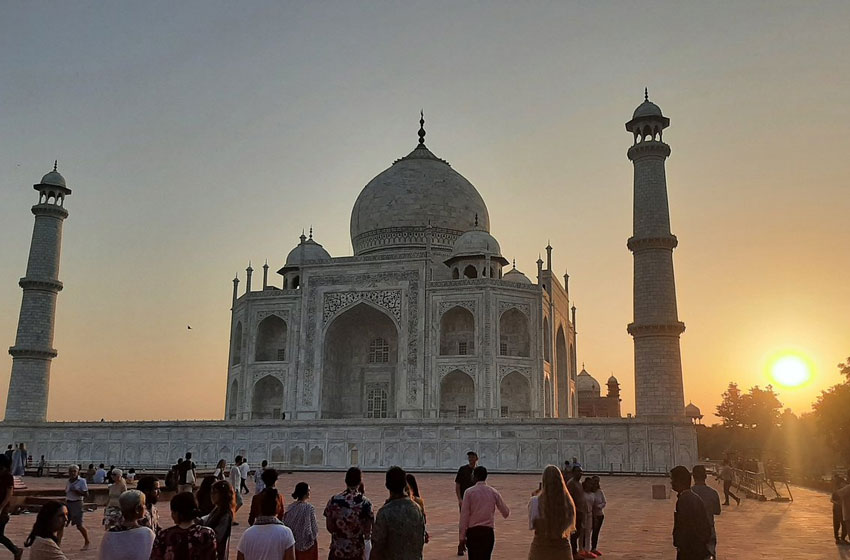
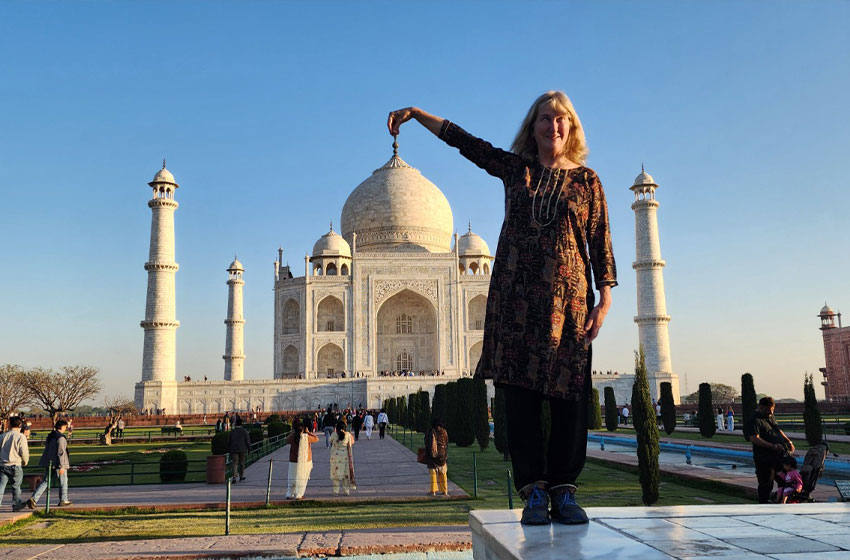
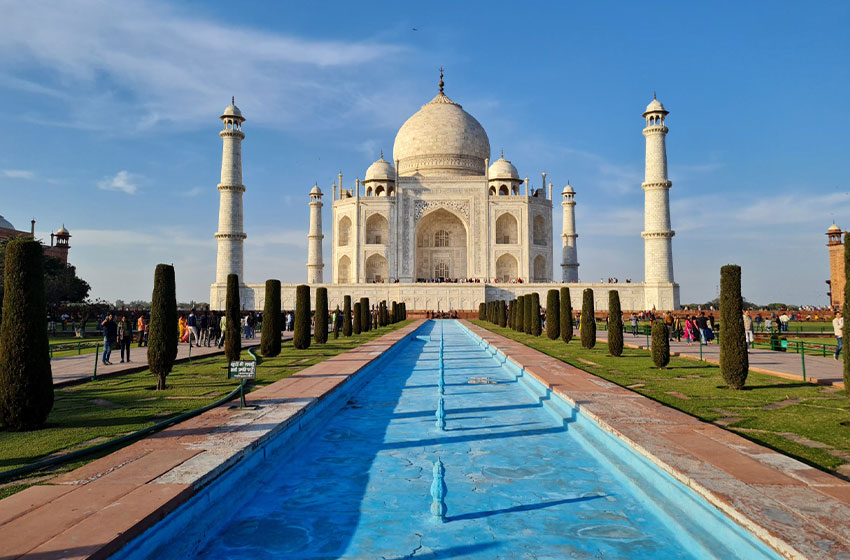
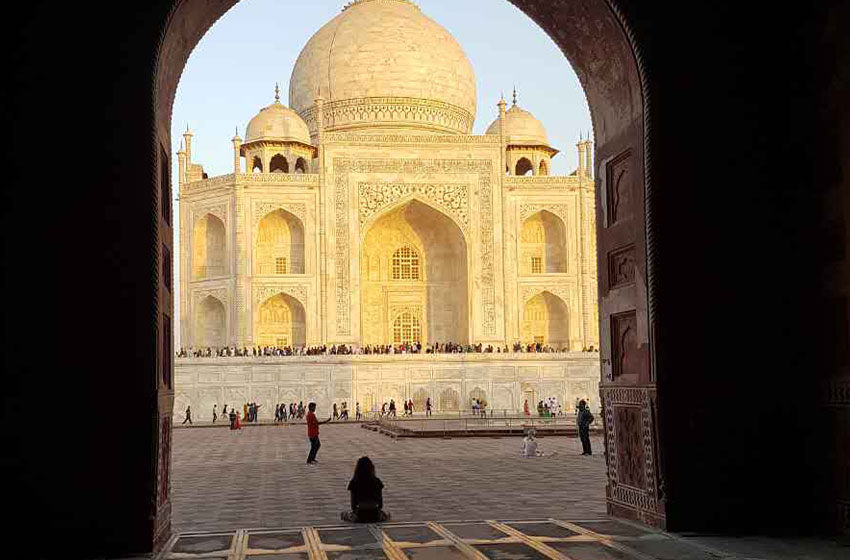
Most travelers associate the Taj Mahal with sunrise, but the hours before sunset offer a completely different view of India's most famous monument. As the afternoon light softens, the white marble gradually changes tone, shadows become less severe, and the Yamuna River creates a quieter setting on the northern side of the Taj Mahal. For travelers who have already visited the monument during the morning, seeing it again from across the river can become one of the most memorable parts of an Agra stay.
The best-known location for this experience is Mehtab Bagh, a historic Mughal garden positioned directly across the Yamuna River from the Taj Mahal. Its location makes it one of the most popular Taj Mahal sunset viewpoints in Agra, particularly for photographers, couples and foreign tourists who want a wide view without entering the Taj Mahal complex for a second time.
Mehtab Bagh is not the only option. The riverfront area contains other viewpoints, and the Taj Mahal itself can also be seen under late-afternoon light from selected locations around Agra. Each location provides a different experience. Some offer a symmetrical frontal view, while others provide more distant or angled views.
Visitors should also understand one important detail before arriving: the sun does not normally set directly behind the Taj Mahal when viewed from every popular viewpoint. The exact position of the sun changes with the season and viewing angle. A beautiful Taj Mahal sunset therefore depends on light, clouds, haze, river conditions and the time of year rather than a guaranteed postcard composition.
For travelers spending only a few hours in Agra, the Taj Mahal and Agra Fort should remain the primary monuments. For anyone staying overnight, however, adding Mehtab Bagh or another riverfront viewpoint in the late afternoon gives the day a much more relaxed ending.
India Agra Tours can include Mehtab Bagh in a private Agra sightseeing itinerary, allowing travelers to visit the Taj Mahal, Agra Fort and the riverfront with a private car, driver and local guide rather than arranging separate transportation for each location.
Mehtab Bagh Agra sits on the opposite bank of the Yamuna River, almost directly behind the Taj Mahal when viewed from the main entrance side of the monument. Its name is commonly associated with the idea of a moonlight garden, and the site forms part of Agra's Mughal riverfront landscape.
The main reason modern visitors come here is obvious as soon as they reach the river-facing side of the garden: the Taj Mahal dominates the view across the water.
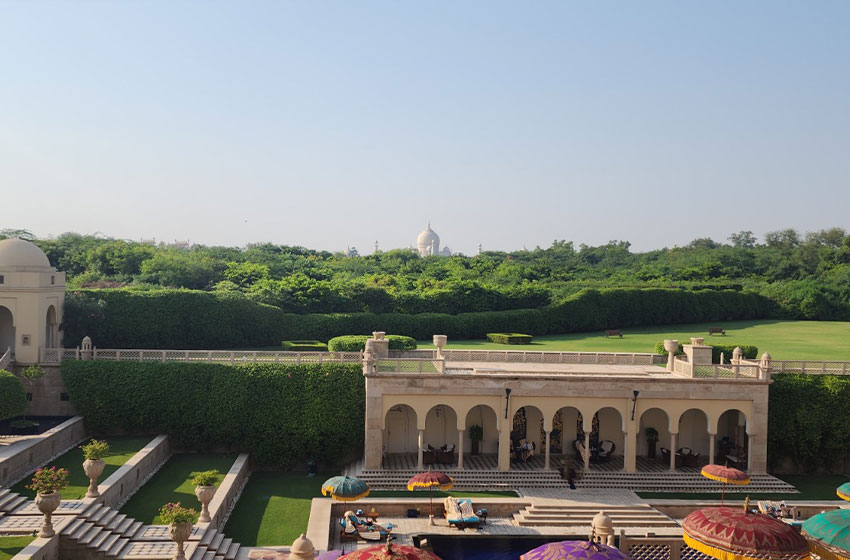
Unlike standing inside the Taj Mahal complex, visitors at Mehtab Bagh can see the monument as part of a broader landscape. The river lies between the viewer and the Taj Mahal, and the surrounding riverbank creates space around the building. This makes it particularly attractive for wide photographs.
The experience is also different psychologically. Inside the Taj Mahal complex, visitors naturally focus on architecture, marble details, gardens, the mausoleum and the crowds moving around them. At Mehtab Bagh, the Taj Mahal becomes a distant architectural composition.
There is no need to rush toward the building.
Visitors can spend time looking at the changing light, taking photographs and seeing how the monument relates to the riverfront.
This is one reason Mehtab Bagh sunset photography is popular with international visitors. A wide-angle lens can capture the landscape, while a telephoto lens can isolate the Taj Mahal and create a much closer-looking composition from across the river.
The condition of the Yamuna changes seasonally. Water level, vegetation, atmospheric haze and riverbank conditions can all alter the appearance of photographs. Travelers should therefore avoid expecting their photographs to look identical to images seen online.
Weather also has a major influence.
A clear evening may produce warm light on the marble. A cloudy evening can create softer, more dramatic tones. During winter, haze or fog may reduce clarity. During monsoon periods, clouds can dominate the sky.
None of these conditions automatically makes the visit unsuccessful. They simply produce different versions of the same famous view.
Mehtab Bagh is particularly useful for travelers who want to photograph the Taj Mahal without entering the main monument twice. Someone who visits the Taj Mahal at sunrise can spend the rest of the day seeing Agra Fort and other attractions before returning to the riverfront for sunset.
That creates two completely different views of the Taj Mahal within the same day.
Visitors should treat Mehtab Bagh timings as an important part of the day because the site operates during daylight hours rather than remaining open indefinitely after sunset.
The garden generally opens around sunrise and remains accessible until approximately sunset. Operational timings can be adjusted, so travelers should confirm the current closing time on the day of their visit, particularly if sunset photography is the main reason for going.
Arriving at the exact moment of sunset is a mistake.
Travelers should ideally reach the area around 45 minutes to an hour before sunset. This allows enough time to complete ticketing and security formalities, walk through the garden, find a suitable viewing position and photograph the Taj Mahal as the light changes.
The best light can occur before the sun actually disappears.
Arriving early also means the visit does not become stressful if Agra traffic takes longer than expected.
For the Mehtab Bagh ticket price, visitors should expect separate rates according to nationality. Indian visitors generally pay a low domestic admission charge, while foreign visitors pay a higher fee. A practical budget for international visitors is approximately ₹300 per foreign adult, while the commonly applied domestic ticket is around ₹25 per Indian visitor. Official ticket prices can be revised, so the current amount should be checked before the visit.
Children and other visitor categories may be subject to separate official ticket rules.
Foreign travelers should purchase tickets through authorized channels or at the official monument facility rather than accepting offers from unauthorized sellers outside tourist sites.
Mehtab Bagh does not require the same amount of time as the Taj Mahal. Most visitors can spend approximately 45 minutes to 90 minutes here, depending on their interest in photography and the quality of the evening light.
A serious photographer may want more time.
A casual visitor may be satisfied after seeing the Taj Mahal from several positions and watching the light change.
The garden should therefore be treated as a scenic addition to an Agra itinerary rather than a half-day attraction.
The appearance of the Taj Mahal at sunset changes gradually rather than suddenly.
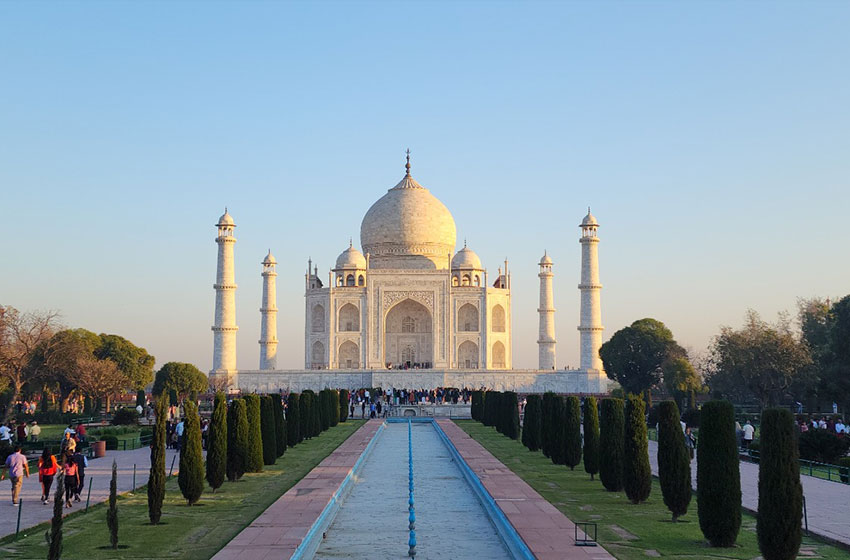
During the stronger afternoon light, the marble can appear bright white. As the sun moves lower, the light becomes warmer and shadows soften. Depending on weather conditions, the monument may take on cream, golden or subtle pink tones.
This changing appearance is one reason travelers often describe the Taj Mahal differently depending on when they visited.
The marble reflects surrounding light, so the monument never looks exactly the same in every photograph.
The atmosphere can be particularly attractive when the sky contains light cloud. Clouds can diffuse harsh sunlight and add texture to wide photographs.
A perfectly clear sky can produce cleaner architectural images but may offer less dramatic background detail.
Winter haze creates another effect. The Taj Mahal may appear softer and less sharply defined from across the river. Photographers looking specifically for extremely crisp long-distance photographs should understand that November through January can occasionally present visibility challenges.
During the monsoon period, dramatic clouds can create striking photographs, although rainfall can interrupt the visit.
The sun's position is also seasonal. Travelers should not assume that standing at Mehtab Bagh will always place a giant orange sun directly behind the central dome.
Many online photographs are taken from carefully selected positions, at particular times of year, using telephoto lenses that visually compress distance.
A normal smartphone photograph may look quite different.
That does not reduce the quality of the experience. Seeing the Taj Mahal across the Yamuna as evening arrives can be impressive even without a technically perfect sunset photograph.
The most obvious Mehtab Bagh Taj Mahal viewpoint is toward the river-facing end of the garden, where visitors can look directly across toward the monument.
Photographers should avoid taking every picture from exactly the same central position.
Moving slightly to one side can change the relationship between the Taj Mahal, riverbank and surrounding vegetation. Wide compositions can include more of the riverfront landscape, while tighter compositions concentrate on the mausoleum.
A smartphone is sufficient for good travel photographs, particularly when light is strong enough.
Travelers using interchangeable-lens cameras may find a moderate telephoto lens useful because the Taj Mahal is across the river. Telephoto compression can make the monument appear more prominent and reduce distracting empty space.
Wide-angle lenses serve a different purpose. They show the Taj Mahal in relation to the Yamuna and garden.
Visitors should expose photographs carefully because bright marble can lose detail if the image is overexposed.
Taking photographs slightly before sunset can often produce better monument detail than waiting until the scene becomes too dark.
Photography rules at protected monuments can change, particularly regarding tripods, professional equipment or commercial shoots. Travelers carrying specialized equipment should verify current rules before arrival rather than assuming that equipment permitted in an ordinary public area will automatically be permitted inside a protected monument.
Drone users should be especially cautious. The Taj Mahal is a highly protected monument, and visitors should never attempt unauthorized drone flights around the site.
For ordinary tourists, a smartphone or handheld camera is the simplest option.
Travelers researching the area may also come across references to a Taj View Point near Mehtab Bagh or riverfront viewing areas close to the garden.
These locations can provide another view of the Taj Mahal from the northern side of the Yamuna. The exact access arrangement, ticket system and visitor rules can change, so travelers should verify local conditions before depending on a particular viewpoint.
The advantage of a riverfront viewpoint is the direct visual relationship between the Taj Mahal and the Yamuna.
Depending on the exact location, the experience can feel less like visiting a formal Mughal garden and more like stopping specifically for the view.
Travelers should not assume that every informal-looking area around the river is open for unrestricted tourist access. Security arrangements around the Taj Mahal are strict, and protected or restricted zones should always be respected.
A local guide or experienced Agra driver can be useful because access patterns can change more quickly than old travel articles or social-media posts.
If the primary goal is a reliable historic attraction with an established visitor entrance, Mehtab Bagh remains the most straightforward choice.
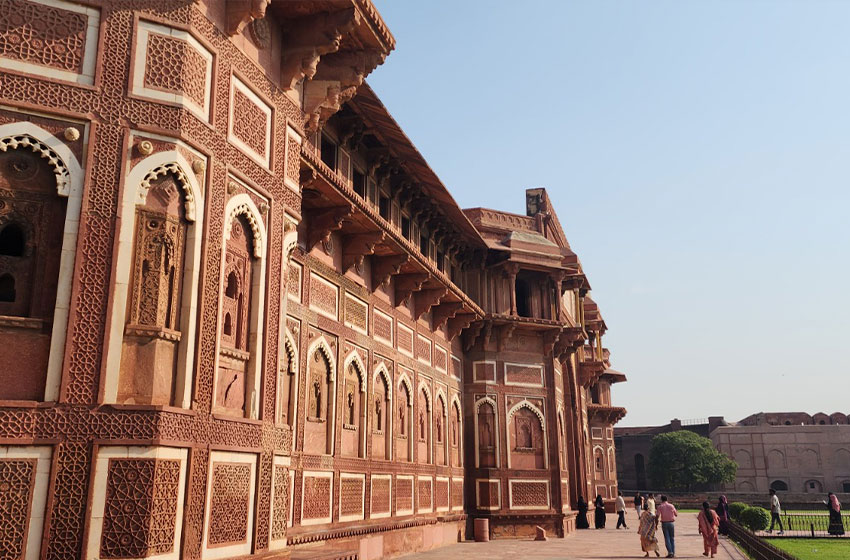
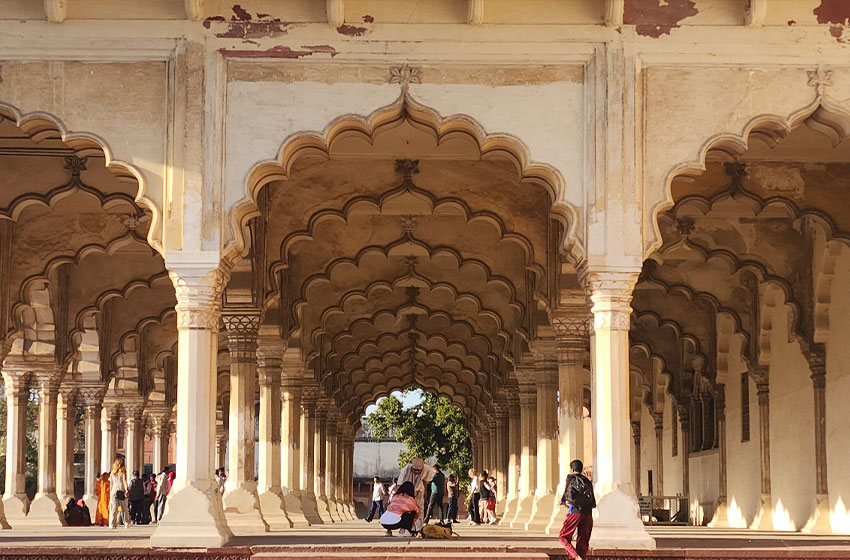
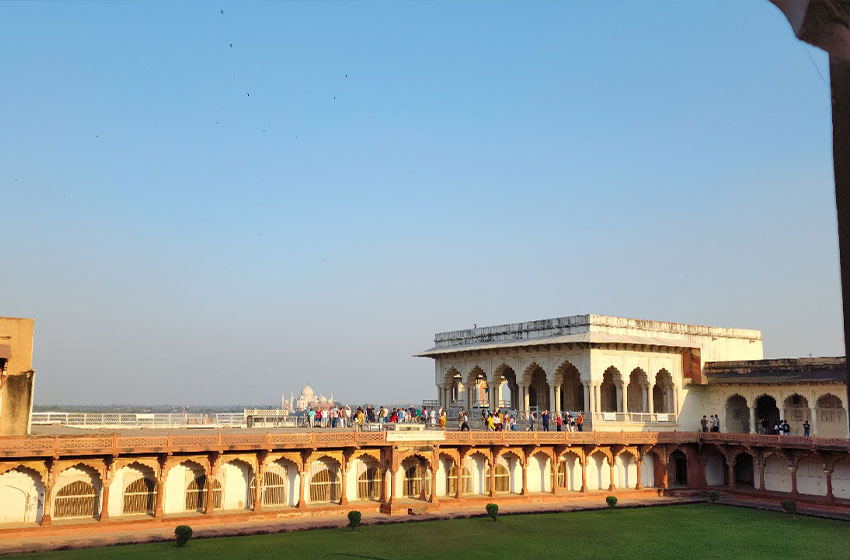
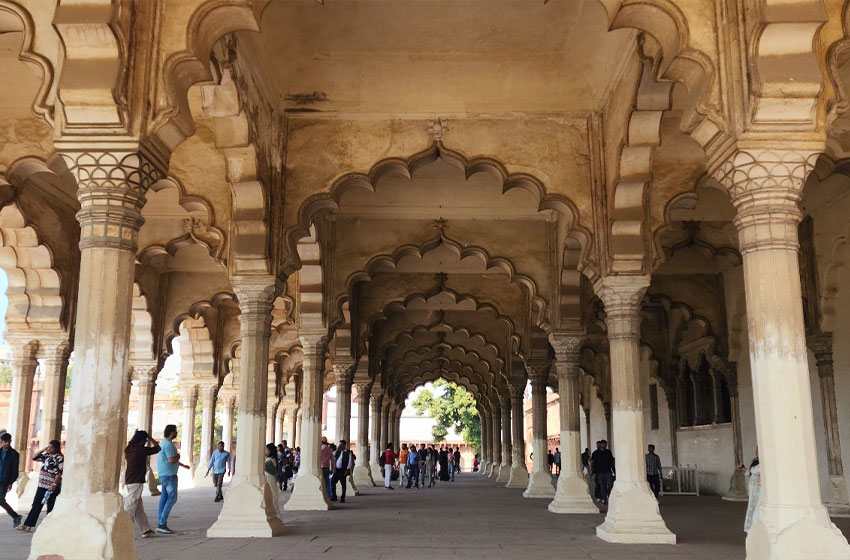
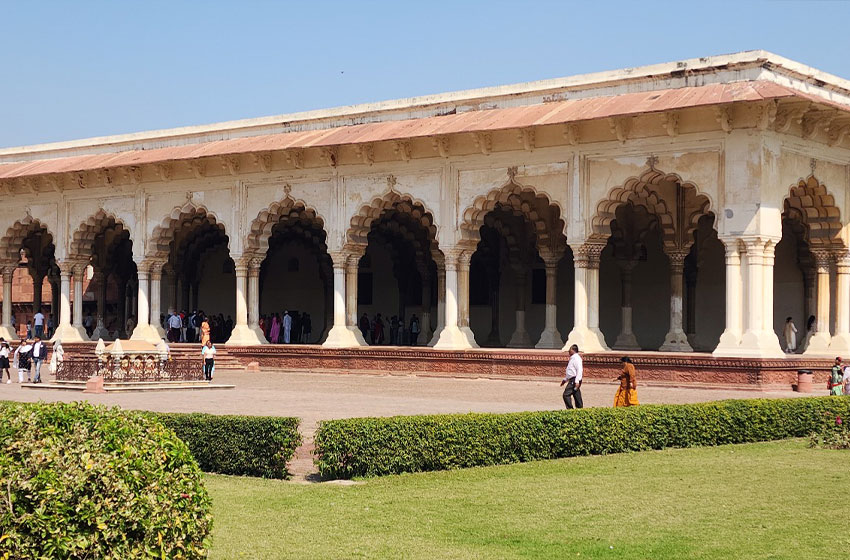
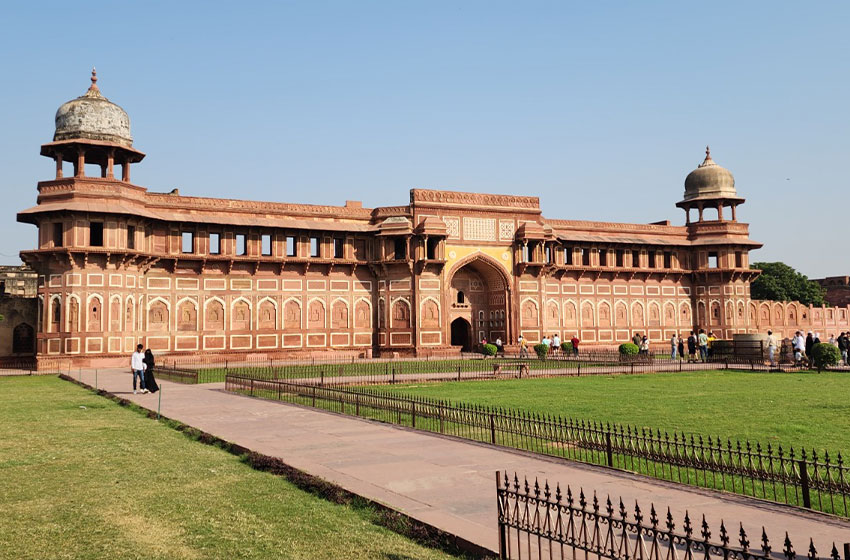
Agra Fort provides another interesting perspective.
Although it does not offer the same frontal composition as Mehtab Bagh, certain areas within Agra Fort offer views of the Taj Mahal in the distance.
This view has historical significance because the fort and Taj Mahal are closely connected with Mughal history. The elevated perspective also allows visitors to see the monument in relation to the river.
The important limitation is timing.
Agra Fort is an archaeological monument with its own opening and closing hours. Travelers cannot assume they can remain inside indefinitely waiting for darkness after sunset.
A late-afternoon visit can nevertheless provide beautiful light if the schedule is timed correctly.
For many travelers, the most efficient Agra day involves visiting the Taj Mahal earlier and Agra Fort afterward, followed by Mehtab Bagh near sunset.
This sequence gives three different architectural perspectives: the Taj Mahal from inside its own gardens, the distant Taj view from Agra Fort and the frontal river view from Mehtab Bagh.
Trying to fit all three into an extremely short half-day visit, however, can become rushed.
Travelers who care about photography should stay at least one night in Agra if possible.
Foreign visitors frequently ask whether they should choose Taj Mahal sunrise or sunset.
The two experiences are not really substitutes.
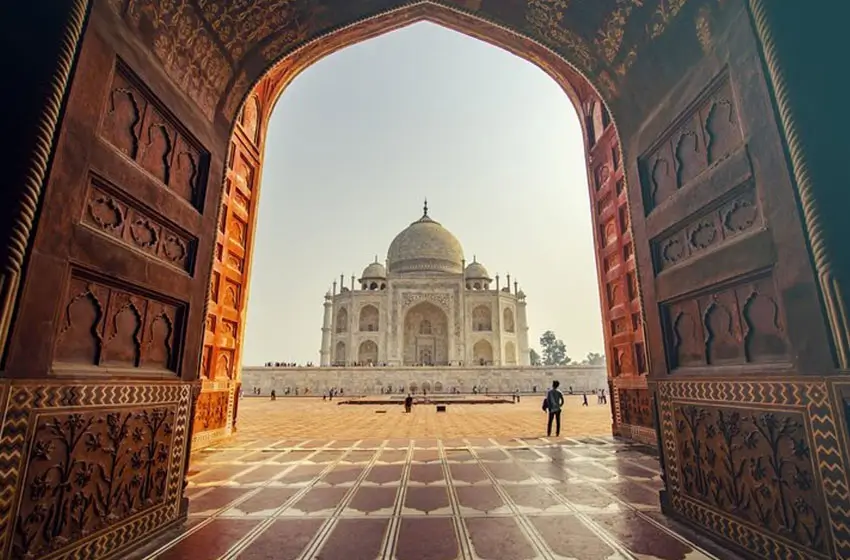
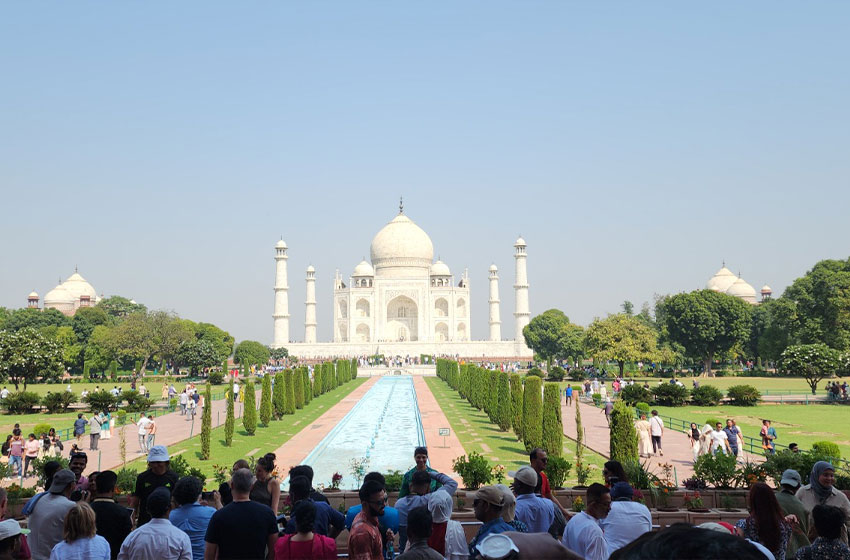
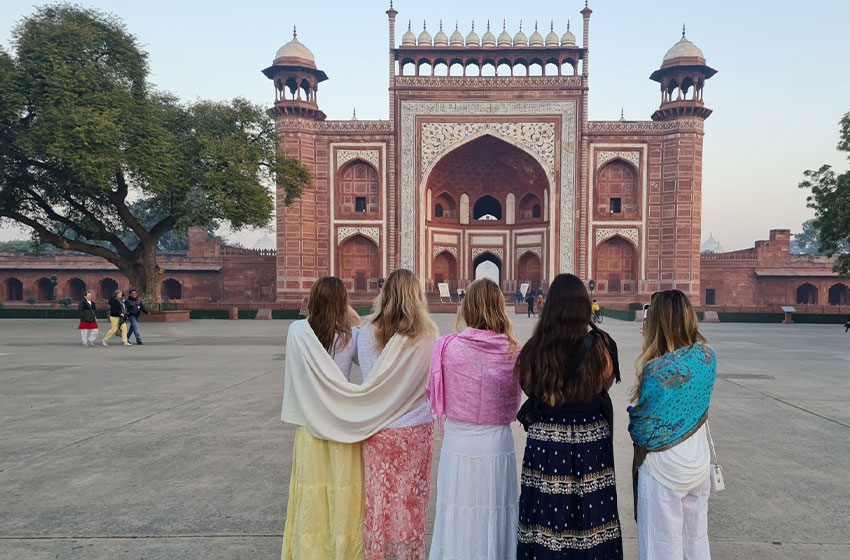
Sunrise is best experienced from inside the Taj Mahal complex. Visitors can walk through the main gateway, see the monument gradually appear ahead of them and approach the marble mausoleum while morning light changes.
Sunset at Mehtab Bagh is a distant viewing experience.
The visitor sees the entire Taj Mahal across the Yamuna rather than standing beside it. The atmosphere is slower, and there is less pressure to inspect architectural details.
Travelers staying overnight in Agra should consider doing both.
Visit the Taj Mahal early in the morning, return to the hotel for breakfast, see Agra Fort later and reach Mehtab Bagh before sunset.
This creates a much more complete Agra sightseeing itinerary than arriving from Delhi, rushing through two monuments and immediately driving away.
Visitors who have only one opportunity to see the Taj Mahal should prioritize entering the Taj Mahal complex rather than seeing it only from Mehtab Bagh.
Mehtab Bagh is an addition, not a replacement.
October through March generally provides comfortable temperatures for spending time outdoors around sunset, although winter haze can sometimes reduce visibility.
November can offer pleasant conditions but may occasionally have atmospheric haze.
December and January bring cooler evenings. Travelers should carry a jacket, particularly if they intend to remain outdoors until the viewing area closes.
February and March can provide comfortable evening temperatures, with March gradually becoming warmer.
April through June become much hotter. Sunset is therefore a more comfortable time for outdoor sightseeing than midday, but visitors should still carry drinking water and protect themselves from heat.
July through September bring monsoon conditions. Clouds can produce dramatic skies, but rainfall makes sunset less predictable.
No season guarantees a perfect Taj Mahal sunset view.
Photography depends on weather, visibility, clouds, atmospheric conditions and the exact position of the sun.
Travelers should therefore treat the view itself as the experience rather than measuring success entirely by whether the sky becomes orange.
A comfortable Agra private sightseeing tour should not place Mehtab Bagh in the middle of the day unless the itinerary requires it.
The garden's strongest appeal is the late-afternoon view.
Travelers arriving from Delhi can visit the Taj Mahal and Agra Fort before moving toward the riverfront later in the day. The exact order depends on arrival time, season and whether the visitor wants sunrise entry at the Taj Mahal.
An overnight Agra itinerary provides greater flexibility.
A traveler can arrive from Delhi in the afternoon, visit Mehtab Bagh for sunset, stay overnight and see the Taj Mahal the following morning. Alternatively, the Taj Mahal can be visited first, with Mehtab Bagh reserved as the final stop.
Remember that the Taj Mahal is generally closed to normal visitors on Fridays, while other Agra attractions operate according to their own schedules.
A private vehicle makes the day easier because the Taj Mahal, Agra Fort and Mehtab Bagh are separate locations.
India Agra Tours can arrange a private Taj Mahal and Mehtab Bagh tour with hotel pickup, an air-conditioned vehicle, chauffeur and local guide. The itinerary can also include Agra Fort and other relevant attractions according to the available time.
For photographers, couples and travelers staying overnight in Agra, Mehtab Bagh is particularly worthwhile. It provides something that standing inside the Taj Mahal cannot: the chance to step away from the monument, see its full riverfront setting and watch the light change across the entire complex.
Yes. Mehtab Bagh is worth visiting for travelers who want a wide Taj Mahal view from across the Yamuna River. It is particularly attractive in the late afternoon and works well for photographers and overnight visitors.
Foreign visitors should budget approximately ₹300 per adult, while the commonly applied Indian visitor ticket is around ₹25. Ticket rates can change, so visitors should verify the current official price before arriving.
Mehtab Bagh generally operates from around sunrise until sunset. Exact entry and closing arrangements can change, so travelers wanting sunset photography should confirm the current timing before their visit.
Arriving approximately 45 to 60 minutes before sunset is sensible. This provides time for entry, walking through the garden, choosing a viewpoint and photographing the changing light before closing.
Yes. Mehtab Bagh provides a direct view of the Taj Mahal from across the Yamuna River. Actual clarity depends on haze, fog, clouds and weather conditions.
The Taj Mahal can be viewed from locations across the Yamuna, including Mehtab Bagh, without purchasing the main Taj Mahal monument ticket. Mehtab Bagh has its own separate admission ticket.
Most travelers visit Mehtab Bagh in the late afternoon because of its reputation as a Taj Mahal sunset viewpoint. Travelers wanting sunrise generally get a stronger overall experience by entering the Taj Mahal complex itself.
Ordinary tourist photography is generally possible, but rules concerning professional equipment, tripods, commercial shoots and specialized photography can change. Visitors carrying such equipment should verify current monument regulations.
Yes. A practical Agra sightseeing tour can include the Taj Mahal, Agra Fort and Mehtab Bagh on the same day. Mehtab Bagh is best kept for late afternoon when sunset is the main reason for visiting.
Yes. India Agra Tours can arrange a private Agra tour with Taj Mahal, Agra Fort and Mehtab Bagh, including an air-conditioned private car, chauffeur and local guide. The schedule can be adjusted so that Mehtab Bagh is reached before sunset rather than treated as a rushed daytime stop.