Taj Mahal Entry Fee for Foreigners (Complete Guide)
13 May 2025
A Jaipur Jodhpur Jaisalmer itinerary is one of the strongest Rajasthan routes for travelers who want forts, historic cities, royal architecture and the Thar Desert without adding unnecessarily long detours. Jaipur introduces the journey with Amber Fort, City Palace and the historic Pink City. Jodhpur brings the massive Mehrangarh Fort and old neighborhoods beneath its hilltop walls, while Jaisalmer changes the character of the journey completely with golden sandstone architecture and the desert landscape of western Rajasthan. The route moves naturally from east to west and works particularly well with a private car and driver.
For most foreign visitors, 7 days for Jaipur, Jodhpur and Jaisalmer provides a compact but practical itinerary. Jaipur and Jodhpur should receive at least two nights each, while Jaisalmer needs two nights because of the distance required to reach it and the time needed for both city sightseeing and a desert outing. Travelers who have eight or nine days can make the journey more relaxed by adding an extra night in Jaipur or Jaisalmer rather than adding another distant city.
Road distances are significant but manageable. Jaipur to Jodhpur is approximately 330 to 350 kilometers and generally requires around six hours depending on traffic, road conditions and breaks. Jodhpur to Jaisalmer is approximately 280 to 300 kilometers and normally requires around five hours. These two sectors are far more manageable than attempting to include Udaipur immediately after Jaisalmer within the same short itinerary.
A private Rajasthan tour with car and driver is especially practical on this route because travelers can leave directly from each hotel, keep their luggage in the vehicle and stop when needed for meals or rest. India Agra Tours can arrange Jaipur, Jodhpur and Jaisalmer as a private route beginning in Jaipur or as an extension of a longer Delhi, Agra and Rajasthan journey.
Seven days is a sensible minimum for travelers who want to see all three destinations without reducing them to quick overnight stops. The route works best with approximately two nights in Jaipur, two nights in Jodhpur and two nights in Jaisalmer, while arrival and departure arrangements determine how the remaining time is used. A traveler arriving in Jaipur early on the first morning gains much more usable sightseeing time than someone whose flight reaches the city late in the evening, so the itinerary should always be built around actual arrival and departure timings rather than simply counting dates on a calendar.
With six days, the route becomes noticeably tighter because one of the destinations will receive less than two nights or an important sightseeing day will need to share time with a long road transfer. This can be done, but it is not ideal for first-time international visitors who may also be adjusting to different food, weather, traffic and time zones. Seven days gives enough time for one complete sightseeing day in each major city and keeps the road journeys separate from the main monument days.
Eight or nine days creates a considerably more comfortable Rajasthan desert itinerary. The additional night can be used in Jaisalmer so that visitors can separate fort sightseeing from the desert excursion, or it can be used in Jaipur for a slower introduction to Rajasthan. Travelers staying at premium heritage hotels may also appreciate having enough time to enjoy the property rather than leaving every morning immediately after breakfast and returning only to sleep.
Anyone with fewer than six days should seriously consider choosing Jaipur and Jodhpur or Jodhpur and Jaisalmer rather than forcing all three into the available time. The quality of a Rajasthan holiday depends much more on having enough time in each destination than on maximizing the number of cities listed in the itinerary.
The first day should remain flexible because travelers reach Jaipur in several different ways. Some arrive on a domestic flight, others travel by road from Delhi, while many foreign visitors reach Jaipur from Agra after completing a Golden Triangle itinerary. Someone traveling from Agra may already have spent several hours in a private car and possibly visited Fatehpur Sikri or Abhaneri on the route, so beginning an intensive Jaipur sightseeing schedule immediately after hotel check-in is usually unnecessary.
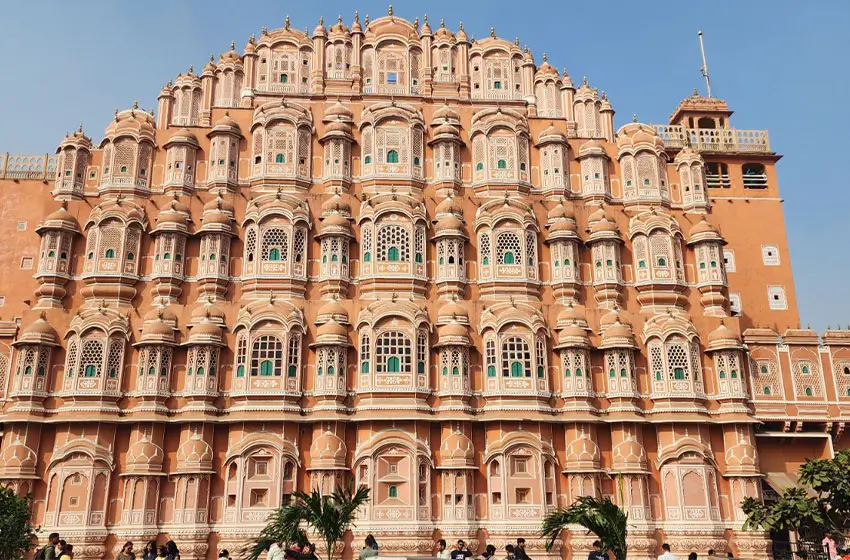
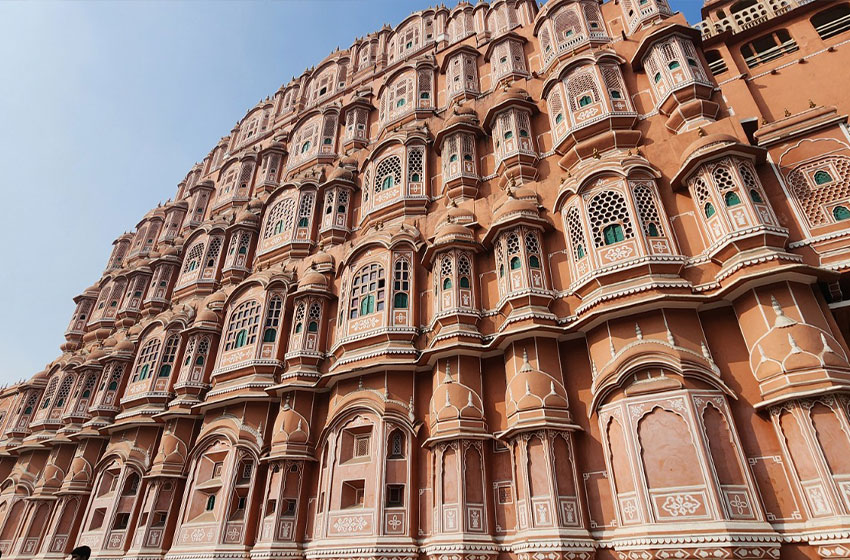
When arrival is early, the afternoon can be used for selected attractions around the historic city. Hawa Mahal is one of the easiest places to include because its famous facade lies in the old-city area. Travelers can also visit City Palace or Jantar Mantar if sufficient time remains before closing, but both deserve proper visits rather than hurried entry shortly before the gates close. If arrival is later, a relaxed walk, dinner and early night can be more useful because the following day is reserved for Jaipur's main sightseeing.
Foreign visitors arriving after a long-haul flight should take jet lag seriously. A private Rajasthan itinerary does not need to fill every available hour. Starting the trip with a manageable afternoon often leads to a much better second day because travelers can begin Amber Fort early and remain comfortable through a full day of sightseeing.
The first evening is also a good time to organize clothing, camera equipment and any items required for the following day. Jaipur's forts and palace complexes involve considerable walking, so comfortable footwear is much more useful than formal travel clothing. During winter, a light jacket may be needed in the morning, while warmer months require breathable clothing and sun protection.
The second day should contain the principal Jaipur sightseeing tour, beginning with Amber Fort in the morning. The fort is located outside the central old city and is one of Rajasthan's major palace complexes. Visitors should allow approximately two to three hours to appreciate its courtyards, gateways, halls, palace areas and viewpoints properly. Arriving earlier in the day is useful both for temperature and crowd management, particularly during the popular October-to-March travel period.
After Amber Fort, travelers can stop near Jal Mahal for photographs while returning toward central Jaipur. Jal Mahal sits within Man Sagar Lake and is generally appreciated from the roadside viewing area rather than as a conventional palace visit. The stop does not require a large portion of the day and works naturally between Amber and the historic center.
City Palace deserves substantial time in the afternoon because the complex contains museums, courtyards and royal architecture. Nearby Jantar Mantar adds a completely different dimension to the day through its large astronomical instruments. Travelers unfamiliar with the historical purpose of these structures may find a professional local guide particularly valuable because visual observation alone does not explain how the instruments were used.
Hawa Mahal and the surrounding old-city area can complete the sightseeing. The famous facade is best appreciated from outside as well as from within the historic district. Travelers interested in shopping can look at textiles, jewelry and handicrafts, but store visits should remain optional rather than consuming hours of sightseeing time.
After a full day, the evening should be kept comfortable because the following morning involves the Jaipur to Jodhpur road journey.
The Jaipur to Jodhpur distance by road is approximately 330 to 350 kilometers, and a realistic driving time is around six hours under normal conditions. Traffic when leaving Jaipur, highway conditions, lunch, rest stops and the approach into Jodhpur can increase the total time. Travelers should therefore treat this as a substantial transfer day rather than scheduling a fixed major attraction immediately after the expected arrival.
A morning departure after breakfast usually works best. The private chauffeur collects travelers directly from their Jaipur hotel, luggage is loaded once, and the journey continues toward Jodhpur without station transfers or fixed public-transport schedules. For foreign travelers with several suitcases, this is one of the strongest advantages of a Jaipur to Jodhpur private car transfer.
The journey can include comfortable breaks according to the group's needs. Families with children or elderly parents may prefer more frequent stops, while couples may choose one longer lunch break. An experienced driver can use established locations where suitable food and washroom facilities are available instead of relying on random roadside stops.
After reaching Jodhpur, guests should check into the hotel and allow some time to rest. If arrival is early and everyone still has energy, the evening can be spent around Clock Tower and Sardar Market. This area introduces visitors to the old city's atmosphere without requiring several hours of formal sightseeing.
Mehrangarh Fort should be saved for the following morning. It is far too significant to be squeezed into the final hour of a road-transfer day, and the views and palace interiors deserve enough time.
The fourth day begins with Mehrangarh Fort, the defining landmark of Jodhpur and one of the most impressive forts in Rajasthan. Built on a rocky hill above the city, the fort appears enormous even from a distance, and the elevated position provides wide views across Jodhpur. Visitors should keep approximately two and a half to three hours, particularly if they are interested in architecture, royal history, museum collections and photography.
Inside the fort, visitors move through gates, courtyards, palace rooms and galleries that reflect different periods of Jodhpur's royal history. A knowledgeable guide can explain the relationship between the fort, the Rathore rulers and the development of the city below. This makes the visit much more meaningful than simply walking through rooms and taking photographs.
After Mehrangarh, Jaswant Thada can be included. The white marble memorial creates a visual contrast with the massive fort and can be visited without consuming the entire afternoon. The setting also provides additional views of the fort and surrounding landscape.
The later part of the day can be used around Jodhpur's historic neighborhoods. The term "Blue City" refers to the blue-painted houses seen in sections of the old city, but visitors should remember that these are real residential neighborhoods. A guided walk can provide context while helping travelers move respectfully through suitable lanes.
Clock Tower and Sardar Market can be included toward evening. The market offers spices, textiles, household goods and local street activity, but shopping should not dominate the day unless the traveler specifically wants it. The main purpose of the day remains Mehrangarh and the historic city.
The fifth day moves farther west toward the Thar Desert. The Jodhpur to Jaisalmer distance by road is approximately 280 to 300 kilometers, and the journey usually requires around five hours under normal conditions. Compared with the Jaipur-Jodhpur sector, the distance is slightly shorter, and the landscape becomes progressively drier as travelers move toward western Rajasthan.
A morning departure allows visitors to reach Jaisalmer during the afternoon. The road journey should include at least one comfortable break, and travelers should keep drinking water accessible inside the vehicle. Restaurant and washroom choices can be more limited on some parts of the route than around Jaipur, so an experienced chauffeur can be useful in selecting appropriate stopping points.
After arriving in Jaisalmer, the hotel should be used as a genuine rest stop rather than merely a place to leave luggage before immediately beginning another long tour. Travelers have already completed several days of forts, city walks and road journeys. An hour of rest can make the evening significantly more enjoyable.
If daylight and energy levels allow, visitors can see a sunset viewpoint or take a short orientation walk. Major Jaisalmer Fort sightseeing should usually remain for the following morning when travelers have enough time.
The transition from Jodhpur to Jaisalmer is one of the most interesting parts of this Rajasthan desert road trip because the architecture and landscape begin to change. Jaisalmer's golden sandstone creates a warmer visual character than Jaipur's pink facades or Jodhpur's blue neighborhoods.
The sixth day contains the most distinctive combination of the itinerary: historic Jaisalmer during the morning and the Thar Desert later in the day. Jaisalmer Fort should be visited without rushing because it differs from many Rajasthan forts. It remains a living historic area containing residences, temples, shops, lanes and guesthouses within its walls. Visitors should allow enough time to walk through the fort and appreciate both its architecture and its continuing role within the city.
The Jain temples inside the fort are particularly important for travelers interested in religious architecture. Current entry timings, clothing requirements and photography rules should be respected. A professional guide can explain the history without reducing the fort to a series of commercial lanes.
Outside the fort, Patwon Ki Haveli is one of Jaisalmer's best-known architectural attractions. Its intricately carved sandstone facade demonstrates the craftsmanship associated with wealthy merchant residences in the city. Depending on available time, additional havelis can be included, but visitors do not need to enter every similar building simply because it appears on a standard sightseeing list.
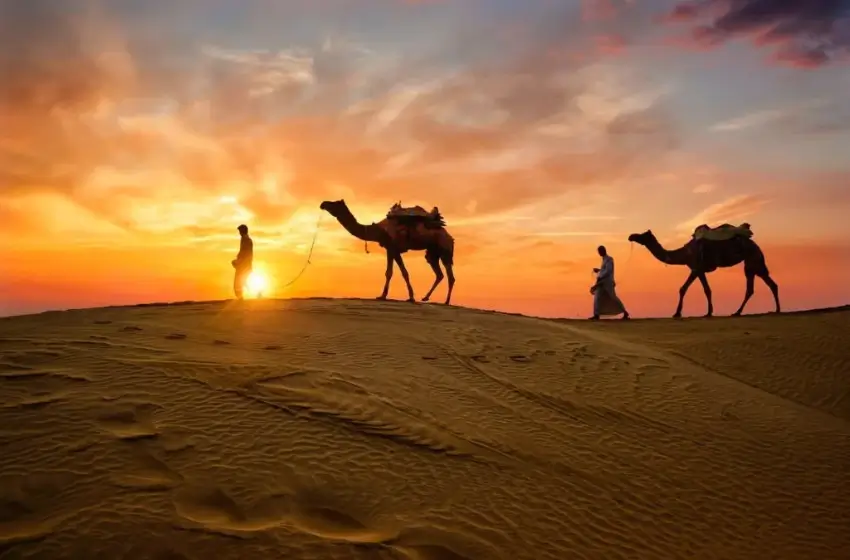
After lunch and a short rest, the journey can continue toward the desert. Popular dune areas are located outside Jaisalmer, so visitors should allow road time rather than assuming the desert begins immediately outside the fort. The late afternoon is generally chosen because temperatures are more comfortable and sunset creates the most attractive light across the dunes.
Travelers staying overnight in a desert camp can remain for dinner and cultural entertainment, while those preferring a city hotel can return to Jaisalmer after the evening activities.
A proper Jaisalmer Fort tour generally requires at least two to three hours, and visitors with a strong interest in architecture can spend longer. The fort should not be treated like a single palace where guests enter one gate, follow a short museum route and leave. It contains narrow lanes, active religious sites, homes, businesses and multiple viewpoints, so the visit naturally involves walking and stopping at different locations.
Morning is a good time to visit because temperatures are generally more comfortable, particularly outside the winter season. The golden sandstone also changes appearance according to the strength and angle of sunlight, making photography an important part of the visit for many travelers.
Because people continue to live and work within the fort, visitors should behave differently from how they might at an empty archaeological site. Private doorways should not be treated as photography sets, and narrow passages should not be blocked for extended photo sessions.
The fort also faces conservation pressures associated with tourism and modern infrastructure. Travelers can contribute by following designated visitor routes, disposing of waste properly and using services responsibly.
Keeping a full morning for the fort and nearby havelis creates a much richer Jaisalmer sightseeing itinerary than attempting to see the city and desert within a few rushed hours after arriving from Jodhpur.
Sam Sand Dunes is the best-known desert excursion area near Jaisalmer and receives a large number of visitors during the main tourism season. The advantage is convenience: there is a wide selection of camps, activities and evening programs. Travelers who enjoy an active atmosphere with other tourists may find Sam suitable, particularly when they want a simple first introduction to the desert.
The disadvantage is that popularity can create crowds. Vehicles, camel rides, music and multiple camps can make parts of the area feel more commercial than travelers expect from photographs of an empty desert. Anyone imagining complete silence and untouched dunes should understand this before booking.
Quieter desert areas and smaller camps can provide a more private atmosphere, although standards vary significantly. Travelers should not select a camp purely because it advertises itself as "offbeat" or "luxury." The actual location, road access, bathroom quality, food standards, tent spacing and guest reviews are more important.
Foreign visitors should also ask exactly where the sunset activity takes place. A camp may be located away from the busiest dunes while still taking guests to a crowded sunset point. Conversely, a simpler property may provide access to a quieter landscape.
A private Jaisalmer desert tour should therefore be selected according to the atmosphere the traveler wants rather than automatically sending everyone to the same dune area.
An overnight desert stay can be worthwhile when the camp is selected carefully and the season is suitable. Staying outside Jaisalmer allows travelers to remain after sunset, have dinner in the desert environment and avoid immediately returning to the city. For many first-time visitors, this becomes one of the most memorable nights of a Rajasthan desert tour.
However, desert accommodation varies enormously. Some camps offer permanent-style tented rooms with private bathrooms and comfortable bedding, while others provide simpler facilities. The word "luxury" has no consistent standard, so travelers should examine actual room photographs and inclusions rather than relying on the category name.
Winter nights can become cold, especially from December through February. A tent that feels pleasant during a sunny afternoon can become considerably cooler after dark. Warm bedding and appropriate clothing are therefore important. During the hotter months, the opposite problem occurs, and a city hotel with strong air-conditioning may be considerably more comfortable.
Travelers who value sleep, quiet and high hotel standards may prefer visiting the dunes for sunset and returning to Jaisalmer. This is completely reasonable; staying in a camp is not compulsory for having a genuine desert visit.
A balanced two-night arrangement can involve one night in a Jaisalmer hotel and one desert night. Travelers with three nights can enjoy both settings without compressing city sightseeing.
Desert excursions around Jaisalmer frequently offer camel rides and jeep-based activities, but travelers should understand what each involves before booking. A camel ride provides a slower movement across the dunes and is often sold around sunset. Visitors who choose this activity should observe the condition and handling of the animals and make their own decision about participating. No traveler should feel pressured to ride simply because it is included in a package.
Jeep activities provide a faster and more energetic desert outing. The exact route and intensity vary between operators, so travelers should ask what is included rather than assuming every "jeep safari" is identical. Older travelers, people with back problems and families with very young children should consider whether rough driving over dunes is appropriate for them.
Photography at sunset does not require either activity. Travelers can simply reach a suitable dune area, walk a manageable distance and spend time watching the light change. For photographers and couples, this can sometimes be more enjoyable than following a tightly scheduled sequence of activities.
Evening cultural programs are commonly offered at desert camps after sunset. These usually include music or dance followed by dinner, although quality and authenticity vary by property.
A good Jaisalmer desert experience should allow travelers to select the activities they genuinely want rather than treating camel rides, jeep rides and cultural programs as compulsory items.
The seventh day should be arranged according to the traveler's next destination. Jaisalmer is geographically far west, so onward transportation deserves careful attention. Some travelers continue by road toward another Rajasthan city, while others use available rail or air connections according to the current schedule. Anyone returning directly toward Jaipur, Delhi or Udaipur should recognize that this involves substantial distance.
If departure takes place later in the day, the morning can be used for additional Jaisalmer sightseeing, shopping or a relaxed breakfast. Travelers staying at a desert camp need to account for the drive back toward the city before connecting with a train, flight or onward private vehicle.
A short seven-day itinerary should avoid scheduling an extremely tight connection after a long road transfer. If an international flight from Delhi follows immediately after Rajasthan, keeping a buffer night before the international departure is much safer than depending on multiple same-day connections.
Travelers continuing toward Udaipur should be prepared for a very long road sector. If Udaipur is important, increasing the overall Rajasthan trip beyond seven days is strongly preferable.
For visitors whose trip ends in Jaisalmer, this final day completes a geographically logical Jaipur to Jaisalmer road trip via Jodhpur without unnecessary backtracking during the main sightseeing portion.
The two major road sectors are manageable when they are kept on separate days. Jaipur to Jodhpur requires approximately six hours of driving for around 330 to 350 kilometers, while Jodhpur to Jaisalmer generally requires around five hours for approximately 280 to 300 kilometers. These times should always be treated as realistic estimates rather than guarantees because city traffic, road maintenance, weather and meal breaks can alter the actual duration.
Travelers from countries with high-speed motorway networks sometimes underestimate Indian road times by looking only at kilometers. A 300-kilometer journey should not automatically be calculated as three hours. Rajasthan roads can include varying traffic conditions, town sections, slower vehicles and city approaches.
The route remains comfortable because neither major transfer needs to be followed immediately by another long transfer the next morning. Two nights in Jodhpur create a full sightseeing day between road journeys, while two nights in Jaisalmer provide enough time after arrival to see the city and desert.
This structure is one of the reasons Jaipur Jodhpur Jaisalmer by private car works better within seven days than an itinerary attempting Jaipur, Jodhpur, Jaisalmer and Udaipur.
October through March is generally the most comfortable period for this route because daytime temperatures are better suited to fort visits and walking through historic cities. October can still feel warm during the day, while November usually becomes more comfortable. December and January bring cooler mornings and evenings, with desert nights around Jaisalmer sometimes feeling surprisingly cold.
February is often very pleasant for sightseeing, and early March can also work well before stronger heat develops. By April, daytime temperatures rise considerably, and May and June can become extremely hot. Visitors traveling during these months should begin sightseeing early, use an air-conditioned private vehicle and reduce outdoor activity during the strongest afternoon heat.
Monsoon conditions between July and September are different in western Rajasthan from many other parts of India. Jaipur can receive periods of rain, while Jodhpur and particularly Jaisalmer remain comparatively dry, although showers are still possible. The lower tourist numbers during this period may appeal to some visitors, but heat and humidity should be considered.
For travelers particularly interested in a desert camp, the cooler season is usually more comfortable. Winter evenings can be cold, but spending the night in a tent is generally more appealing than during intense summer heat.
The best time for a Rajasthan desert tour therefore depends on weather preference, but October through March remains the easiest period for most first-time international visitors.
Packing should account for both city sightseeing and desert conditions. Comfortable walking shoes are essential because Amber Fort, Mehrangarh Fort and Jaisalmer Fort all involve significant time on foot. Lightweight clothing works well during warmer months, while winter visitors should carry layers because temperatures can change substantially between afternoon and late evening.
For Jaisalmer, sunglasses and sun protection are important even during winter because desert sunlight can be strong. A light scarf can be useful during windy conditions, while a warm layer is valuable after sunset from approximately November through February. Travelers staying overnight in a camp should confirm what bedding is provided rather than assuming nighttime temperatures will remain warm.
Medication, passports, money and important electronics should remain in a small day bag rather than being buried beneath luggage in the vehicle. Long road journeys also make a portable phone charger useful.
Foreign travelers should avoid overpacking for a one-week route. Large suitcases reduce luggage space and make hotel changes more cumbersome. Laundry services are available at many hotels, so carrying an excessive number of outfits is unnecessary.
A well-packed Rajasthan road trip is more comfortable when travelers can easily access what they need during long driving and sightseeing days.
The price of a private car and driver from Jaipur to Jodhpur and Jaisalmer depends on the vehicle category, total kilometers, number of days, pickup and final drop-off point, tolls, parking and the driver's return requirements. A sedan for two travelers can commonly be budgeted around ₹5,000 to ₹7,000 per day on a higher-side basis for a professionally arranged multi-city route. A larger SUV or MPV may commonly fall around ₹7,000 to ₹10,000 or more per day, while luxury vehicles and vans cost substantially more.
The final quotation should clearly state whether fuel, tolls, parking, driver allowances and applicable road charges are included. Travelers should be cautious about comparing a full-service multi-day quotation with a low advertised local taxi rate that excludes several of these expenses.
Local guides, monument tickets, hotels, meals and desert activities are normally separate unless a complete package specifically includes them. Desert-camp costs also vary significantly according to quality, location and season.
For a week-long road journey, vehicle comfort matters. Two travelers with large luggage may prefer a larger car even if a sedan technically has enough seats. Families of three or four with international suitcases should pay particular attention to luggage capacity.
India Agra Tours can arrange a 7-day Jaipur Jodhpur Jaisalmer private tour with car and driver, with vehicle selection based on passenger count, luggage and preferred comfort category.
Trains connect major Rajasthan cities and can be useful for travelers who enjoy rail journeys, but a private car provides several practical advantages on a seven-day itinerary. Hotel-to-hotel transportation eliminates repeated taxi arrangements, luggage can remain with the group during transfers and departure times can be adjusted according to breakfast, sightseeing and personal preference.
A train journey also involves more than the scheduled rail time. Travelers need transportation from the hotel to the station, sufficient time before departure, luggage handling and another transfer from the arrival station to the next hotel. When all of these stages are included, the time difference may be smaller than it initially appears on some routes.
A private car is particularly useful for families, couples carrying large luggage and travelers who want stops along the way. It also provides a consistent chauffeur throughout the road portion of the journey.
Trains can still be valuable when a particular schedule fits the itinerary well. There is no need to treat one transport type as universally superior. The decision should depend on the route, available tickets and the traveler's preferred style.
For a compact Jaipur Jodhpur Jaisalmer tour, however, a private vehicle generally provides the simplest door-to-door arrangement.
This itinerary can be adapted for elderly travelers, but the sightseeing pace should be reduced. Amber Fort, Mehrangarh Fort and Jaisalmer Fort all involve walking on historic surfaces, and some areas include slopes or steps. Families should allow additional time and avoid placing several major monuments into the same half-day.
A spacious vehicle becomes especially important. Elderly travelers may need more legroom and easier entry and exit, so a larger SUV or MPV can be worth the additional cost. Road journeys should include regular washroom and refreshment breaks rather than trying to reach the next city as quickly as possible.
The desert outing should also be adjusted. Rough jeep activities may not be appropriate for travelers with back or mobility problems, while camel riding may also be uncomfortable. Watching sunset from an accessible dune area and enjoying dinner at a suitable camp can still provide a memorable desert evening without physically demanding activities.
During winter, cold desert evenings should not be underestimated. Senior travelers should carry warm clothing, particularly if remaining outdoors after sunset. During summer, the greater concern is heat, making early sightseeing and afternoon rest essential.
A private Rajasthan family tour allows these changes to be made according to the family's actual comfort instead of following a fixed group schedule.
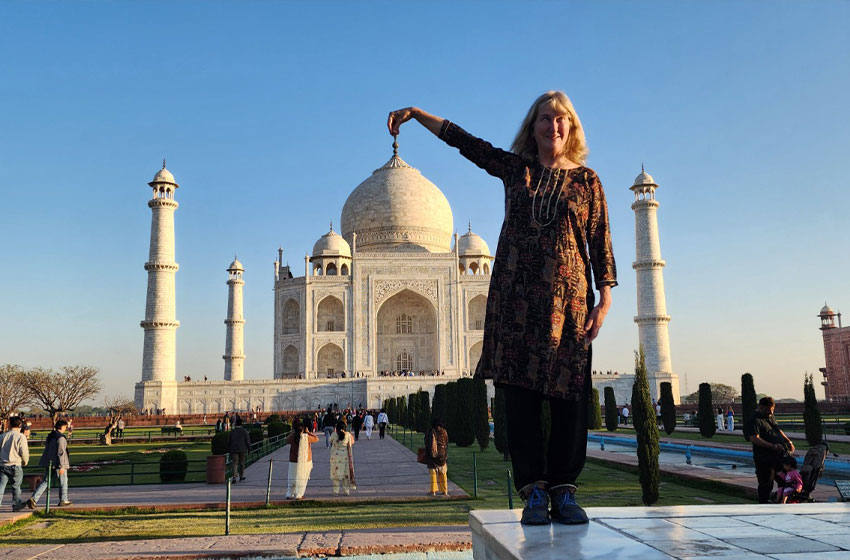
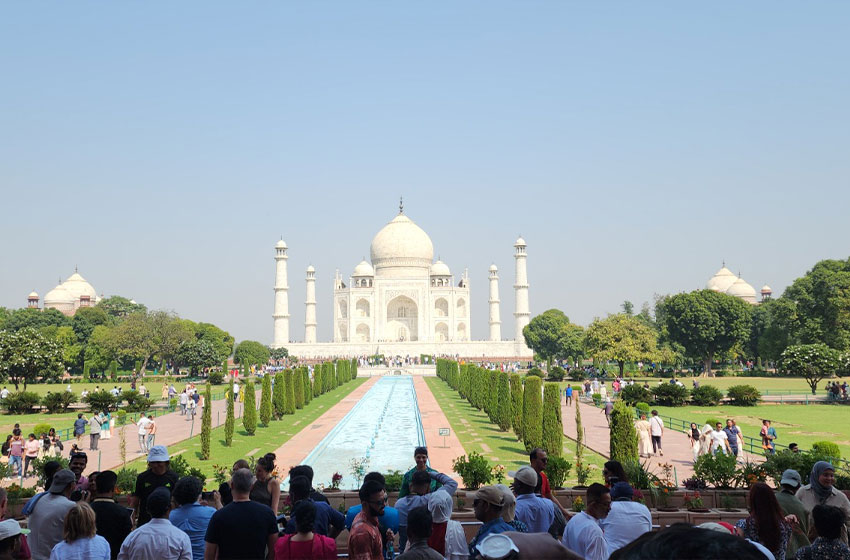
Foreign travelers visiting India for the first time can combine this desert route with Delhi and Agra to create a wider North India itinerary. Delhi can be the international arrival point, followed by Agra for the Taj Mahal and Agra Fort. The journey can then continue from Agra to Jaipur, after which the seven-day Rajasthan desert route begins.
A Delhi Agra Jaipur Jodhpur Jaisalmer tour should ideally receive around 10 to 12 days. Two nights in Delhi, one night in Agra, two nights in Jaipur, two nights in Jodhpur and at least two nights in Jaisalmer create a strong structure, with the remaining time used for road transfers and arrival or departure arrangements.
Travelers can visit Fatehpur Sikri while traveling from Agra to Jaipur, avoiding the need for a separate excursion. Abhaneri can also be included when time permits. This makes the road-transfer day useful without requiring visitors to return to Agra.
After Jaisalmer, onward transportation should be arranged according to the international departure. Travelers returning to Delhi should consider the most suitable current train or flight connection rather than automatically making the entire distance by road.
India Agra Tours can arrange the complete private North India and Rajasthan tour from Delhi through Agra, Jaipur, Jodhpur and Jaisalmer, with the route adjusted according to the traveler's total number of nights.
Yes. Seven days can provide a comfortable Jaipur Jodhpur Jaisalmer itinerary when each city receives approximately two nights and the major road transfers are kept separate from the main sightseeing days. Travelers wanting a slower pace can increase the route to eight or nine days.
The Jaipur to Jodhpur distance is approximately 330 to 350 kilometers, depending on the exact route and hotel locations. A private car journey normally takes around six hours, with extra time required for traffic, meals and rest stops.
Jodhpur to Jaisalmer is approximately 280 to 300 kilometers by road. Travelers should normally allow around five hours, although the exact journey time depends on traffic, stops and road conditions.
At least two nights in Jaisalmer are recommended. This provides enough time to visit Jaisalmer Fort and important havelis while also including an afternoon and evening desert excursion. Three nights are even better for travelers wanting a slower stay.
It can be worthwhile when the camp has good accommodation standards and the weather is suitable. Travelers who prioritize hotel comfort can instead stay in Jaisalmer city, visit the dunes for sunset and return after the evening activities.
The choice depends on the type of journey desired. Jaisalmer is more suitable for travelers prioritizing the Thar Desert, golden sandstone architecture and a desert stay, while Udaipur offers lakes and palace scenery. Trying to include both within the same seven-day Jaipur-Jodhpur route creates excessive driving.
October through March generally provides the most comfortable weather for sightseeing and desert activities. December and January evenings can become cold, so warm clothing is important for visitors staying outside after sunset.
A sedan can commonly be budgeted around ₹5,000 to ₹7,000 per day, while an SUV or larger MPV may cost approximately ₹7,000 to ₹10,000 or more per day, depending on the exact route, total kilometers, vehicle category and inclusions.
Yes. A Delhi Agra Jaipur Jodhpur Jaisalmer private tour works very well for first-time visitors. Around 10 to 12 days is preferable so that Delhi and Agra can be included without reducing the Rajasthan destinations to rushed overnight stops.
Yes. India Agra Tours can arrange a private Jaipur Jodhpur Jaisalmer tour with car and driver, including hotel-to-hotel road transfers and local sightseeing arrangements. The route can also begin in Delhi or Agra and can be customized for couples, families, elderly travelers, heritage hotels, luxury stays and Jaisalmer desert camps.