Taj Mahal Entry Fee for Foreigners (Complete Guide)
13 May 2025

Toilets are not usually the first subject travelers think about when arranging an India holiday, but knowing what to expect can make long sightseeing days and road journeys much more comfortable. Foreign visitors may encounter modern Western-style toilets, traditional squat toilets, handheld water sprays, toilet paper, attendants, paid public restrooms and facilities that vary greatly depending on location. A five-star hotel in Delhi and a small roadside stop between Rajasthan cities can provide completely different restroom conditions.
For tourists following established routes such as Delhi, Agra, Jaipur, Udaipur, Jodhpur or Jaisalmer, good-quality Western-style toilets are widely available at hotels, better restaurants, airports and many major tourist facilities. Visitors should not assume that traveling in India means using squat toilets throughout the holiday. At the same time, it is sensible to carry a few basic personal items because toilet paper, soap or perfectly maintained facilities cannot be guaranteed at every public restroom.
One of the biggest differences for many visitors from North America, Europe and Australia is the common use of water for personal cleaning. Many Indian bathrooms have a handheld bidet spray beside the toilet, often called a health faucet. Some facilities may also have a water tap, bucket and small mug. Learning what these fixtures are before arrival prevents unnecessary confusion.
Travelers taking a private India tour with car and driver have an additional advantage because suitable restroom stops can be incorporated into long road journeys. A professional driver familiar with routes such as Delhi to Agra, Agra to Jaipur or Jaipur to Jodhpur will generally know established restaurants, fuel stations and other locations where visitors can take a comfortable break.
This guide explains the main toilet types found in India, how the handheld spray works, what to carry, what to expect on highways and how to handle restroom stops during a longer North India or Rajasthan trip.
Travelers can encounter both Western toilets and Indian squat toilets. In major hotels, airports, modern shopping centers, quality restaurants and many tourist-oriented properties, Western-style seated toilets are normal. Foreign tourists staying in mid-range, upscale or luxury hotels are therefore unlikely to spend their entire trip searching for a familiar toilet.
Squat toilets remain common in some public facilities, smaller establishments, railway-related facilities, rural locations and older buildings. A squat toilet is installed at floor level rather than at chair height. The user places their feet on the raised foot areas on either side and squats over the opening. For someone who has never used one, the position can feel unfamiliar, especially when carrying a backpack or wearing restrictive clothing.
Some larger public restrooms provide both types. Doors may be marked to indicate Western or Indian toilet facilities, allowing the visitor to choose. When both are available, foreign tourists who are unfamiliar with squatting can simply use the Western-style cubicle.
The condition of a restroom is more important than its toilet type. A clean squat toilet can be more hygienic than a poorly maintained Western toilet. Travelers should therefore judge the actual facility rather than assuming one design is automatically cleaner.
On a private Rajasthan road trip, tourists can usually use better facilities at hotels, established restaurants and selected highway stops, making squat toilets less necessary for travelers who strongly prefer Western-style toilets.
Make Every Journey More Comfortable
Travel between India's iconic destinations with a private driver and flexible itinerary. Enjoy convenient stops, comfortable transportation and a smoother sightseeing experience throughout your holiday.
A squat toilet may initially look complicated to someone who has always used seated toilets, but the basic design is straightforward. The toilet has two raised areas for the feet, with the opening positioned between them. Travelers should place their feet securely on the designated areas, face in the direction appropriate to the fixture and lower themselves carefully into a squat.
Clothing requires attention. Loose trousers, long skirts or scarves should be kept clear of the floor. A traveler carrying a shoulder bag or camera may find it easier to keep belongings securely on the body rather than placing them on a restroom floor. Hooks are not available in every cubicle, which is another reason a small crossbody bag can be more practical than carrying several loose items.
People with knee, hip or mobility problems should not force themselves to use a squat toilet if a Western toilet is available. Hotels and larger restaurants can usually direct visitors to a seated toilet. During a private road journey, the driver can also select a more appropriate restroom stop when informed in advance that someone has mobility limitations.
After use, the flushing arrangement varies. Some squat toilets have a conventional flush mechanism, while others may rely on water from a tap and bucket. Visitors should observe the facility and use the system provided.
Foreign tourists do not need to practice using a squat toilet before every India holiday. Knowing what one looks like and how it functions is generally enough, because travelers on standard tourist routes can often choose Western facilities.
The small hose with a spray nozzle beside many Indian toilets is a handheld bidet spray, frequently called a health faucet. It is used with water for personal cleaning after using the toilet. Travelers from countries where bidets or handheld sprays are uncommon sometimes mistake it for a cleaning hose intended only for bathroom staff.
The nozzle generally has a trigger or lever that releases water when pressed. Water pressure can vary substantially, so first-time users should press the control gently rather than immediately using maximum pressure. The spray is directed as required for personal cleaning, after which toilet paper can be used for drying when available.
Many foreign visitors become comfortable with the system after using it a few times and may find it more hygienic than relying exclusively on dry toilet paper. There is no requirement to use the spray, however. Travelers who prefer toilet paper can continue using it where appropriate, while following the facility's rules concerning disposal.
A bathroom may also have a tap, bucket and small plastic mug. Water-based cleaning is common in India, and these items serve a similar general purpose where a handheld spray is not installed.
Hotel bathrooms used by international tourists often provide both a health faucet and toilet paper, giving visitors a choice. This combination is common enough that a traveler may see it repeatedly during a Delhi Agra Jaipur tour.
Toilet paper in India is widely available in hotels, airports, modern restaurants, shopping centers and tourist-oriented establishments. Foreign visitors staying in established hotels should generally find toilet paper in their room bathroom, and replacement rolls can be requested from housekeeping when needed.
Public toilets are less predictable. Some have toilet paper inside each cubicle, some provide it near an attendant, and others may have none available at the time of the visit. Even a restroom that normally stocks paper can temporarily run out during a busy period. For this reason, carrying a small packet of tissues or a compact toilet-paper roll in the day bag is one of the simplest preparations a foreign tourist can make.
Toilet paper can be purchased easily in supermarkets, pharmacies, convenience stores and many general shops in tourist cities. Travelers do not need to fill half a suitcase with toilet rolls before flying to India. Carrying enough for emergencies and purchasing more locally when required is far more practical.
The question of flushing paper requires more care because plumbing systems differ. In many modern hotels, reasonable amounts of normal toilet paper can be flushed, but some properties or public facilities request that paper be placed in a waste bin. Visitors should follow any signs or hotel instructions rather than assuming the same rule applies everywhere.
Large quantities of paper, wet wipes, sanitary products and other non-dissolving materials should never be forced into a toilet.
Experience India with Comfort and Convenience
Explore vibrant cities, historic monuments and cultural attractions without rushing. Enjoy private travel arrangements, flexible sightseeing and a holiday designed around your preferences.
There is no single answer that applies to every building in India. Modern hotels and newer buildings may have plumbing capable of handling normal quantities of toilet paper, while older properties, smaller establishments or facilities with different waste systems may ask guests to use a bin. Travelers should therefore look for signs beside the toilet and follow instructions from the accommodation.
When a waste bin is clearly provided specifically for used paper, visitors should use it as instructed. The bin normally has a lid and is emptied by housekeeping or cleaning staff. This may initially feel unfamiliar to tourists from countries where all toilet paper is automatically flushed, but it protects plumbing systems that may be more sensitive to blockages.
Even where ordinary toilet paper can be flushed, wet wipes should generally not be flushed. Many wipes do not break down like toilet paper and can create plumbing problems. The same applies to sanitary pads, tampons, diapers, cotton products and other personal-care items. These should go into the appropriate waste bin.
Hotel staff can clarify the procedure when a guest is uncertain. Asking is preferable to causing a blocked toilet in the room.
Foreign tourists traveling between several cities should remain attentive because the procedure at a luxury Delhi hotel may differ from a small heritage property in Rajasthan. Treating each bathroom according to the instructions provided is the simplest approach.
Hotels serving international travelers generally have bathrooms that feel familiar to visitors from Western countries. A typical mid-range or upscale room will have a Western-style seated toilet, flushing system, sink, shower, toilet paper and a handheld health faucet. Luxury hotels may provide additional bathroom amenities, while simpler guesthouses can have more basic facilities.
The biggest difference is often the presence of the water spray beside the toilet rather than the toilet itself. Many hotel bathrooms also have a floor drain because bathrooms may be cleaned with water more extensively than in some Western countries. In smaller properties, the shower and toilet area may not be separated by a full glass enclosure, meaning the floor around the toilet can become wet after someone showers.
Travelers booking budget accommodation should read recent guest reviews when bathroom standards are important to them. Photographs can also help identify whether a property has the type of bathroom they expect. Terms such as "private bathroom" should be checked carefully at very low-cost guesthouses because facilities and layouts can vary.
Guests with mobility limitations should specifically request an accessible room rather than assuming every Western-style toilet will meet accessibility standards. Toilet height, grab rails, shower entry and bathroom door width can all matter.
On a luxury India tour, bathroom facilities at reputable hotels are generally not something foreign visitors need to worry about, although road and sightseeing restrooms can still vary.
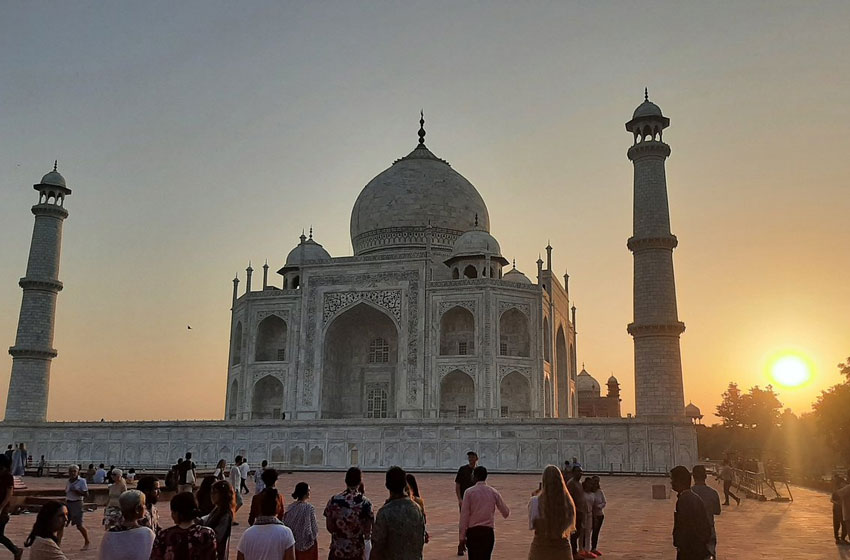
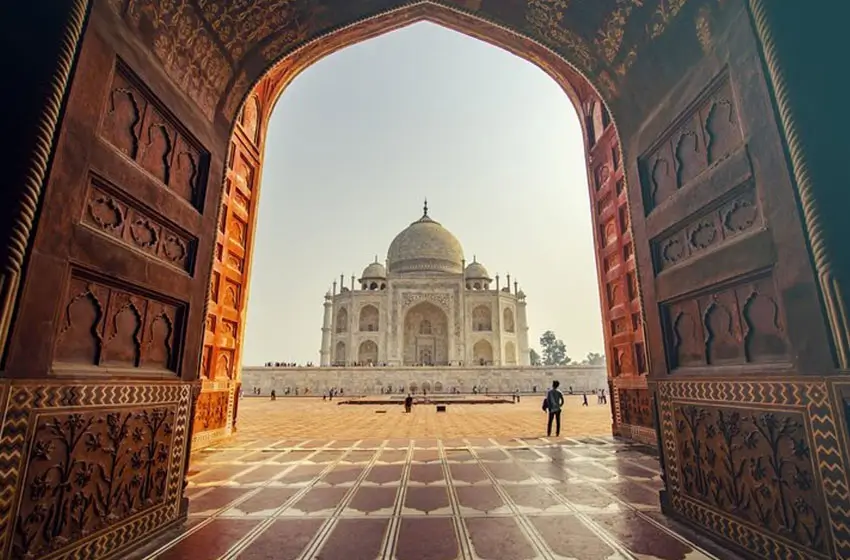
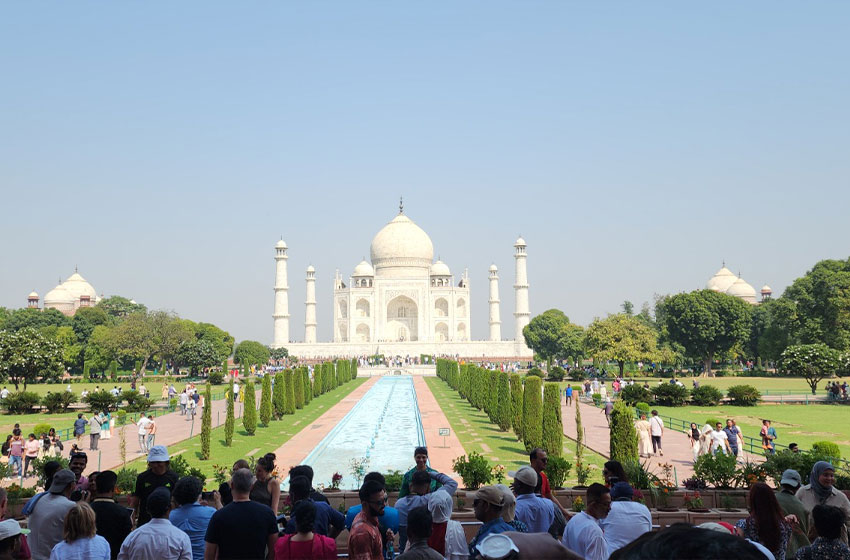
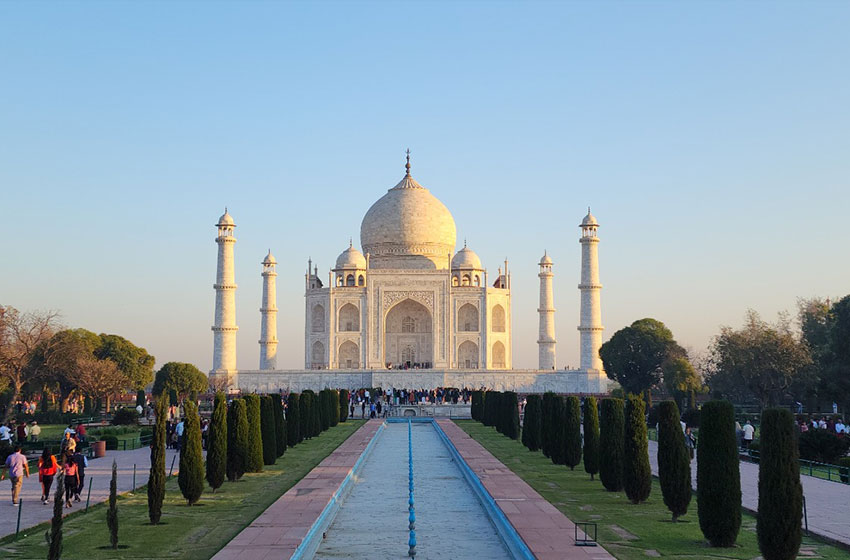
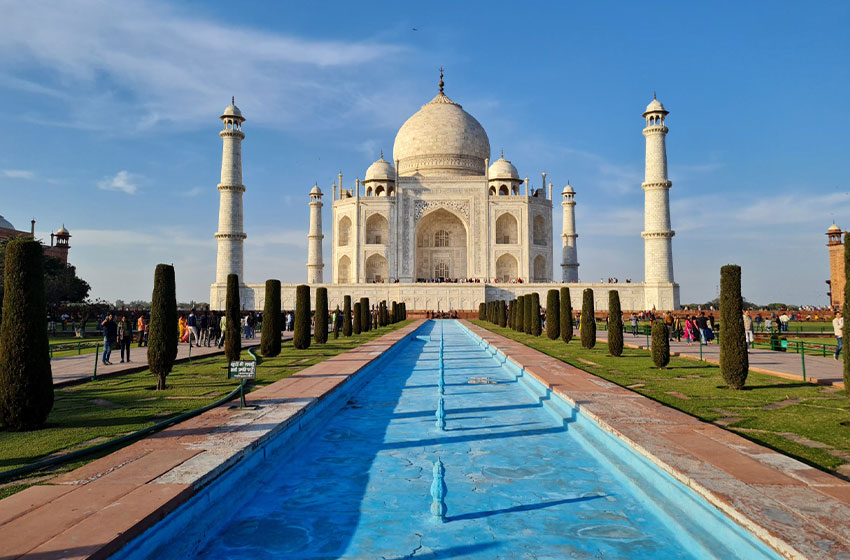
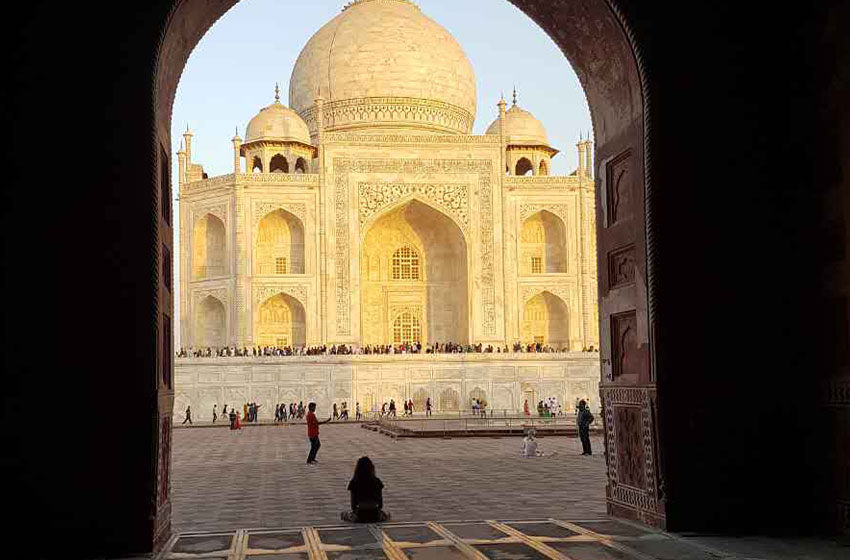
The Taj Mahal receives large numbers of domestic and international visitors, and restroom facilities are available for tourists around the visitor-access areas. However, travelers should use the restroom before entering the main monument complex when convenient because a Taj Mahal visit can last two to three hours and involves security procedures and substantial walking.
Foreign tourists staying overnight in Agra can use the hotel bathroom before leaving for a sunrise visit. This is particularly useful because early-morning departure may occur before some cafes or restaurants have opened. Anyone traveling from Delhi on a same-day tour should use a good highway restroom during the journey if necessary rather than waiting until reaching the monument entrance.
Visitors should still carry tissues and hand sanitizer because public facilities can become busy, especially during peak tourism periods. Toilet paper or soap may occasionally need replenishment even at heavily visited attractions.
A Taj Mahal private tour with a guide also makes logistics easier because the guide can indicate the appropriate facilities before or after the monument visit. Travelers should not hesitate to mention that they need a restroom break; guides work with international visitors every day and are accustomed to such practical requests.
For families with children and elderly visitors, using the restroom before beginning the main Taj Mahal visit is particularly sensible because returning through crowded areas simply for a bathroom break can be inconvenient.
Major monuments such as Agra Fort, Amber Fort, City Palace complexes and other heavily visited attractions generally have visitor restroom arrangements, but quality and exact location can vary. A restroom at a historic site should not automatically be expected to match the bathroom standard of a four- or five-star hotel.
Travelers should use clean facilities when they encounter them rather than waiting until the need becomes urgent. This is especially important at large forts, where walking from one part of the complex back toward the restroom can take time. Amber Fort and Mehrangarh Fort, for example, cover substantial areas and include slopes, courtyards and multiple visitor sections.
Carrying personal tissues becomes useful on full sightseeing days because supplies may be inconsistent. A small bottle of hand sanitizer is equally practical, although hand washing with soap and water should be used when available.
Visitors should also avoid drinking too little simply because they are worried about finding toilets. Rajasthan and Agra can become extremely hot, and dehydration presents a much greater health concern than the inconvenience of requesting an additional restroom stop.
A private guide can indicate facilities at major attractions and can often suggest a better restroom before entering a site when the monument's facilities are basic. This small practical advantage can make a full-day private Agra or Rajasthan sightseeing tour more comfortable.
The Delhi-Agra route is one of the easiest long-distance road journeys for foreign visitors in North India because the Yamuna Expressway has established rest areas and food stops. Travelers using a private car can stop at an appropriate facility during the journey rather than depending on small roadside toilets.
Better highway stops commonly provide Western-style toilets, hand-washing facilities and food or beverage options. Standards can still vary according to maintenance and time of day, but the route is generally straightforward for international tourists. A driver familiar with the expressway will know the established stopping points regularly used by travelers.
The journey between Delhi and Agra normally takes several hours depending on the pickup point, traffic and stops. Travelers should tell the driver whenever they need a restroom rather than waiting until the situation becomes uncomfortable. There is no need to follow a rigid stopping schedule on a private Delhi to Agra car tour.
Families with children or elderly parents may prefer a restroom break even when no one has an urgent need, particularly before the vehicle continues for another long stretch. A short stop can also be used for coffee, tea or stretching the legs.
Visitors should keep tissues and hand sanitizer in their day bag even on a high-quality expressway route. These items take almost no space and provide reassurance if a restroom has temporarily run out of supplies.
Road travel through Rajasthan can involve longer stretches between major tourist cities, and restroom standards are less uniform than on a modern controlled-access expressway. Routes such as Jaipur to Jodhpur, Jodhpur to Jaisalmer and Jaipur to Udaipur pass through towns and rural areas where travelers may encounter a wide range of restaurants, fuel stations and roadside facilities.
A professional private car and driver in Rajasthan can make a major difference because experienced chauffeurs know the restaurants and rest stops commonly used by international guests. Instead of stopping at the first available facility, the driver can often continue to a better-maintained restaurant or fuel station when the traveler's need is not urgent.
Foreign visitors should communicate early. If someone thinks they may need a restroom within the next 20 or 30 minutes, telling the driver immediately gives them more choice. Waiting until the last possible moment can result in having to use the nearest available facility regardless of quality.
Western toilets are available at many established highway restaurants, but they should not be guaranteed at every small roadside stop. Toilet paper and soap may also vary, making personal tissues and sanitizer useful.
Women, elderly travelers and families may particularly appreciate scheduled breaks every few hours. A six-hour road journey should not be treated as a race to the next hotel. Comfortable restroom, meal and stretching stops are part of a properly arranged private road trip.
The Jaipur to Jodhpur road journey generally requires around six hours depending on traffic and stops. There are restaurants and fuel stations along the broader route, but the quality of restrooms varies considerably. Foreign travelers should use larger, established restaurants recommended by their driver rather than choosing an unknown roadside facility solely because it appears first.
Leaving Jaipur after breakfast means a restroom and refreshment stop can usually be arranged around the middle of the journey. Travelers who drink coffee or large amounts of water in the morning may naturally need an earlier break, and this should not be treated as a problem. A private vehicle allows the schedule to adjust to the passengers.
Older visitors may need more frequent stops. The same applies to families with children and anyone taking medication that affects bathroom frequency. Drivers should be informed so they can keep suitable facilities in mind as the journey progresses.
Travelers should also keep a small amount of cash accessible because some public toilets or roadside facilities may charge a modest usage or cleaning fee. The amount is generally small, but having low-denomination rupee notes is convenient.
A Jaipur to Jodhpur private car transfer should therefore include enough time for at least one comfortable break rather than using an unrealistic non-stop driving estimate.
The Jodhpur to Jaisalmer drive takes approximately five hours under normal conditions, and the landscape becomes progressively more sparsely populated as travelers move west. Suitable restroom stops remain available, but visitors should not expect the same density of modern facilities found around major metropolitan areas.
A driver experienced on the route can select an established stop for tea, lunch or a restroom break. Travelers should take advantage of a good facility when it appears, particularly if they know another long stretch of driving follows.
This route demonstrates why carrying a small personal restroom kit is useful even for luxury travelers. A packet of tissues, hand sanitizer and a few small waste bags occupy almost no luggage space but can be helpful when facilities are basic.
Visitors should continue drinking adequate water despite the longer road sectors. Jaisalmer and western Rajasthan can be very dry, and dehydration can contribute to headaches, fatigue and other problems. Reducing water intake solely to avoid restroom stops is a poor strategy.
For travelers staying in a Jaisalmer desert camp, restroom standards should also be checked when booking. Higher-quality camps generally provide private attached bathrooms, but tented accommodation varies greatly. Travelers who require a Western toilet and private bathroom should confirm these facilities before paying for the stay.
Jaisalmer desert camps range from basic tented properties to high-end accommodation with private bathrooms. The word "camp" does not automatically mean that guests will use a shared outdoor toilet. Many established camps have attached Western-style toilets, showers and running water inside or directly connected to the guest tent.
However, standards vary significantly. Travelers should examine the actual room or tent category rather than assuming every accommodation unit has the same facilities. A low-priced tent may have simpler plumbing than a premium tent, and some basic camps may use shared facilities.
Water pressure and hot-water arrangements can also differ from city hotels. In remote desert environments, hot water may be available only at certain times or through a different system. Guests who consider a strong hot shower essential should confirm the details before booking.
Toilet paper may be supplied, but carrying personal tissues remains sensible. Travelers should also follow the camp's instructions concerning what can be flushed because remote waste systems can be more sensitive than modern urban plumbing.
Anyone booking a luxury Jaisalmer desert camp should ask specifically about a private attached bathroom, Western toilet, hot water and electricity rather than relying solely on the word "luxury" in the property description.
Indian trains have different coach categories and toilet facilities, and the condition can vary according to train type, class, journey length and maintenance. Long-distance trains generally have toilets at the ends of coaches, and passengers may encounter both Western-style and squat-style facilities.
Travelers using higher travel classes may find the overall environment more comfortable, but toilet cleanliness can still change during a long journey as many passengers use the facilities. Carrying toilet paper, tissues, sanitizer and wet wipes for personal cleaning can therefore be useful.
Shoes should be worn when entering a train restroom. The floor can become wet, and walking barefoot or only in socks is not advisable. Travelers should keep phones, wallets and other small objects secure because placing them on restroom surfaces is unnecessary.
Using the toilet while the train is stationary at a station can be less comfortable because people may be boarding or moving through the coach. When possible, travelers can choose a quieter point during the journey.
Foreign visitors who are particularly concerned about train restrooms may prefer a private car and driver in North India for routes where road transportation is practical. However, train travel remains an important part of India for many tourists and is manageable with basic preparation.
Major Indian airports have modern restroom facilities, and international visitors should generally find Western-style toilets, sinks, toilet paper and cleaning staff. Airports are among the easiest places to use the restroom before beginning a long transfer, so travelers should take advantage of the facilities after collecting luggage when the next journey will involve several hours by road.
Some airport restrooms may also contain Indian-style toilet cubicles alongside Western ones. Travelers can simply choose the type they prefer. Handheld bidet sprays are common even beside Western toilets.
Large airports can require significant walking from arrival gates through immigration, baggage collection and the exit. Travelers with mobility issues should arrange airport assistance in advance when needed rather than relying on restroom availability alone.
Before leaving Delhi airport for Agra or Jaipur, using the restroom is sensible because city traffic can add considerable time before the vehicle reaches an expressway or suitable stop. The same applies before boarding a domestic flight from Jaipur, Udaipur or another major city.
Airport facilities should not create significant concern for foreign visitors. The greater need for preparation begins after leaving major transport hubs and traveling through smaller towns or rural road sectors.
Public toilets exist in cities, markets, transport areas and near tourist sites, but maintenance standards vary. Some facilities are free, while others charge a small fee. A paid toilet is not necessarily expensive; the fee may simply contribute to cleaning and staffing.
Travelers should keep small-denomination Indian currency available because attendants may not always have change for a large note. Digital payment is common in India, but foreign visitors should not depend on being able to use an international card or mobile payment application for a small public restroom fee.
Women may occasionally find a longer queue than men at busy attractions. Using facilities before entering a crowded monument or before a long road journey can reduce inconvenience.
Visitors should not be surprised if an attendant is present near the entrance. In some places, attendants manage cleanliness, distribute paper or collect the restroom fee. A small sign may indicate the charge.
A tourist who strongly prefers higher-standard facilities can prioritize hotel, restaurant, airport and larger fuel-station restrooms whenever possible. On a private India road trip, this is generally easier than when using local public transportation because the vehicle can stop at selected locations.
A small restroom kit is one of the most useful items to keep in a day bag. It does not need to be elaborate. A compact packet of tissues or toilet paper, hand sanitizer and a few small disposable bags cover most unexpected situations. Women may also want to keep menstrual products easily accessible because a preferred international brand may not always be available during a road journey.
Wet wipes can be useful for personal cleaning, but they should not be flushed down toilets. Used wipes should go into an appropriate waste bin or a small disposal bag until one is available. The same applies to sanitary products.
Travelers can also carry a small bottle of liquid soap if they are particularly concerned about public facilities, although this is optional. Better hotels and restaurants normally provide soap.
A few low-denomination rupee notes are useful for paid public toilets. Keeping these separately from larger cash can make quick stops easier.
The objective is not to travel as though every restroom will be poor. Most tourists on established routes will use many perfectly normal facilities. The personal kit simply prevents a minor inconvenience from becoming stressful when toilet paper or soap is temporarily unavailable.
Female tourists generally use the same hotel, restaurant and airport facilities they would expect during international travel, but a little preparation is useful during long sightseeing and road days. Carrying tissues, sanitizer and menstrual products in a small day bag means the traveler is not dependent on every public restroom being fully stocked.
Clothing can also affect convenience. Very complicated outfits can become inconvenient in small restroom cubicles, while extremely long skirts or loose trousers require additional care around wet floors. Practical travel clothing makes both Western and squat toilets easier to use.
Women traveling during menstruation should carry enough of their preferred products for road days and remote stays. Sanitary pads are widely sold in India, particularly in cities, but a specific imported brand or tampon type may be harder to locate immediately. Menstrual cups are another option for travelers already comfortable using them, but a trip is not necessarily the ideal time to learn a completely unfamiliar product.
Sanitary products should be wrapped and placed in the appropriate waste bin rather than flushed. Many women's restrooms provide designated disposal bins.
A private India tour for women can also make restroom stops easier because the driver can be told in advance to use better restaurants or established facilities on longer routes.
Travelers with knee, hip or mobility problems should prioritize Western-style seated toilets because squat toilets can be difficult or unsafe. Hotels should be informed in advance when an accessible bathroom is required, particularly if grab rails, a walk-in shower or wheelchair clearance are necessary.
A hotel advertising an elevator does not automatically mean every bathroom is wheelchair accessible. Guests with significant mobility requirements should request exact accessibility information rather than relying on general hotel categories.
During road journeys, the driver should be told that Western toilets are required. This allows the route to use larger restaurants, hotels or fuel stations where suitable facilities are more likely to be available. Waiting until the need is urgent reduces the driver's ability to select a better stop.
Elderly travelers may also require more frequent breaks, particularly when taking certain medications. A six-hour drive should include enough time for these stops without making anyone feel that they are delaying the group.
Families arranging a private India tour with elderly parents should build realistic transfer times that include bathroom, meal and stretching breaks. A slightly longer journey with comfortable stops is far better than attempting to match an unrealistic minimum driving time.
Parents should encourage children to use a clean restroom whenever one is available before a long sightseeing visit or road sector. Young children may not provide much warning, and finding an appropriate facility immediately can be difficult in rural areas.
A family day bag can contain tissues, sanitizer, wet wipes, spare underwear and a small change of clothing for younger children. Used wipes should be disposed of in bins rather than flushed. Parents can also carry small disposable bags for situations where a waste bin is not immediately available.
Children should be supervised in public restrooms, particularly where floors are wet. Squat toilets can be difficult for children unfamiliar with them, so Western facilities are preferable when available.
Families should not restrict children's water intake simply to reduce bathroom stops. Heat in Agra and Rajasthan can be intense, and adequate hydration is important. A private vehicle makes it much easier to request additional stops.
For a family Golden Triangle tour, choosing good hotels and traveling by private car removes much of the restroom uncertainty that parents may worry about before arriving in India.
Basic hygiene is generally more useful than becoming excessively worried about every surface. Wash hands properly with soap and water when available, particularly before eating. Hand sanitizer is useful when soap is missing or immediately after leaving a facility, but it should supplement rather than permanently replace hand washing.
Travelers can avoid placing phones, passports, handbags or cameras on restroom floors or wet counters. A crossbody bag or secure backpack makes it easier to keep belongings off potentially dirty surfaces.
If a Western toilet seat is visibly dirty, choose another cubicle when possible rather than attempting to use an unsuitable facility. Travelers should not stand or squat on top of a Western toilet seat, as this can damage the fixture and create a risk of falling.
Shoes should remain on in public restrooms unless a specific religious facility has different rules outside the restroom area. Bare feet are unnecessary and increase contact with wet floors.
Most visitors quickly adapt to the differences and stop thinking about toilets after the first few days. Carrying basic supplies and using good facilities when available is generally enough to keep restroom issues from affecting the holiday.
One of the practical advantages of traveling with a private chauffeur is control over stops. Travelers do not need to wait for a scheduled bus break or search for a toilet after arriving at a railway station. If someone needs a restroom, the driver can look for an appropriate facility along the route.
Communication is important. Telling the driver early gives them time to reach a known restaurant, hotel or fuel station rather than stopping at the nearest basic facility. This is particularly useful on Rajasthan routes where good-quality stops can be separated by longer distances.
India Agra Tours can arrange private road travel for routes including Delhi to Agra, Agra to Jaipur, Agra to Ranthambore, Jaipur to Jodhpur and wider Rajasthan journeys. Travelers with children, elderly parents or specific restroom requirements should mention these needs when arranging the vehicle and itinerary.
Foreign visitors should not feel embarrassed about requesting a restroom stop. Drivers and guides work with travelers every day, and bathroom breaks are a completely normal part of a long road journey.
With a few tissues, sanitizer, suitable hotels and a flexible private vehicle, toilets in India are generally much easier to manage than many first-time visitors expect before arrival.
Yes. Western-style toilets are widely available in India, especially at hotels, airports, modern restaurants, shopping centers and major tourist facilities. Squat toilets are also common in some public and rural locations, and some restrooms provide both types.
The hose beside many Indian toilets is a handheld bidet spray or health faucet. It provides water for personal cleaning after using the toilet. Water pressure can vary, so first-time users should operate the trigger gently.
Yes. Hotels, airports and many good restaurants provide toilet paper, and it can be purchased easily in cities. Public restrooms may occasionally run out, so tourists should carry a small packet of tissues or toilet paper in their day bag.
It depends on the building and plumbing system. Many modern hotels allow reasonable amounts of normal toilet paper to be flushed, while some facilities request that paper be placed in a bin. Always follow signs or hotel instructions. Wet wipes and sanitary products should not be flushed.
No. Travelers staying on established tourist routes can usually find Western-style toilets at hotels, restaurants, airports and many attractions. Knowing how a squat toilet works is useful for occasional situations, but tourists do not have to use one whenever a Western toilet is available.
Yes. The Delhi-Agra route has established expressway rest areas and restaurants where travelers can use restroom facilities. A private driver can stop at a suitable location whenever required.
Restroom quality varies more on Rajasthan highways. Larger restaurants, fuel stations and hotels generally provide better facilities, while small roadside stops may be basic. An experienced private driver can select established stops used by international travelers.
Many mid-range and luxury desert camps provide private attached bathrooms with Western toilets, but standards vary greatly. Travelers should confirm the exact tent category, private bathroom, hot-water arrangement and toilet type before booking.
Carry a small packet of toilet paper or tissues, hand sanitizer, a few disposable bags and small-denomination Indian currency. Women may also want to keep their preferred menstrual products easily accessible during long road journeys.
Yes. Travelers using a private car and driver with India Agra Tours can request restroom breaks during long transfers. Drivers familiar with major tourist routes can use established restaurants, fuel stations and other suitable facilities, and guests should mention any mobility or specific restroom requirements in advance.