Taj Mahal Entry Fee for Foreigners (Complete Guide)
13 May 2025
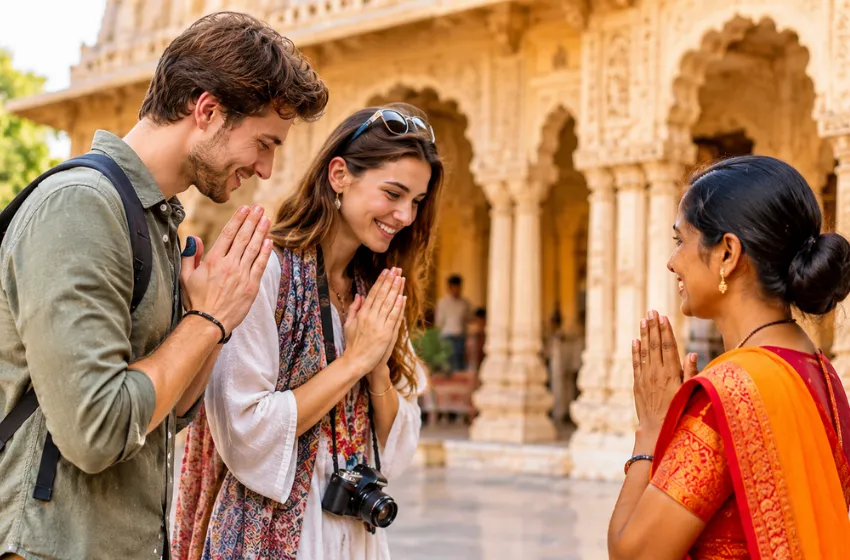
India can feel remarkably different from one city to another. A traveler may spend the morning inside a centuries-old mosque in Delhi, have lunch at a modern restaurant, visit the Taj Mahal the following day and then continue by private car to the forts and palaces of Rajasthan. Each setting has its own atmosphere, and knowing a few basic social customs makes these transitions much easier.
Most foreign visitors do not need an extensive knowledge of Indian traditions before arriving. Tourists are not expected to behave exactly like local residents, and small cultural mistakes are usually treated with patience. What matters more is being observant, respectful and willing to follow instructions at religious sites, private homes and heritage attractions.
Indian etiquette for tourists is also difficult to reduce to one universal rulebook. India has many religions, languages, regional traditions and social customs. Behavior considered completely normal in one environment may be less suitable in another. A luxury hotel in Delhi, a Sikh gurudwara, a Hindu temple in Rajasthan and a rural village should not be treated as identical social settings.
For first-time visitors, the most useful approach is practical rather than complicated. Dress appropriately for the location, ask before photographing people, remove shoes where required, respect religious rules, avoid unnecessary public confrontation and observe what local residents are doing when uncertain.
The following 25 cultural do's and don'ts cover situations international tourists commonly encounter during a private India tour, including greetings, monuments, religious places, restaurants, markets, tipping, photography and road travel.
Visitors do not need to master a complicated greeting system before arriving in India. English is widely used within the tourism industry, and a simple "Hello," "Good morning" or "Good evening" is completely acceptable when speaking with hotel staff, guides, drivers and other people encountered during a holiday.
Some travelers like to use "Namaste" with their palms placed together. This is widely recognized and can be used respectfully, but foreign visitors should not feel obligated to perform it every time they meet someone. A natural greeting accompanied by a smile is preferable to forcing a gesture simply because it appears culturally Indian.
Handshakes are also common, particularly in business, hotels and professional tourism settings. However, not everyone will automatically offer a handshake, especially between men and women in more traditional environments. Waiting for the other person to initiate physical contact can be a considerate approach when uncertain.
Titles and respectful forms of address are appreciated in formal situations, but international visitors are rarely expected to know every local convention. When meeting a private guide or chauffeur, ordinary polite conversation is enough.
The key point is not to turn greetings into a source of anxiety. Respect is communicated through tone, patience and behavior throughout the interaction, not through performing one specific gesture perfectly.
Make Your India Journey More Meaningful
Combine iconic attractions with authentic cultural experiences. Discover regional traditions, explore historic destinations and enjoy personalised travel arrangements designed around your interests and preferred travel style.
India contains enormous religious, linguistic, regional and cultural diversity. A custom seen in Jaipur should not automatically be treated as a rule for Delhi, Kerala, Mumbai or Varanasi. Even within one city, families and communities can follow traditions differently.
Foreign tourists sometimes arrive with a short list of "Indian rules" collected from social media and attempt to apply them mechanically. This can create more confusion than simply paying attention to the setting. For example, head covering may be required at one religious site but not another, and footwear procedures can differ according to the place being visited.
Regional food traditions also vary dramatically. It is inaccurate to assume that all Indians are vegetarian, that everyone avoids alcohol or that every person follows the same religious dietary restrictions. Visitors should avoid making broad statements based on a single meal or interaction.
The same principle applies to clothing and social behavior. Major cities contain highly modern environments alongside deeply traditional communities. A foreign tourist may see people wearing Western business clothing, jeans, traditional garments and religious dress within the same day.
Good India travel etiquette therefore begins with recognizing diversity. Follow the rules of the actual place you are visiting rather than expecting more than a billion people to share one identical set of habits.
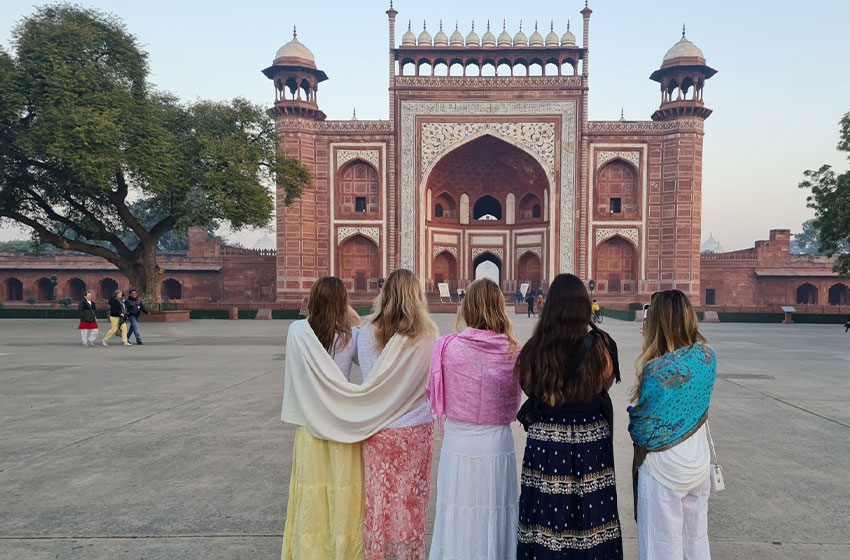
India does not require foreign tourists to wear traditional Indian clothing. Normal Western travel clothes are suitable for most sightseeing, provided they are comfortable and reasonably appropriate for the setting. Lightweight trousers, shirts, T-shirts, longer dresses and skirts are practical choices for Delhi, Agra and Rajasthan.
Religious places require greater attention. Clothing that covers the shoulders and extends toward or below the knees is a sensible general standard when visiting active temples, mosques, gurudwaras and similar sacred locations. Individual sites can have additional requirements.
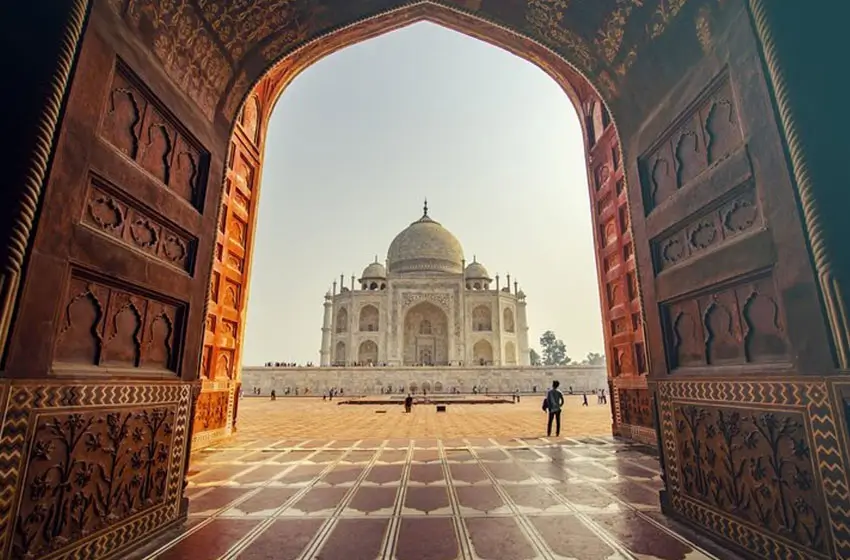
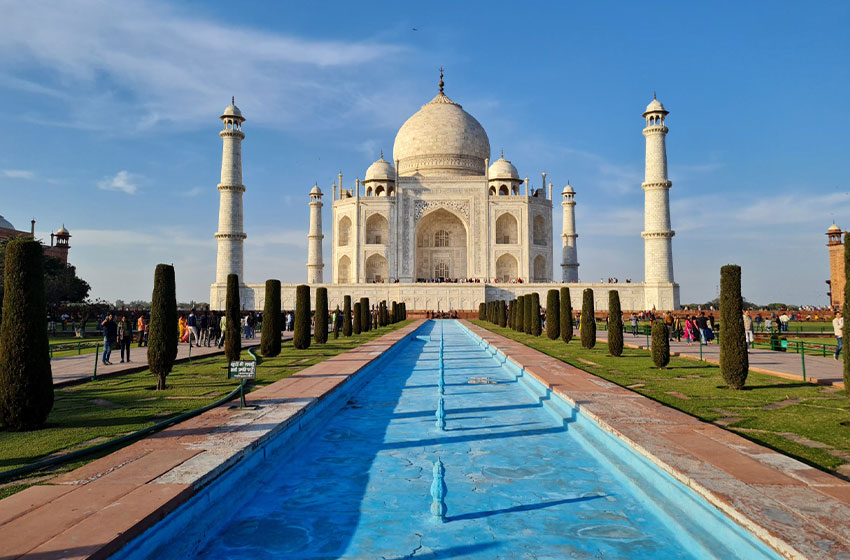
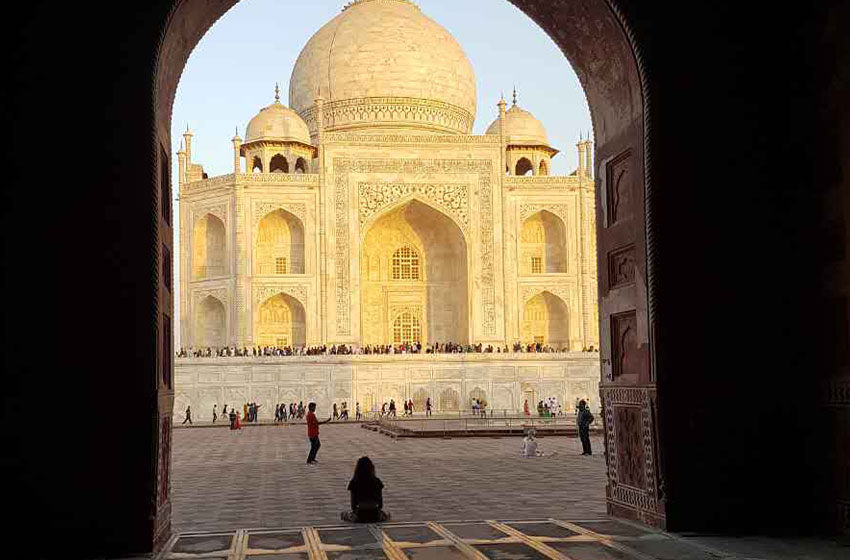
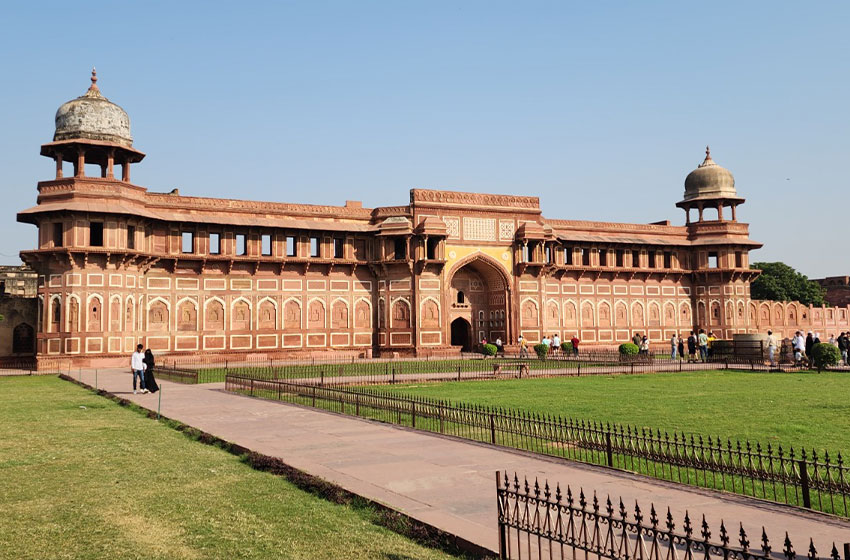
At ordinary tourist monuments such as the Taj Mahal, Agra Fort or many Rajasthan forts, visitors have considerably more flexibility. Even there, comfortable clothing and footwear are more useful than extremely revealing or impractical outfits because sightseeing can involve several hours of walking.
Weather should also influence clothing. A respectful outfit does not need to be heavy or uncomfortable. During hot weather, loose cotton, linen or other breathable fabrics provide coverage without creating unnecessary heat. During December and January, Delhi, Agra and Rajasthan can require sweaters or jackets in the morning.
Foreign visitors following a Golden Triangle tour in India should therefore pack adaptable clothing that works for monuments, religious sites, restaurants and road journeys rather than bringing outfits suitable for only one environment.
Removing shoes before entering certain religious spaces is one of the customs foreign tourists encounter most frequently. Hindu temples, Sikh gurudwaras, mosques and other sacred locations may require footwear to be left outside or at a designated shoe counter.
Visitors should look for signs, observe what other people are doing and follow instructions from staff or their guide. When hundreds of pairs of shoes are visible near an entrance, continuing inside in footwear because no one personally stopped you is not appropriate.
The procedure varies. Some sites have a staffed shoe-storage counter, while others have shelves or a designated area. Carrying shoes in a personal bag may not be permitted everywhere, so visitors should use the system provided.
Socks may also need to be removed in certain places. For this reason, travelers who know their sightseeing day includes several religious locations may prefer footwear that is easy to remove and put back on.
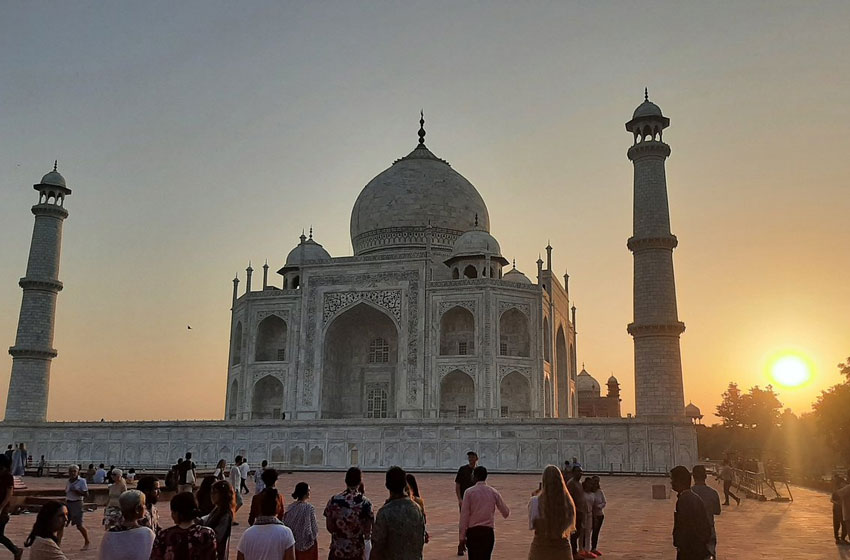
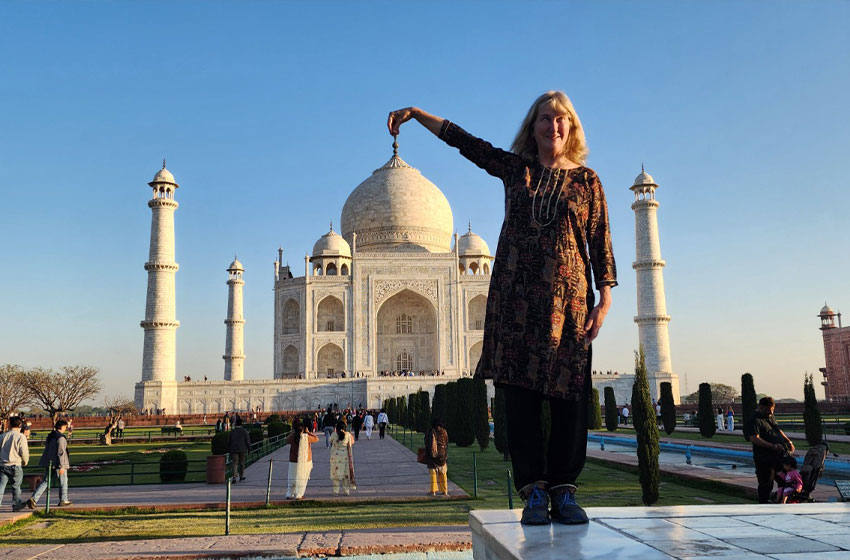
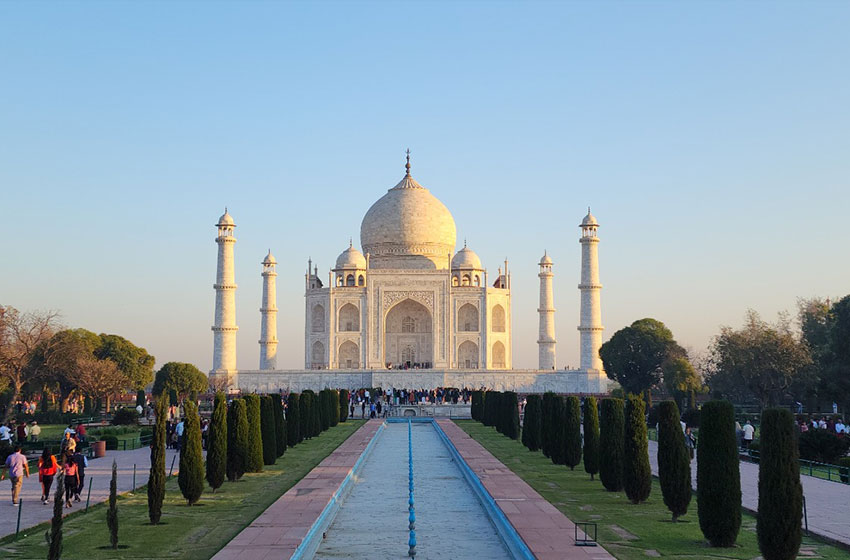
At the Taj Mahal, visitors also encounter footwear-related procedures around the main marble mausoleum, where shoe covers or footwear removal may be required according to the visitor arrangements in operation. Following the instructions given at the site is the simplest approach.
Head-covering requirements depend on the religious site. At Sikh gurudwaras, both men and women are expected to cover their heads. Appropriate cloth coverings are often available for visitors who do not have their own.
A casual fashion hat should not automatically be assumed to satisfy the requirement. Visitors should follow the instructions provided by the religious institution and use an accepted covering.
Some mosques may ask women to cover their hair or may provide additional garments for visitors. Certain temples can also have specific dress or head-covering customs. These requirements should be treated as part of entering a sacred space rather than as an inconvenience directed at tourists.
A lightweight scarf is particularly useful for female travelers because it can be carried throughout the day and used whenever additional coverage is requested. Men can use the head covering provided at a gurudwara or other religious location.
Visitors who do not wish to comply with a religious site's entry rules should simply avoid entering restricted areas. Entering and then deliberately ignoring the rules is disrespectful.
A private guide can explain the procedure before arrival, which is one reason a private tour guide in India can be helpful when an itinerary includes several different religious traditions.
India offers endless photographic opportunities, from colorful markets and traditional clothing to festivals and street scenes. However, the fact that something looks interesting to a tourist does not automatically make every person in that scene comfortable being photographed closely.
When taking an individual portrait, particularly at close range, asking permission is the respectful approach. A simple gesture toward the camera combined with a polite question is usually enough. If someone declines, the answer should be accepted immediately.
Children deserve particular care. Foreign visitors should not photograph a child closely simply because the child appears curious or friendly. When appropriate, permission from a parent or responsible adult should be obtained.
Travelers should also be sensitive around people praying, bathing at religious locations, receiving medical care or dealing with private circumstances. Some moments should not become travel photographs at all.
Photography rules at monuments and religious sites can differ. Certain interiors prohibit photography, while other places restrict tripods, professional equipment or video recording. Visitors should follow posted rules rather than assuming that paying an entrance fee provides unlimited photography rights.
Respectful photography etiquette in India is straightforward: consider the person before the photograph and accept restrictions without argument.
Explore India with Confidence and Respect
Discover India's cultural traditions, local customs and everyday etiquette before your journey. Travel confidently, connect respectfully with local communities and enjoy meaningful experiences across incredible destinations.
Religious ceremonies can be visually fascinating, but they are acts of worship rather than performances created for tourists. Visitors should remain aware that local participants may be praying, making offerings or observing personal rituals.
Some temples prohibit photography entirely inside specific areas. Others allow general photographs but not images of the main deity or sanctum. Mosques, gurudwaras and other religious institutions may also have restrictions according to the location and activity taking place.
When a guide says photography is not allowed, visitors should follow that instruction rather than attempting a quick hidden photograph. Rules can protect religious sensitivities, security or the physical preservation of a site.
Flash photography should be avoided wherever it is prohibited and is often inappropriate during ceremonies even when ordinary photography is permitted. Large cameras should not obstruct worshippers or block pathways.
Travelers interested in serious cultural photography can ask their guide where photography is appropriate and whether permission is required. This usually produces better photographs because the visitor can take them openly instead of nervously trying to capture images without knowing the rules.
Sacred objects, altars, statues, scriptures and offerings should not be handled simply because they are within reach. Different religious traditions have specific rules regarding who may touch certain items and under what circumstances.
At temples, foreign visitors may see local worshippers touching a threshold, bell or other object. This does not automatically mean tourists should copy every action. Some practices have religious meaning, and imitating them without knowing their purpose can be inappropriate.
The same principle applies to offerings. Food, flowers or other items placed before a deity should not be moved for a photograph. Religious books and ceremonial objects in Sikh, Jain, Buddhist, Muslim or Hindu settings should also be treated according to the instructions of the site.
If a priest or authorized person offers something to a visitor, such as blessed food, a flower or another item, the guide can explain how it should be received. Visitors who are uncomfortable participating can decline respectfully rather than making jokes about the practice.
Cultural curiosity is welcome in many religious environments, but respectful observation is usually better than touching objects simply to create a more interactive visit.
Attitudes toward public affection vary across India, particularly between major metropolitan areas and more conservative communities. Holding hands or ordinary affectionate behavior may attract little attention in many places, but prolonged kissing or highly intimate physical behavior can be considered inappropriate in public settings.
Foreign couples do not need to behave as though they are strangers. The practical approach is simply to remain aware of the surroundings. Behavior that feels normal at a private resort or international hotel may draw unwanted attention near a religious site or in a traditional neighborhood.
Visitors should be particularly restrained inside temples, mosques, gurudwaras, memorials and other places with religious or solemn significance. These are not suitable locations for romantic photographs involving intimate poses.
The same principle applies to pre-wedding or social-media photography at heritage sites. Couples can take attractive photographs without blocking pathways or behaving in a way that conflicts with the atmosphere of the monument.
A little situational awareness is enough. Foreign tourists are not expected to remove all affection from their trip, but treating every public location like a private space can create unnecessary discomfort.
In many Indian cultural and religious settings, feet are regarded as the lowest and less clean part of the body. Deliberately pointing the soles of the feet toward an altar, religious image or respected person can therefore be considered impolite.
This becomes most relevant when sitting on the floor at a temple, gurudwara, meditation area or private home. Travelers can sit cross-legged or position their feet to the side rather than stretching their legs directly toward a sacred space.
Foreign visitors are unlikely to cause major offense through an accidental position they did not understand, particularly if they correct it when advised. The issue is more about awareness than perfection.
Similarly, touching someone with the foot can be considered disrespectful. If it happens accidentally in a crowded area, a simple apology is sufficient.
Tourists do not need to monitor the angle of their feet throughout an entire India holiday. The custom is mainly useful to remember in religious environments and situations where people are seated on the floor.
Traditionally, the right hand is preferred for eating, giving and receiving certain items because the left hand has associations with personal hygiene. This custom remains noticeable in many parts of India, although everyday behavior varies significantly among individuals and environments.
Foreign visitors may see people eating Indian food with the fingers of the right hand, particularly foods such as roti with curry. Tourists are welcome to use cutlery and are not expected to learn hand-eating techniques unless they want to.
When handing money, food, a gift or a religious offering directly to someone, using the right hand can be a considerate habit. Using both hands for an important item is also generally respectful.
Left-handed travelers should not become anxious. India is not a place where every accidental use of the left hand will cause offense. Modern restaurants, hotels and shops serve millions of people with different habits.
The value of knowing this custom is simply that it helps visitors interpret behavior they may notice and allows them to make a small respectful adjustment when convenient.
Indian dining practices vary widely. Forks and spoons are readily available in hotels and most restaurants serving international travelers, while many people also eat certain Indian dishes with their hands.
Foreign tourists are not expected to eat with their fingers. Asking for a spoon or fork is perfectly normal. Anyone who wants to try eating Indian food by hand should generally use the right hand and can observe how bread is used to pick up curry or other dishes.
Food should be handled neatly rather than placing the entire hand into shared dishes. When eating from communal serving bowls, use the serving utensils provided rather than using personal fingers or cutlery.
Restaurants accustomed to international guests are unlikely to judge a visitor's technique. Enjoying the meal respectfully matters far more than attempting to imitate local diners perfectly.
Travelers with dietary restrictions should communicate them clearly. Vegetarian food is widely available, but visitors with allergies, vegan requirements or medical dietary restrictions should be precise rather than assuming a restaurant interprets every dietary term identically.
Vegetarian food has a major presence in India, and many restaurants clearly distinguish vegetarian and non-vegetarian dishes. Some restaurants are entirely vegetarian, while others serve both.
Foreign tourists should respect establishments where meat is not served rather than asking staff to make an exception. Religious or cultural reasons may be behind the policy, and bringing outside meat into such a restaurant can also be inappropriate.
Likewise, tourists should not assume that every Indian person is vegetarian. Food traditions vary significantly between regions, religions, communities and families. Chicken, mutton, fish and other non-vegetarian foods are widely eaten in many parts of the country.
Beef and pork can involve particular religious sensitivities depending on the community and location. Travelers should avoid making provocative jokes or turning dietary differences into arguments.
For international visitors, India offers an unusually wide range of vegetarian meals, making it relatively easy for vegetarian travelers to find substantial food rather than relying only on side dishes. A private Rajasthan tour can also include restaurant stops according to the guest's dietary requirements when those preferences are communicated in advance.
Experience the Beauty of Indian Culture
Explore India's diverse traditions, historic temples and vibrant communities. Understand local customs, appreciate cultural differences and make your journey more meaningful through respectful travel experiences.
Tourist areas in India can have persistent vendors, guides, shopkeepers and drivers, and foreign visitors sometimes become defensive after several approaches. Caution is sensible, but assuming that every person selling something is dishonest is neither accurate nor helpful.
A vendor may simply be doing their job. If the visitor is not interested, a firm and polite "No, thank you" followed by continuing to walk is usually more effective than entering a long conversation.
Tourists should still use common sense. Prices should be confirmed before accepting services when no fixed rate is displayed, and unsolicited offers that sound unusually complicated or urgent deserve caution. Official guides, established transport services and reputable businesses reduce uncertainty.
The important distinction is between declining a sales approach and treating the seller disrespectfully. Shouting, insulting someone or mocking their livelihood is unnecessary.
Foreign visitors quickly become better at recognizing when to engage and when to continue walking. Calm confidence usually works better than hostility.
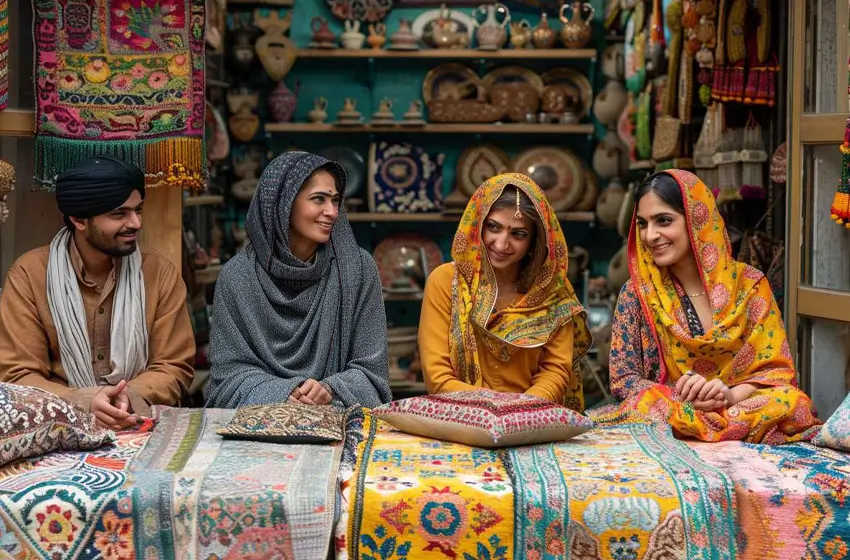
Bargaining is common in many markets and independent shops, particularly where prices are not fixed. It can be part of the buying process rather than a confrontation. Travelers can ask the price, make a reasonable counteroffer and decide whether the final amount represents acceptable value.
Bargaining should remain friendly. There is little benefit in becoming angry over a relatively small amount of money. If the price remains too high, the customer can simply thank the seller and leave.
Not every place is negotiable. Shopping malls, supermarkets, ticket counters, many branded stores and restaurants generally operate with fixed prices. Attempting to bargain over an official monument ticket or restaurant bill is inappropriate.
Tourists should also think about scale. Spending twenty minutes aggressively negotiating a tiny amount from an artisan may not be a meaningful victory. The objective should be a fair transaction rather than obtaining the absolute lowest possible price at any cost.
Anyone shopping during a Jaipur private tour will encounter both fixed-price businesses and negotiable market stalls. A guide can explain the difference, although visitors should still make their own purchasing decisions.
Entering a shop does not create an obligation to purchase. Tourists are free to look at carpets, jewelry, textiles, handicrafts or souvenirs and leave when nothing suits them.
Sales presentations can sometimes be lengthy, particularly for higher-value products. Visitors should decide according to their own interest and budget rather than purchasing simply because tea was offered or the shopkeeper spent time showing products.
Before buying expensive jewelry, gemstones, carpets or antiques, travelers should consider quality, certification, export rules and return policies. A verbal promise should not replace proper documentation for a high-value purchase.
If a guide or driver suggests a shop, the visitor still controls the decision. A recommendation is not an obligation to enter or buy. Travelers who are not interested in shopping can say so clearly at the beginning of the sightseeing day.
This is an important aspect of India shopping etiquette for tourists: be polite to the seller, but remain comfortable saying no.
Tipping practices in India differ from those in countries where a fixed 15 to 25 percent gratuity is routinely expected. Tips are common in tourism and hospitality, but the amount depends on the service, location and whether a service charge has already been included.
At restaurants, visitors should check the bill before adding a gratuity. A service charge may already appear. When it does not, tourists can leave an amount according to service quality and their own judgment.
Private drivers and guides are also commonly tipped at the end of their service when the traveler is satisfied. The amount can vary according to trip length, group size and level of service. A guide working for one day and a chauffeur accompanying guests for ten days are different situations.
Hotel porters, housekeeping staff and other service workers may also receive small gratuities. Keeping smaller rupee notes can make this easier.
Tipping should remain voluntary recognition of service rather than something that creates anxiety throughout the holiday. Travelers should not feel pressured to tip every person who speaks to them.
Visitors may encounter children asking for money, pens, sweets or other items in tourist areas. Giving something directly can feel compassionate, but unstructured handouts can have unintended effects and may encourage children to remain around tourist locations seeking gifts.
Travelers who want to contribute can consider established local charities, schools or community organizations rather than distributing cash randomly. The appropriate method depends on the organization and should be researched carefully.
Photographing children immediately after giving them money can also create an uncomfortable dynamic in which assistance becomes part of a travel photograph.
When children approach persistently, visitors should remain calm and avoid becoming aggressive. A guide or driver can help manage the situation when necessary.
Foreign tourists are not required to solve complex social issues during a short holiday. Respectful behavior and responsible giving are more useful than spontaneous distribution motivated by pressure.
Queues in India can sometimes feel less clearly defined than the lines visitors are accustomed to at home, particularly in crowded transport or public environments. However, this does not mean that tourists should automatically push ahead.
At airports, monument ticket counters and security checkpoints, formal queues are usually clear and should be followed. Some attractions may have separate lines for men and women during security screening, which can temporarily separate couples or families.
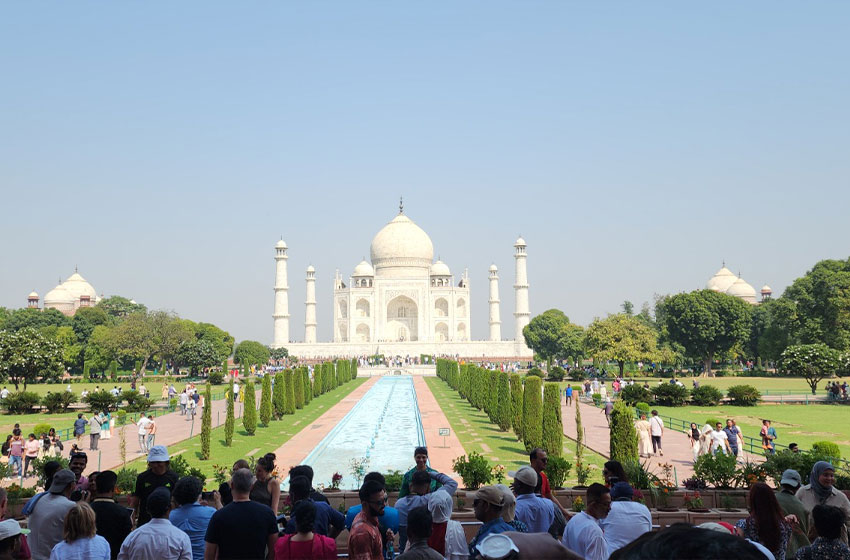
The Taj Mahal, for example, involves security procedures that can become busy during peak periods. Travelers should follow staff directions and keep prohibited items out of their bags to reduce delays.
If someone appears to move ahead unexpectedly, reacting with immediate anger rarely improves the situation. A polite question to staff can clarify which line is correct.
Private guides often help visitors navigate ticketing and entrance procedures, but they cannot bypass security rules. Patience remains part of visiting heavily attended monuments.
Traffic is one of the biggest adjustments for many first-time visitors to India. Delhi, Jaipur and other cities can be crowded, horns are used frequently and road movement may appear chaotic to someone accustomed to quieter traffic systems.
The horn does not always carry the same aggressive meaning it may have in another country. Drivers frequently use it to indicate their presence when overtaking, moving through busy streets or approaching other road users.
A foreign passenger may occasionally feel that the vehicle is closer to motorcycles, rickshaws or other cars than they would prefer. A professional tourist driver is accustomed to local traffic patterns, but passengers can still request slower driving if they feel uncomfortable.
Travel times should be treated realistically. A journey across Delhi can take considerably longer during peak traffic, and becoming angry with the driver cannot remove congestion.
A private car and driver in India offers greater comfort than many other transport options, but the vehicle still shares the road with local traffic. Building enough time into transfers is more effective than expecting city roads to behave like empty highways.
Distances in India should not be interpreted using motorway speeds from Europe, Australia or North America. A route of 250 kilometers can take five or six hours depending on road type, towns, traffic and stops.
Travelers should therefore avoid creating an itinerary with long drives followed immediately by fixed-time activities. An Agra-to-Ranthambore transfer followed by a safari, for example, needs a substantial buffer because the safari cannot simply start late if the road journey takes longer than expected.
Restroom, meal and tea stops also add time, and they should. A private holiday should not require elderly parents or children to sit in a vehicle for six uninterrupted hours simply to match an optimistic navigation estimate.
Drivers also need reasonable rest. Asking a chauffeur to complete an excessively long driving day and then continue late into the night is not good travel practice.
A well-arranged Rajasthan tour by private car uses realistic road times and gives travelers enough time to enjoy each destination rather than spending the holiday constantly trying to recover from delays.
Busy markets, railway stations, monument entrances and old-city streets can feel crowded. The amount of personal space people maintain may be smaller than visitors are accustomed to in less densely populated countries.
This does not mean every close interaction is intentionally intrusive. In a crowded bazaar or security line, people may simply stand closer because space is limited.
Tourists should still protect valuables and remain aware of their belongings in busy places, as they would in any crowded international destination. A zipped crossbody bag or secure daypack is preferable to leaving a wallet or phone in an easily accessible pocket.
Visitors who become uncomfortable can move toward a quieter area rather than reacting angrily to ordinary crowding. Private sightseeing arrangements can also reduce some of the stress because the traveler has a private vehicle available between attractions.
Crowds are particularly important around major monuments during weekends, public holidays and peak tourism periods. Starting early can often create a calmer visit.
India's religious diversity is one of the most interesting aspects of the country, and visitors may have many questions. Respectful curiosity is generally welcome, particularly when speaking with a knowledgeable guide who can provide historical and cultural context.
However, visitors should avoid mocking beliefs, sacred practices or religious clothing simply because they are unfamiliar. Jokes that might seem harmless within a travel group can be offensive in a sacred environment.
Questions are better than assumptions. If a visitor does not know why shoes are removed, why a head is covered or why a certain food is avoided, asking a guide can provide meaningful context.
Tourists should also avoid expecting one person to speak for an entire religion or community. Individual beliefs and practices differ.
A private tour guide for foreign tourists in India can be particularly valuable at religious and historical sites because visitors can ask questions privately rather than relying on incomplete explanations found online.
Foreign tourists often have spontaneous conversations with local people, particularly at monuments, markets and public spaces. Students may ask where a visitor comes from, families may request a photograph together and someone may simply want to practice English.
Not every conversation is a sales attempt or scam. Many interactions are based on genuine curiosity. At the same time, travelers should maintain normal awareness and avoid sharing sensitive personal information or following strangers to isolated locations.
Requests for selfies are common in some tourist destinations, particularly when visitors look noticeably foreign. Tourists are free to accept or decline. Saying no politely is completely acceptable, and nobody needs to spend half a sightseeing visit posing for photographs with strangers.
If a conversation turns into persistent selling, a request for money or an invitation that makes the traveler uncomfortable, they can end the interaction and move away.
Balanced awareness allows visitors to enjoy genuine human interactions without becoming either overly trusting or unnecessarily suspicious.
Historic monuments often contain doors, courtyards, staircases and buildings that appear accessible but may actually be closed to visitors. Religious sites can also have areas reserved for worshippers, priests or members of a particular faith.
A partially open doorway is not an invitation to enter. Travelers should follow signs, barriers and instructions from authorized staff.
The same rule applies in villages and residential neighborhoods. An attractive courtyard or decorated doorway may be someone's private home rather than a tourist attraction. Photographing from a public street is different from walking onto private property.
When visiting a home by invitation, travelers can ask whether shoes should be removed at the entrance. Many Indian households prefer shoes to remain outside or near the door, although practices vary.
Respecting boundaries is one of the simplest forms of cultural etiquette in India and requires no special knowledge beyond asking when uncertain.
Indian cuisine is highly diverse, and a traveler will not enjoy every dish. Saying that something is too spicy for your taste is perfectly reasonable. Describing local food as disgusting or mocking how people eat it is unnecessary.
Visitors should communicate spice preferences before ordering when possible. Asking for mild food can help, although the meaning of "mild" varies from restaurant to restaurant. Hotel restaurants accustomed to international guests are generally familiar with such requests.
Dietary restrictions should be explained clearly. Someone with a severe allergy needs more precise communication than someone who simply dislikes an ingredient.
Travelers should also remember that "Indian food" is not one cuisine. Rajasthan, Delhi, Punjab, Gujarat, South India, Bengal and other regions have very different dishes and cooking traditions.
Trying unfamiliar food is part of travel for many visitors, but there is no cultural requirement to enjoy everything. Respectful personal preference is completely acceptable.
Service styles can vary between hotels, restaurants and regions. Luxury properties may operate according to international hospitality standards, while a small family-run restaurant may have a much more informal system.
Visitors should communicate clearly when they need something rather than expecting staff to interpret hints. A polite direct request for water, the bill or assistance is usually effective.
At the same time, tourists should distinguish between a genuine service problem and a simple difference in pace or procedure. Becoming immediately confrontational can make a minor issue harder to resolve.
If a hotel problem is significant, speaking calmly with reception or a manager generally produces better results than arguing with junior staff who may not have authority to solve it.
The same applies to a private tour. If a guest wants a later departure, different restaurant, additional restroom stop or less shopping, telling the guide or driver clearly allows adjustments to be made when practical.
Good communication is more valuable than expecting every service interaction to follow exactly the same pattern as it would at home.
Major Indian monuments operate with security procedures, restricted items and photography rules. The Taj Mahal is a particularly important example because visitors pass through security screening and certain objects cannot be carried inside.
Tourists should check current restrictions before leaving the hotel and avoid carrying unnecessary items. A smaller day bag generally makes security easier than a large backpack filled with items that will not be used during sightseeing.
Drones should never be flown around protected monuments simply because a traveler wants an aerial photograph. Drone regulations, security restrictions and no-fly areas can apply, and the Taj Mahal area is particularly sensitive.
Tripods and professional photography equipment can also face restrictions at certain sites. Commercial photography may require separate permission.
Arguing with security staff rarely changes the rule. If an item is prohibited, visitors may have to return it to the vehicle or use an approved storage arrangement where available.
A guide can help explain current monument procedures, but the final authority remains with the relevant security and monument staff.
Cards are widely accepted at hotels, larger restaurants and many shops, but carrying some Indian rupees remains useful. Small cash can be needed for tips, public restrooms, small purchases and places where international cards do not work reliably.
Large-denomination notes are not always convenient for a very small transaction. Keeping smaller notes separately makes roadside stops and gratuities easier.
Foreign tourists should exchange or withdraw money through legitimate channels rather than accepting unsolicited currency-exchange offers from strangers. ATMs and authorized exchange services are available in major tourist cities.
Digital payments are extremely common in India, but many systems are designed primarily around Indian bank accounts or mobile payment infrastructure. International visitors should not assume that every QR code displayed by a vendor will work with their foreign banking application.
Cash does not need to be carried in large quantities. A combination of cards and a modest amount of rupees is more practical for most North India private tours.
One of the most useful skills for a first-time visitor is a clear, polite refusal. Tourists may be offered souvenirs, rickshaw rides, photographs, guiding services or other products they do not want.
A short "No, thank you" is usually more effective than giving a long explanation. Continuing to engage after refusing can sometimes be interpreted as continued interest.
Visitors do not need to feel guilty about declining a shop visit, optional activity or photograph request. A holiday should reflect their interests rather than every suggestion made along the route.
Firmness does not require hostility. Raising the voice, insulting a seller or becoming confrontational is rarely necessary. If someone remains persistent, the traveler can continue walking or ask their guide or driver for assistance.
This balance of politeness and confidence is particularly useful in busy tourist areas around Delhi, Agra and Jaipur.
Drivers and guides play a major role in a private India holiday. A chauffeur may spend ten or more days with the same guests, handling early departures, luggage, traffic and long road sectors. Treating them professionally contributes to a much smoother journey.
Visitors should communicate schedule changes clearly and avoid expecting unsafe driving to recover lost time. If a guest leaves the hotel an hour late, asking the driver to speed aggressively so the group reaches the next city at the original time is unreasonable.
Drivers also require adequate rest. Extremely late finishes followed by very early departures should not become the daily routine on a long Rajasthan road trip.
Guides should similarly be treated as professionals. Asking questions is encouraged, and visitors can disagree respectfully, but humiliating or shouting at service staff is inappropriate.
India Agra Tours arranges private cars, chauffeurs and local guiding services for international visitors, and clear communication between guests and the travel team helps road transfers and sightseeing days run much more comfortably.
Cultural awareness is valuable, but tourists do not need to spend an entire holiday worried that every movement might be incorrect. India receives millions of visitors from different backgrounds, and people working in tourism are accustomed to guests who do not know every local custom.
The most important behaviors are universal: be polite, respect sacred places, follow local rules, ask before entering private spaces, treat people with dignity and listen when someone explains a custom.
If a visitor accidentally forgets to remove shoes, uses the wrong hand to pass something or misunderstands a procedure, correcting the mistake politely is normally enough. Cultural etiquette should make travel easier, not create constant anxiety.
Foreign tourists will also encounter many situations where no special cultural rule is needed at all. Checking into a hotel, ordering coffee, riding in a private car or shopping in a modern mall can feel much like international travel elsewhere.
A thoughtful visitor does not need to imitate local behavior perfectly. Paying attention to context and responding respectfully is enough for most situations encountered during an India holiday.
The most useful rules are to dress respectfully at religious sites, remove shoes where required, ask before photographing people, follow monument rules and treat service staff politely. Visitors should also remember that customs vary by region and religion.
No. "Namaste" is a respectful and widely recognized greeting, but tourists do not need to use it in every interaction. A normal "Hello," "Good morning" or another polite greeting is completely acceptable.
Yes. Foreign tourists can wear normal Western clothing. Comfortable trousers, shirts, T-shirts, skirts and suitable dresses are widely used by travelers. More modest coverage is advisable when entering temples, mosques, gurudwaras and other religious places.
Many temples and other religious sites require shoes to be removed before entry. The exact procedure varies, so visitors should follow signs, local staff or their guide. Some mosques and Sikh gurudwaras also require footwear removal.
Taking general street photographs is common, but close individual portraits should be taken with permission whenever practical. Visitors should be especially careful when photographing children, worshippers and religious ceremonies.
Yes, bargaining is common in many markets and independent shops where prices are negotiable. It should remain friendly and reasonable. Fixed-price stores, restaurants, supermarkets and official ticket counters are generally not places for bargaining.
There is no single mandatory percentage for every situation. Restaurant tipping depends partly on whether a service charge is already included, while private guides, drivers, porters and housekeeping staff are commonly tipped according to service and trip length.
Ordinary affection such as holding hands is generally not a major issue in many tourist areas, but highly intimate public behavior can be considered inappropriate, particularly around religious sites and more traditional communities.
The right hand is traditionally preferred for eating and directly giving or receiving certain items. Foreign visitors can use cutlery normally and should not worry excessively about occasional left-hand use. Knowing the custom is useful, but perfection is not expected.
India Agra Tours can arrange private cars, drivers, local guides and multi-city routes through Agra, the Golden Triangle and Rajasthan. Having experienced local travel support can also make religious-site procedures, monument visits, road stops and everyday cultural situations easier to navigate.