Taj Mahal Entry Fee for Foreigners (Complete Guide)
13 May 2025
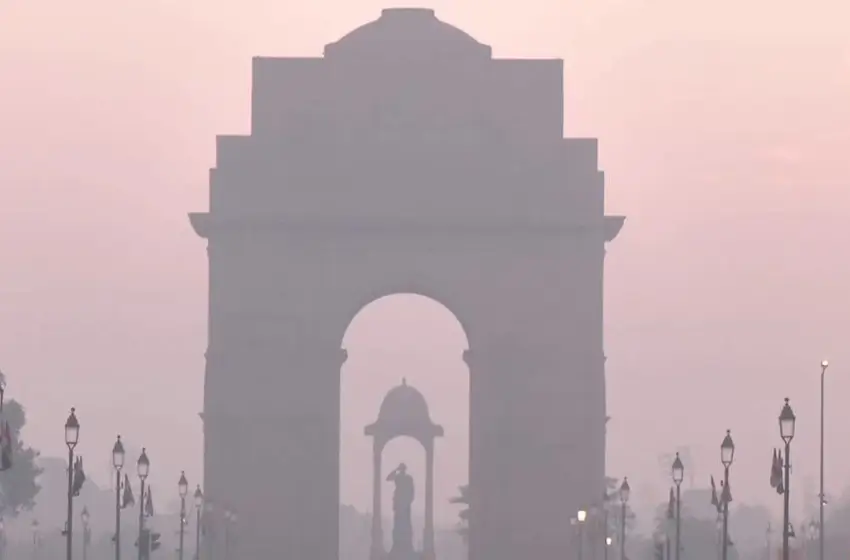
November, December and January are among the most popular months for foreign tourists visiting Delhi, Agra, Jaipur and Rajasthan. Temperatures are cooler, long hours of outdoor sightseeing become more comfortable, and destinations such as the Taj Mahal, Amber Fort and Agra Fort can be easier to visit than during the intense summer heat. However, the same winter period brings two issues that foreign visitors frequently hear about before arriving: Delhi air pollution and North India winter fog.
Both are genuine considerations, but they should be understood separately. Air pollution concerns air quality and can affect health and outdoor comfort, particularly for sensitive travelers. Winter fog is mainly a visibility and transport issue that can affect roads, trains, flights and sunrise sightseeing. The two can occur during the same period, but they are not the same thing.
Conditions also change from one day to another. A traveler may experience a clear afternoon in Delhi followed by a hazy morning, or an Agra sunrise with limited visibility followed by much clearer conditions later in the day. It is therefore unhelpful to assume that every day between November and January will look identical.
For most travelers, winter travel through North India remains possible, but the itinerary should be built with sensible timing. Visitors with respiratory or cardiovascular conditions should take air-quality concerns particularly seriously and seek medical advice appropriate to their own circumstances before traveling. Other visitors should monitor local conditions and avoid treating a tightly packed schedule as if weather and visibility can never interfere with it.
For travelers using Delhi as the starting point for a Golden Triangle tour, India Agra Tours can arrange private travel through Delhi, Agra and Jaipur with a chauffeur-driven vehicle, allowing departure times and sightseeing schedules to remain more flexible when winter conditions affect the road.
Delhi air pollution in winter receives substantial international attention, and foreign tourists arriving in North India during November, December or January should not ignore it. At the same time, travelers should avoid assuming that a single headline or photograph describes conditions throughout an entire three-month journey.
Air quality changes from day to day and even during different periods of the same day. Weather patterns, wind, temperature, local emissions and atmospheric conditions can all influence how pollution accumulates or disperses.
Late autumn and winter can create conditions in which pollutants remain closer to the ground. Delhi's large urban population, road traffic, construction activity and other emission sources contribute to the problem, while regional factors can also influence pollution episodes.
For a foreign visitor, the practical issue is not merely whether the sky looks hazy. Air quality can affect throat comfort, eyes, breathing and the amount of time some people feel comfortable spending outdoors. Travelers with asthma, chronic respiratory conditions, cardiovascular disease or other relevant medical concerns may be more vulnerable and should speak with a qualified medical professional before travel if they are uncertain about their individual risk.
Visitors should monitor a reliable Delhi air quality index during their stay rather than making decisions based entirely on the month.
An AQI reading is intended to communicate how polluted the air is and the potential level of health concern. The interpretation of individual numerical values can depend on the AQI system being used, so travelers should follow the health guidance provided by the relevant official or reputable monitoring service rather than comparing numbers from different systems without context.
When air quality is poor, a foreign tourist can make practical adjustments. Long outdoor walks can be shortened, strenuous outdoor exercise can be reduced, and sightseeing can be balanced with indoor attractions, restaurants and hotel breaks.
A well-fitted high-filtration mask may also be useful during poor-air periods. Travelers concerned about particulate pollution often carry an N95 or equivalent respirator, particularly for extended time outdoors. The fit matters; a high-quality mask worn incorrectly may provide less benefit than expected.
Hotel choice can also matter. Travelers particularly sensitive to air quality may prefer accommodation with good indoor filtration or ask the hotel about room air purifiers. This is more useful than assuming every premium hotel automatically has the same indoor air-quality arrangements.
The important point is that Delhi winter travel should be approached with awareness rather than panic. Some days may have poor air quality, while others may be noticeably better. Travelers should respond to actual conditions.
Fog presents a different challenge.
Winter fog in North India is most relevant because it can reduce visibility, especially during colder mornings. Delhi, Agra and sections of the northern plains can experience fog during winter, with December and January generally deserving particular attention.
For a tourist, fog can affect the holiday in several ways.
Road journeys may take longer because responsible drivers need to reduce speed when visibility is poor. Trains can experience delays. Flights can also be affected when visibility at an airport falls below operational requirements. A sunrise visit may begin with limited visibility even when the weather improves later in the morning.
This matters greatly for tourists who create extremely tight schedules.
Consider a visitor who wants to leave Delhi very early, reach Agra, see the Taj Mahal at sunrise, continue sightseeing, return to Delhi and catch an international flight that evening. On paper, the schedule may look efficient. During a period of dense winter fog, however, it creates unnecessary risk.
A better approach is to include reasonable buffers around important connections.
Foreign visitors taking an international flight should ideally avoid relying on a long same-day road transfer immediately before airport check-in. Staying in Delhi the night before an important international departure can provide valuable protection against unexpected delays.
The same principle applies to trains.
A scheduled arrival time should not be treated as an absolute guarantee when the following activity is expensive or impossible to reschedule. If a traveler has a flight shortly after a train is expected to arrive, a substantial delay can become much more stressful than the money saved by avoiding an additional hotel night.
A private car and driver in North India provides flexibility but cannot eliminate weather. A professional driver should reduce speed when visibility is poor, and tourists should never pressure a driver to maintain normal highway speeds simply because they are late for a monument visit.
Safety should take priority over an itinerary.
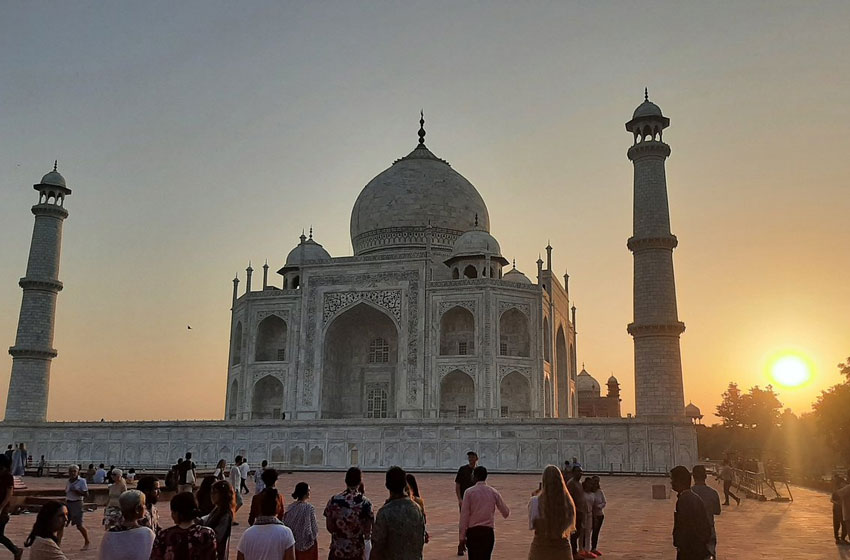
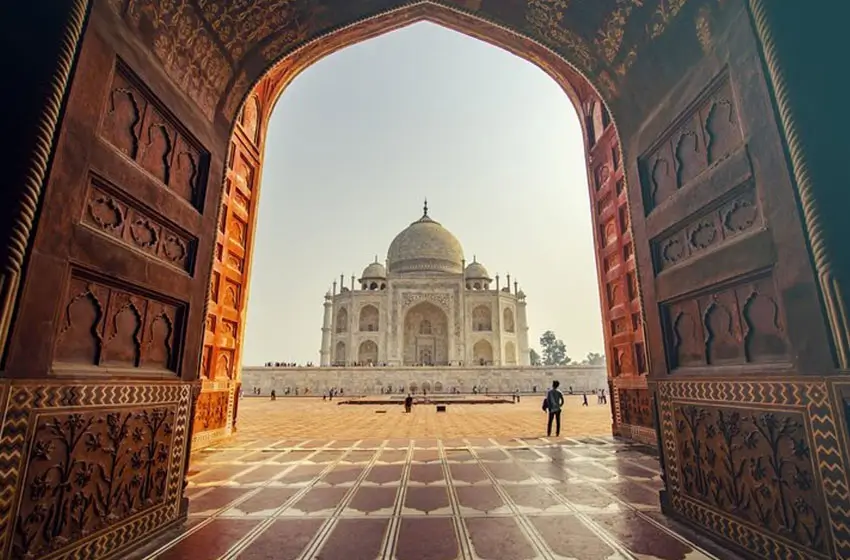
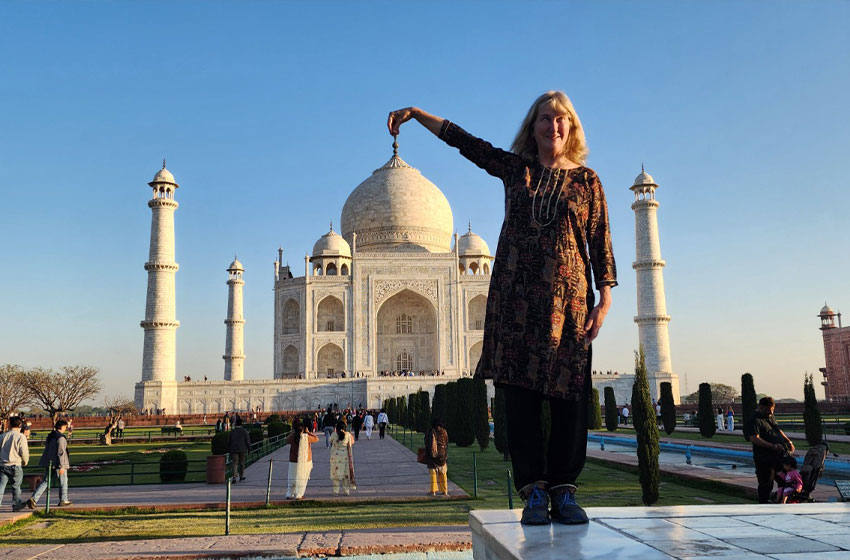
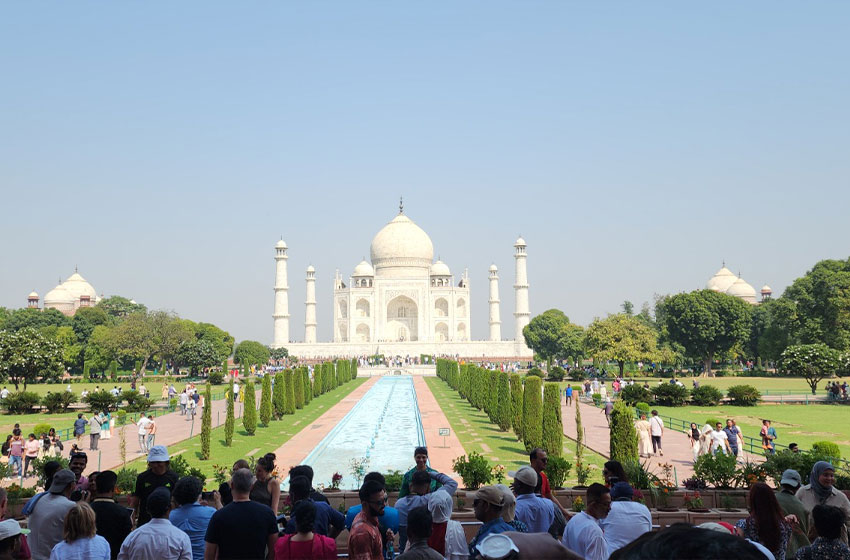
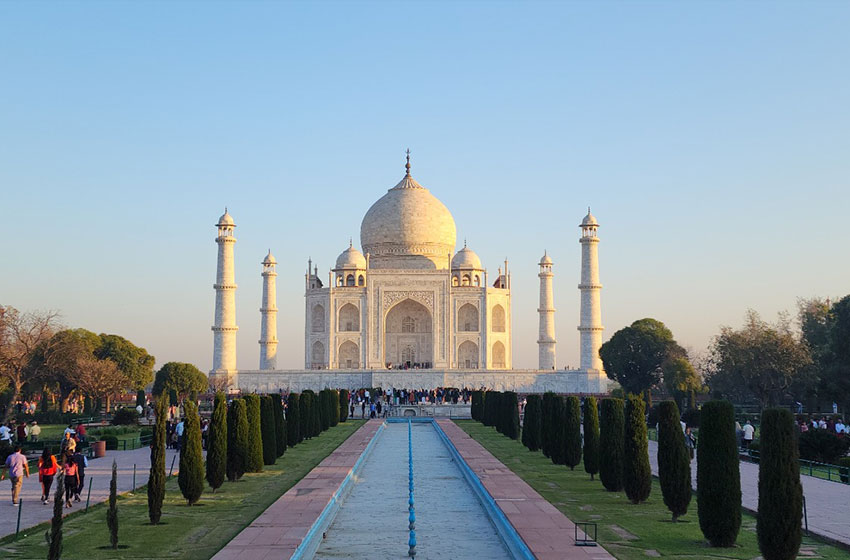
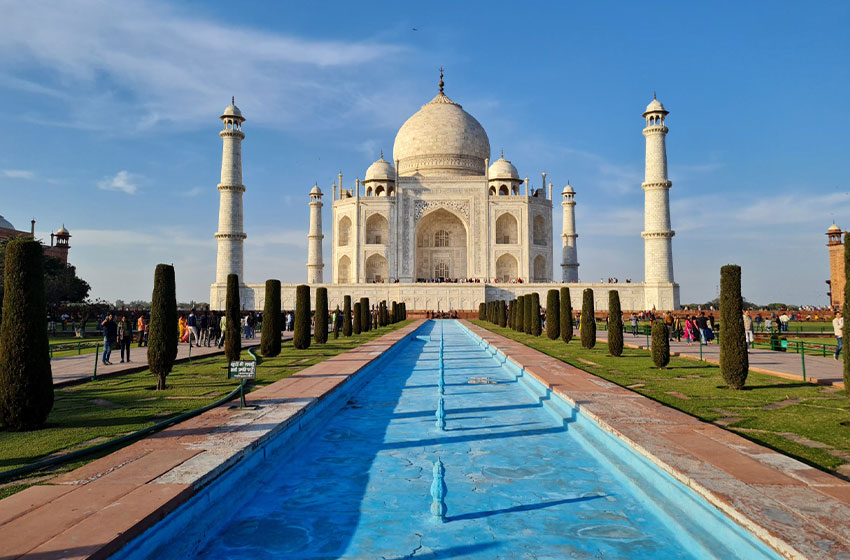
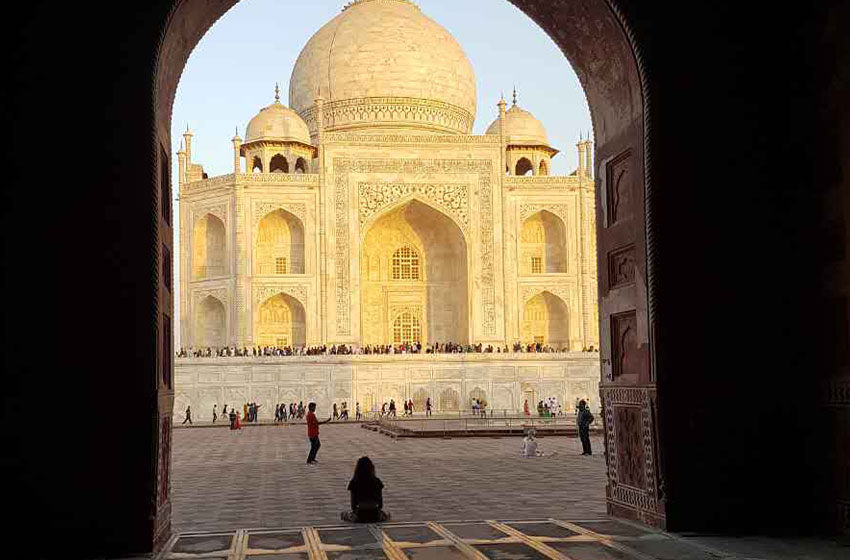
The Taj Mahal at sunrise is one of the most requested experiences among foreign visitors to India. During winter, however, sunrise should be viewed as a preferred visiting time rather than a guarantee of perfect visibility.
November can bring haze and changing air conditions, while December and January can bring colder mornings and periods of fog. On some days, visitors may see the Taj Mahal clearly as soon as they enter. On other mornings, the monument may initially appear through mist or haze.
Dense fog can dramatically reduce visibility.
This does not necessarily make the visit worthless. The atmosphere around the monument can change as the morning progresses, and visibility may improve as conditions change. However, travelers whose only objective is a perfectly clear sunrise photograph should understand that winter weather cannot be controlled by a guide, driver or tour company.
An overnight stay in Agra can provide a more comfortable experience.
Instead of leaving Delhi in the middle of the night and driving through possible fog, travelers can arrive in Agra the previous afternoon, sleep locally and make a short transfer to the Taj Mahal the following morning.
This is particularly useful for elderly travelers, families with children and visitors who do not enjoy extremely early road journeys.
Foreign tourists should also remember that the Taj Mahal is closed to regular visitors on Fridays. A flexible winter schedule cannot simply move a missed Thursday sunrise to Friday morning. The weekly closure must be considered when arranging the wider route.
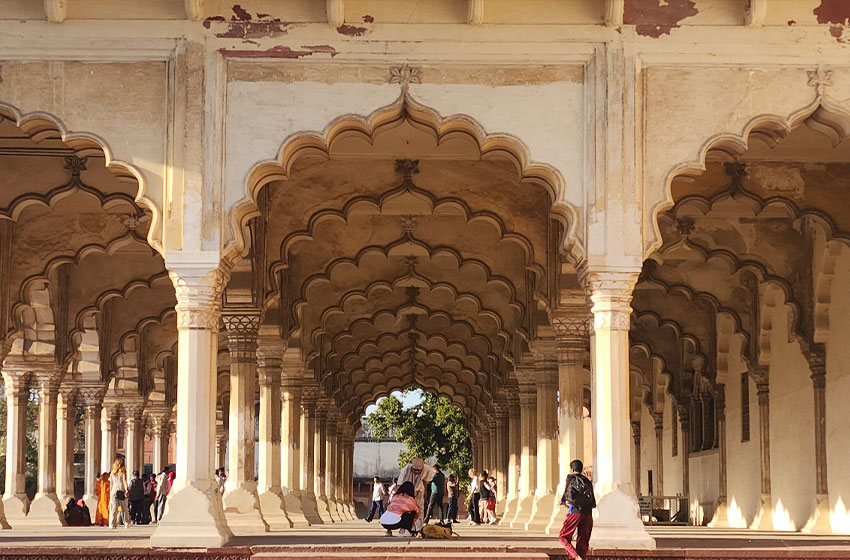
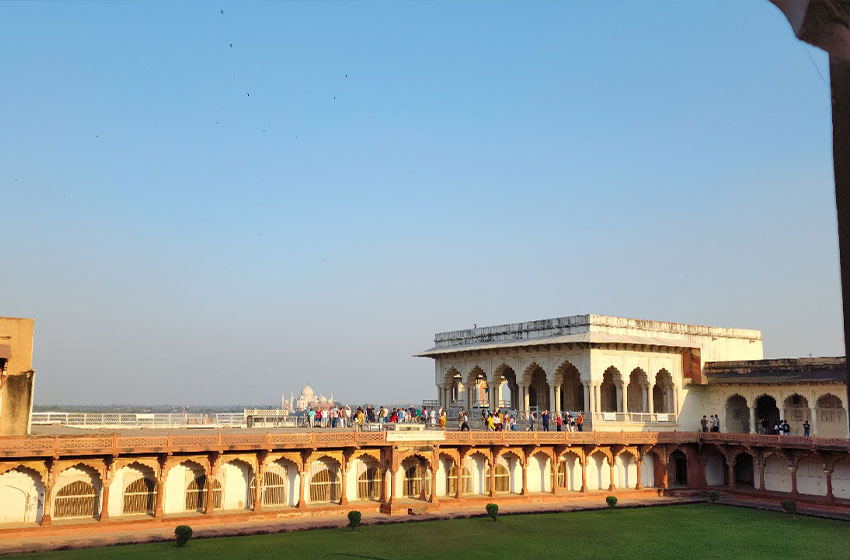
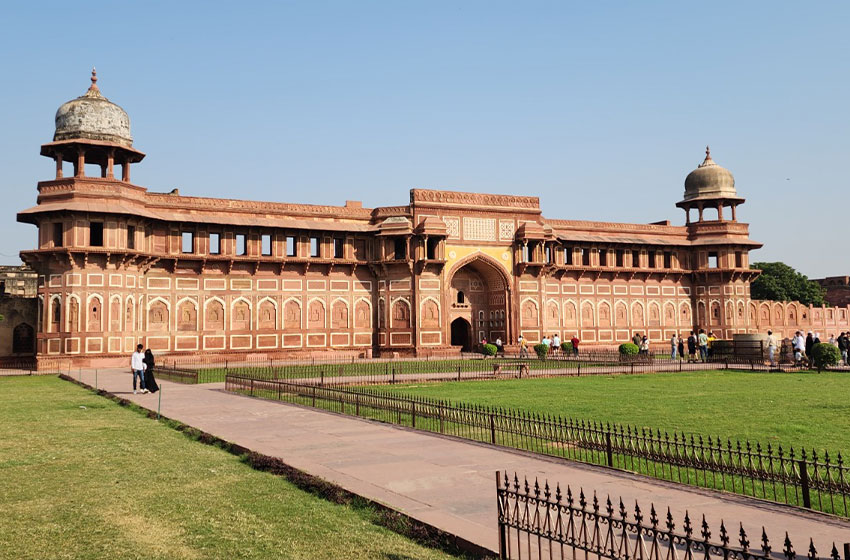
If the morning is foggy, visitors should not assume the entire Agra day will remain the same. Conditions can change. Agra Fort and other attractions can still be visited, and an experienced local guide can help structure the sightseeing according to the available time.
Photography expectations should also remain realistic. Winter images of the Taj Mahal can look very different from the bright blue-sky photographs used in tourism advertising. Mist, soft light and haze create a different visual character.
Travelers booking a private Taj Mahal tour with India Agra Tours can choose an overnight Agra stay or a same-day journey depending on their schedule. During the colder winter period, an overnight option can reduce dependence on a long pre-dawn road journey.
The Delhi-Agra journey is one of the most common road transfers for foreign visitors to India. Under normal conditions, the expressway makes the route straightforward, but Delhi to Agra winter fog can change the journey.
Driving time should never be guaranteed to the minute.
Traffic when leaving Delhi, weather conditions, visibility, rest stops and the final location of the hotel or monument all affect the total journey. Dense fog can require slower driving, particularly in the early morning.
This becomes especially important for travelers booking a same-day Taj Mahal tour.
An extremely early departure may seem like the best way to maximize time in Agra, but on a foggy winter morning the road itself can be slower. Travelers should therefore discuss realistic departure times with their tour operator and avoid creating unnecessary pressure around a single scheduled moment.
A private vehicle offers several advantages. The traveler can leave directly from the hotel, luggage can remain securely stored where appropriate, rest stops can be taken when required and the schedule can be adjusted if conditions change.
However, private transportation does not make fog disappear.
A responsible private driver from Delhi to Agra should drive according to visibility rather than the passenger's preferred arrival time.
The same rule applies when traveling onward from Agra to Jaipur. A Golden Triangle journey should allow sufficient time between cities, particularly if sightseeing stops are included along the route.
Foreign travelers sometimes compare Indian road distances directly with driving times in their home country. This can create unrealistic expectations. A journey should be evaluated according to local traffic and conditions rather than distance alone.
For a winter Delhi Agra Jaipur private tour, leaving enough time between destinations makes the entire journey more comfortable.
For many foreign travelers, yes.
Delhi remains one of India's most historically significant cities, and winter temperatures can make sightseeing much more comfortable than during extreme summer heat. The key is to treat Delhi air quality in winter as a real variable rather than pretending it does not exist.
Travelers who are particularly sensitive to air pollution may choose to reduce the number of nights in Delhi while still visiting major attractions. Someone with a longer North India itinerary might spend a shorter period in the capital before continuing to Agra and Rajasthan.
Another visitor may decide that Delhi's historical sites, markets, religious landmarks and food culture justify several days despite the seasonal air-quality concern.
There is no universal answer because personal health circumstances differ.
What should be avoided is making medical decisions based solely on travel blogs. Travelers with existing respiratory or cardiovascular conditions should obtain individualized medical advice.
For ordinary sightseeing, flexibility helps. Outdoor monuments can be visited when conditions are more suitable, while museums, restaurants and indoor experiences can fill other parts of the day.
Travelers should also distinguish between visibility and air quality.
A clear-looking day does not automatically guarantee excellent air quality, and a misty morning does not tell a visitor everything about pollution. Checking an actual air-quality reading is more useful than judging conditions purely by appearance.
Foreign tourists sometimes assume that leaving Delhi automatically eliminates all winter air-quality issues. That is too simplistic.
Agra is a separate city with different local conditions, but it is still located in North India and can experience haze, fog and periods of poor air quality during winter.
Travelers should therefore monitor conditions in each destination rather than checking Delhi once and assuming the rest of the journey is unaffected.
The more important difference for tourists is often the style of the visit.
Delhi is a huge metropolitan area with heavy traffic and extensive urban activity. Agra's tourist itinerary is usually concentrated around major monuments and hotels. Visitors may therefore spend their time differently in the two cities.
A Taj Mahal and Agra Fort tour can also be completed at a more relaxed pace when the traveler stays locally instead of combining it with many hours of road travel on the same day.
For visitors who are worried about winter fog rather than pollution, staying in Agra can be particularly valuable because it removes the need for a long pre-sunrise drive from Delhi.
Winter packing for North India requires more than a heavy coat.
Delhi, Agra and Jaipur can have cold mornings followed by considerably warmer afternoons. Layered clothing is therefore more practical. A sweater or fleece, medium jacket, full-length trousers and comfortable closed footwear will suit many sightseeing days.
A scarf can be useful during cold mornings.
Travelers concerned about air pollution in Delhi may carry well-fitted high-filtration masks such as N95 or equivalent respirators. People with medical conditions should follow advice from their healthcare professional rather than relying only on general travel recommendations.
Eye drops or other personal comfort items may be useful for travelers who normally experience irritation in dry or polluted conditions, but medication should be selected according to individual medical advice.
Water remains important during winter. Cooler weather can make travelers less conscious of hydration even when they spend hours walking around monuments.
A compact day bag can hold layers as temperatures rise.
Foreign visitors should also keep essential medication in hand luggage rather than checked baggage when flying into India. Important prescriptions should be carried in sufficient quantity for the journey.
The good news for travelers concerned about spending their entire holiday in Delhi is that a North India winter tour does not need to remain in the capital.
After Delhi and Agra, the Golden Triangle continues to Jaipur. Travelers with more time can continue deeper into Rajasthan toward Jodhpur, Udaipur and Jaisalmer.
Rajasthan's winter weather is one of the main reasons November through January remains such a popular travel period. Days can be excellent for forts and palace visits, although mornings and nights can become cold.
Jaipur works particularly well after Agra. Amber Fort, City Palace, Jantar Mantar and the old city can fill several days.
Jodhpur offers Mehrangarh Fort and a distinctive historic center, while Udaipur provides lakes and palaces. Jaisalmer offers desert landscapes that are particularly attractive during the cooler season.
Winter conditions still require appropriate clothing, and fog can occasionally affect sections of North India, but the experience becomes very different once travelers move beyond Delhi.
For this reason, visitors should avoid cancelling an entire Golden Triangle and Rajasthan tour simply because they have read about Delhi pollution. The more useful approach is to consider each destination, monitor actual conditions and adjust the amount of time spent in the capital according to personal needs.
A sensible winter itinerary contains time buffers.
The biggest mistake is scheduling every important activity directly after a transport connection. If a train, road journey or flight experiences a delay, the entire itinerary can collapse.
Travelers arriving in Delhi after a long international flight may benefit from resting before beginning intensive sightseeing.
Those wanting the Taj Mahal at sunrise can consider sleeping in Agra the previous night.
Visitors continuing to Jaipur should allow realistic road time rather than expecting to finish a full Agra sightseeing day and arrive in Jaipur at an exact early-evening time regardless of traffic or weather.
International departure days deserve even more caution. Returning from Jaipur or Agra to Delhi immediately before a long-haul flight creates unnecessary dependence on road conditions.
A private Golden Triangle tour with driver can reduce logistical stress because the same transportation arrangement can cover intercity transfers and local sightseeing. It cannot prevent fog, but it makes schedule adjustments easier than coordinating several unrelated transport bookings.
India Agra Tours can arrange private Delhi, Agra, Jaipur and Rajasthan journeys according to the traveler's available days, hotel preferences and sightseeing pace. During winter, routes can be kept realistic rather than forcing an excessive number of cities into a short holiday.
Many tourists continue to visit Delhi during winter, but air quality can become poor and conditions vary from day to day. Travelers should monitor reliable AQI information and follow relevant health guidance. People with respiratory or cardiovascular conditions should seek individual medical advice before travel.
Air-quality problems can occur at different times, but late autumn and winter, particularly the period around November to January, receive significant attention because atmospheric conditions can allow pollution to accumulate.
December offers cool temperatures that can be comfortable for sightseeing, but travelers should be prepared for possible poor air quality, cold mornings and winter fog. Checking current conditions during the trip is important.
Yes, winter fog can occur in Delhi and surrounding northern regions. Conditions vary by day, and some mornings can have much lower visibility than others.
Yes. Winter fog on the Delhi to Agra route can reduce visibility and increase driving time. A responsible driver should reduce speed according to road conditions, and travelers should keep flexibility in their schedule.
Yes. Fog or haze can reduce visibility during a Taj Mahal sunrise visit. Conditions may improve later in the morning, but perfectly clear sunrise views cannot be guaranteed during winter.
An overnight stay can be very useful, particularly for travelers wanting an early Taj Mahal visit. It removes the need for a long pre-dawn drive from Delhi and gives more flexibility if winter road conditions are slow.
Travelers may consider a well-fitted high-filtration respirator such as an N95 or equivalent when air quality is poor. Individual health needs vary, so travelers with medical conditions should obtain advice from a healthcare professional.
Not necessarily. These months offer some of the most comfortable temperatures for Delhi, Agra, Jaipur and Rajasthan sightseeing. Travelers should consider air quality, possible fog and their individual health circumstances while keeping the itinerary flexible.
Yes. India Agra Tours can arrange a private Golden Triangle tour with car and driver covering Delhi, Agra and Jaipur, along with longer Rajasthan routes. Winter itineraries can include sensible travel buffers, an overnight stay in Agra and flexible road schedules when fog or visibility affects travel.