Taj Mahal Entry Fee for Foreigners (Complete Guide)
13 May 2025
Traveling from Agra to Jaipur is not simply a transfer between two major tourist cities. The road connecting them passes close to several historically important places that can turn an ordinary driving day into one of the most interesting parts of a North India itinerary. Instead of leaving Agra, sitting inside a vehicle for several hours and arriving directly at a Jaipur hotel, travelers can stop at Mughal architecture, an extraordinary ancient stepwell and, when enough time is available, one of Rajasthan's important birding areas. The key is choosing stops carefully so that the journey remains comfortable rather than becoming an overloaded sightseeing day.
The Agra to Jaipur distance by road is approximately 240 to 250 kilometers depending on the exact hotel locations and route used. A straightforward private car journey generally requires around five to six hours under normal conditions, but traffic, road works, meal breaks and city congestion can increase the total time. Once sightseeing stops are added, travelers should treat the journey as a full travel day. A route including Fatehpur Sikri and Abhaneri Stepwell can comfortably take seven to nine hours from hotel to hotel, depending on how long visitors spend at each location.
For first-time international travelers, Fatehpur Sikri is usually the most significant stop because of its direct connection with Emperor Akbar and the Mughal Empire. Abhaneri provides a completely different architectural experience through Chand Baori, one of India's best-known historic stepwells. Bharatpur can also be considered, particularly by travelers interested in birds and nature, although adding a proper bird sanctuary visit to the same day requires substantially more time.
A private Agra to Jaipur transfer with sightseeing stops is particularly convenient because travelers can leave directly from their Agra hotel, keep their luggage in the vehicle and continue to the Jaipur hotel after sightseeing. India Agra Tours can arrange this route with a private air-conditioned car and chauffeur, with a local guide added where required. The itinerary can be adjusted according to the traveler's departure time, mobility, interests and expected arrival time in Jaipur.
The road journey between Agra and Jaipur is one of the most useful private-car sectors on a Golden Triangle itinerary because the two cities are close enough to connect comfortably in one day while still offering worthwhile stops between them. Depending on the exact route, the journey covers approximately 240 to 250 kilometers, and visitors should normally allow around five to six hours for direct driving. This estimate should not be treated as a guaranteed arrival time because leaving central Agra, entering Jaipur, local traffic, road conditions and rest stops can all affect the journey. A private transfer is therefore best arranged as a flexible hotel-to-hotel travel day rather than a tightly timed race between cities.
The major advantage of a private car from Agra to Jaipur is that sightseeing can be built naturally into the road journey. Travelers do not need to return to Agra after visiting Fatehpur Sikri, nor do they need to arrange separate taxis for luggage and sightseeing. The driver collects the guests and their luggage from the Agra hotel, travels toward the selected attractions and then continues directly toward Jaipur. For couples or families carrying several suitcases, this is considerably easier than repeatedly moving baggage through railway stations or coordinating different vehicles.
An early departure is generally advisable when two sightseeing stops are included. Leaving Agra after a relaxed breakfast can work when only Fatehpur Sikri is being visited, but travelers who want Fatehpur Sikri, Abhaneri and a lunch stop should normally begin earlier. Arriving in Jaipur very late at night simply to add another minor attraction rarely improves the journey. The route should leave enough time for monument visits, meals and comfortable driving while still allowing guests to reach their Jaipur hotel at a reasonable hour.
Vehicle selection also matters. Two travelers with standard luggage can normally use a comfortable sedan, while three or four adults with large international suitcases may be better served by a larger vehicle. Families and small groups should consider both passenger space and luggage capacity rather than selecting a car purely according to the number of seats. On a multi-city Golden Triangle tour with private driver, the same vehicle may remain with the guests across several destinations, making comfort particularly important.
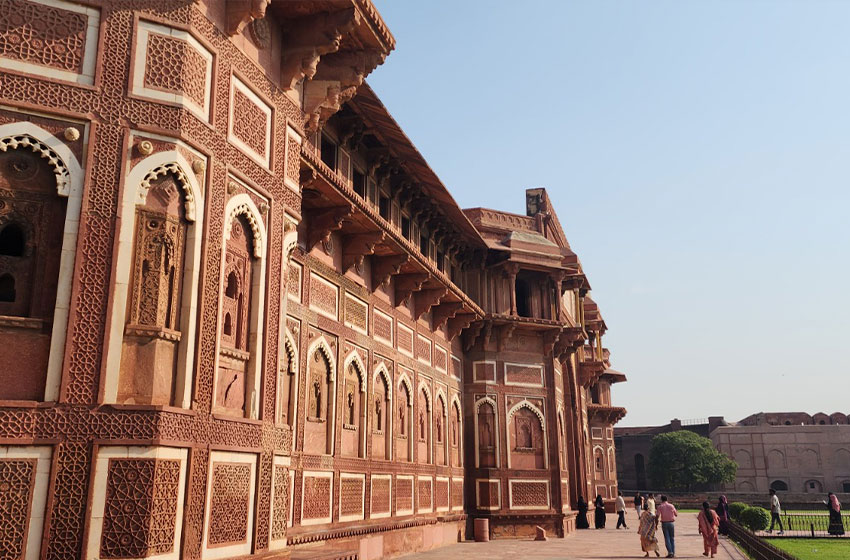
Fatehpur Sikri is the most historically significant sightseeing stop on the Agra-Jaipur route and should receive sufficient time rather than being treated as a quick roadside photograph. Located roughly 40 kilometers from Agra, this remarkable Mughal complex is closely associated with Emperor Akbar, who established an imperial capital here during the sixteenth century. The surviving architecture includes enormous courtyards, royal structures, audience areas, religious buildings and finely carved sandstone architecture, making the site substantially larger and more historically important than many first-time visitors expect.
The complex is commonly discussed in two broad parts: the palace or archaeological area and the Jama Masjid side, where the monumental Buland Darwaza and the tomb of Sheikh Salim Chishti are located. The scale of Buland Darwaza is particularly impressive when approached from below, while the white marble tomb creates a strong visual contrast with the surrounding red sandstone architecture. Within the palace complex, visitors encounter structures associated with Akbar's court and royal life, including areas traditionally identified as Diwan-i-Khas, Panch Mahal and other important buildings.
Travelers should allow approximately 1.5 to 2 hours for Fatehpur Sikri, and history enthusiasts may want longer. The site involves considerable walking across large open courtyards, so comfortable footwear is important. During the hotter months, visiting earlier in the day is preferable because the sandstone complex can become extremely hot under strong afternoon sun. Elderly travelers should move at a comfortable pace and avoid treating the monument as a fast one-hour stop simply because another attraction is scheduled later.
Vehicle access is controlled around the protected monument area, so visitors should expect a final transfer or walk according to the current local system rather than assuming the private car will stop directly beside every building. Travelers should also be cautious around unsolicited guides or vendors and use authorized services when professional guiding is required. A knowledgeable guide can add substantial value here because the architecture becomes much more meaningful when Akbar's reign, imperial court and the function of individual buildings are explained properly.
For anyone traveling on an Agra to Jaipur private tour, Fatehpur Sikri fits naturally into the route and is far more efficient to visit during the transfer than as a separate return excursion from Agra.
A realistic Fatehpur Sikri visit should normally receive between 90 minutes and two hours, excluding the time needed to reach the visitor entrance and return to the vehicle. Travelers with a serious interest in Mughal history or architectural photography can easily spend longer. Attempting to complete the entire complex in 30 or 40 minutes means rushing through a site that once functioned as an imperial capital and contains numerous structures spread across a substantial area. It is better to visit fewer stops properly than to collect photographs from several locations without having enough time to understand any of them.
The time required also depends on temperature and mobility. During cooler months, visitors can walk comfortably through the courtyards and spend more time examining architectural details. During May and June, the same route can feel considerably more tiring, particularly in the middle of the day. Families traveling with elderly parents should allow extra time for rest rather than setting a strict departure deadline immediately after arrival.
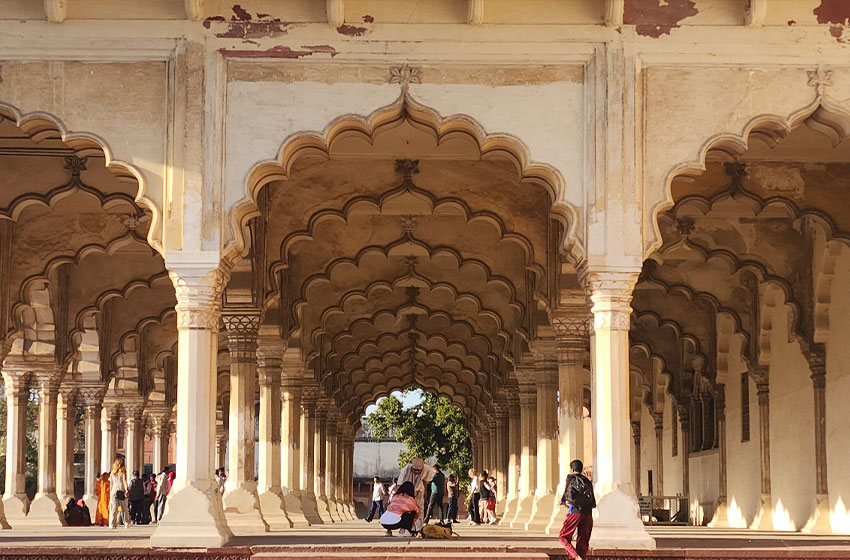
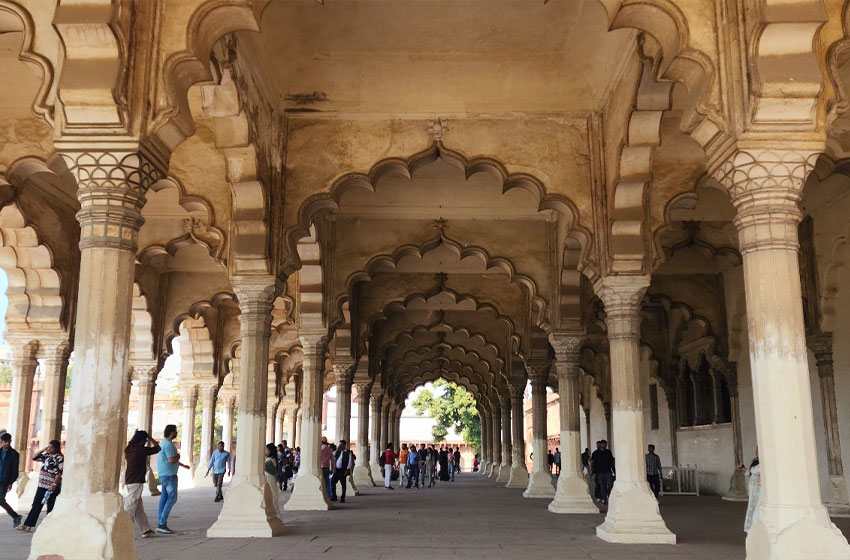
Photography can also extend the visit. Fatehpur Sikri contains long colonnades, carved stone screens, courtyards, gateways and symmetrical architectural compositions that are very different from the white marble appearance of the Taj Mahal. Visitors interested in photography should allow enough time to move through the site instead of remaining with a fast-moving group.
When Fatehpur Sikri and Abhaneri are both included between Agra and Jaipur, the morning should begin early enough to protect this sightseeing time. The objective should be to reach Jaipur comfortably in the evening without cutting the principal monument visit short.
After the monumental Mughal architecture of Fatehpur Sikri, Chand Baori at Abhaneri provides a completely different visual and historical experience. Located in the village of Abhaneri in Rajasthan's Dausa district, Chand Baori is one of India's most recognizable historic stepwells. Its geometric arrangement of thousands of narrow steps descending toward the lower levels creates a pattern unlike the palaces and forts most foreign visitors see elsewhere on a Golden Triangle route.
Stepwells were functional structures designed to provide access to water in regions where seasonal conditions made water management particularly important. Instead of being simple wells, many developed into substantial architectural spaces. Chand Baori is an exceptional example because of its depth, scale and striking geometric construction. Rows of steps descend along the sides in a repeated pattern, creating an almost mathematical appearance when viewed from above.
Visitors should understand that current safety barriers and access restrictions determine how much of the stepwell can be physically approached. Tourists should not expect to walk freely down every staircase seen in photographs. Historic structures require protection, and access rules are intended to preserve the monument and keep visitors safe.
For most travelers, Abhaneri Stepwell requires approximately 30 to 60 minutes. It is much more compact than Fatehpur Sikri, so it works well as the second major stop of the day. Photography is one of the principal attractions because the repeating staircase patterns look dramatically different depending on viewing position and light.
The nearby Harshat Mata Temple adds historical context to the village and can be included when time and current access permit. Travelers should dress respectfully because religious sites may still have local significance even when they are also visited for their historical architecture.
Abhaneri is particularly suitable for travelers who enjoy architecture and photography. It also breaks up the Agra-Jaipur road journey, giving passengers an opportunity to leave the car, walk and see something entirely different before continuing toward Jaipur.
Combining Fatehpur Sikri and Abhaneri Stepwell in one day is practical when traveling from Agra to Jaipur by private car, but the day should be structured around realistic driving and sightseeing times. Travelers should not think of the route as a five-hour transfer with two ten-minute stops. Once hotel pickup, monument visits, lunch, rest breaks and Jaipur traffic are included, the journey becomes a full-day transfer.
A comfortable schedule can begin with departure from the Agra hotel in the morning. Fatehpur Sikri is visited first because it lies relatively close to Agra and requires the longest sightseeing period. After approximately 1.5 to two hours at the monument, the journey continues toward Rajasthan. Lunch can be arranged at a suitable point according to the route, followed by Abhaneri later in the day. After visiting Chand Baori, the private car continues to the Jaipur hotel.
Travelers should expect the complete journey to take roughly seven to nine hours, although actual time depends on traffic, sightseeing pace, meal duration and hotel locations. A family with elderly travelers may need longer because rushing between the vehicle and monuments is unnecessary. Photographers may also spend more time at both attractions.
This route is especially valuable on a Golden Triangle itinerary because it transforms a transfer day into a genuine sightseeing day without requiring a major detour to a distant city. The traveler leaves Mughal Agra in the morning, sees Akbar's former imperial capital, crosses into Rajasthan, visits an extraordinary stepwell and arrives in Jaipur by evening.
For many international visitors, this makes the Agra to Jaipur road trip via Fatehpur Sikri and Abhaneri much more rewarding than traveling directly between hotels.
Bharatpur is another important destination between the broader Agra and Jaipur region, particularly because of Keoladeo National Park, a UNESCO World Heritage Site renowned for birdlife. Unlike Fatehpur Sikri and Abhaneri, however, Keoladeo is not best treated as a short roadside monument stop. A worthwhile visit requires enough time to enter the park and move through the wetland environment, making it more suitable for travelers who have a genuine interest in birds, wildlife and nature.
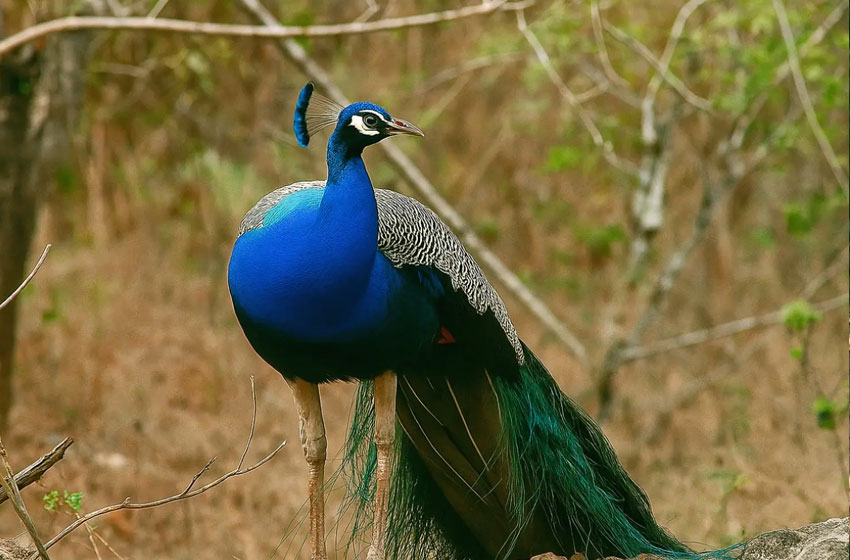
The park is known for resident and migratory bird species, with the cooler season generally attracting strong interest from birdwatchers. The exact birds present vary according to season, water conditions and migration patterns, so visitors should not arrive expecting one guaranteed species. The attraction lies in spending time in the habitat and observing wildlife rather than quickly photographing one monument.
Travelers may move through permitted parts of the park using the transport and guiding arrangements available at the time, which can include walking, cycling or locally available cycle-rickshaw services depending on current rules. A knowledgeable naturalist or bird guide can be valuable for visitors who want help identifying species.
Adding a proper Bharatpur bird sanctuary visit to the same day as Fatehpur Sikri and Abhaneri can make the journey too long for many travelers. Someone who is serious about birding should consider staying overnight in Bharatpur or choosing Bharatpur and Fatehpur Sikri while leaving Abhaneri for another route. Trying to fit three substantial stops between Agra and Jaipur can result in an unnecessarily late Jaipur arrival.
For ordinary first-time Golden Triangle visitors whose priority is architecture, Fatehpur Sikri and Abhaneri usually fit the transfer day more naturally. For birdwatchers, Bharatpur may be important enough to replace another stop rather than being added on top of everything else.
An overnight stay in Bharatpur makes sense for travelers who genuinely want to spend several hours inside Keoladeo National Park, particularly those interested in early-morning bird activity and photography. Instead of leaving Agra, rushing through the park and then continuing several more hours toward Jaipur, travelers can reach Bharatpur comfortably, spend the night and enter the park at a suitable time the following morning. This arrangement also makes the itinerary less tiring for older travelers or visitors carrying professional photography equipment.
Bharatpur should not automatically be added as an overnight stop to every Golden Triangle itinerary. Travelers with only six or seven days usually gain more by keeping the route focused on Delhi, Agra and Jaipur, with Fatehpur Sikri visited during the Agra-Jaipur transfer. Every additional hotel creates another check-in, check-out and luggage movement, so overnight stops should have a clear purpose.
For a birdwatcher, that purpose is obvious. Keoladeo is not merely a convenient place between two cities; it can be one of the principal attractions of the trip. Spending a night nearby gives visitors a better opportunity to enter at a favorable time and avoid treating wildlife observation like a quick sightseeing stop.
Travelers with ten days or more can integrate Bharatpur more comfortably, especially when the wider itinerary already includes nature destinations such as Ranthambore. This creates a more varied journey combining Mughal monuments, Rajasthan architecture, wetlands and wildlife rather than concentrating exclusively on forts and palaces.
For travelers who enjoy architecture, unusual historic structures and photography, Abhaneri is worth visiting between Agra and Jaipur. Chand Baori is visually unlike the Taj Mahal, Agra Fort, Fatehpur Sikri or the palaces of Jaipur, so the stop adds variety without requiring another overnight stay. Its relatively compact size also means visitors can see it properly without adding several hours of sightseeing.
The value of the stop depends on the itinerary. A traveler leaving Agra late in the afternoon should not force Abhaneri into the route and arrive in Jaipur exhausted at night. Similarly, someone with limited mobility who has already spent two hours walking around Fatehpur Sikri may prefer to continue directly to Jaipur. On the other hand, visitors leaving Agra in the morning can usually include the stepwell comfortably.
Photographers often find Chand Baori particularly worthwhile because of its repeated geometric staircase patterns. The monument is best appreciated from the permitted upper viewing areas, where the depth and symmetry become clear. Different light conditions create changing shadows across the stairs, making the appearance more dramatic at certain times.
The stop also provides useful historical variety. Most Golden Triangle sightseeing concentrates on Mughal and Rajput palaces, forts and religious monuments. A historic water structure introduces travelers to another aspect of Indian architecture and the practical engineering required in a region with challenging seasonal water conditions.
For this reason, Agra to Jaipur via Abhaneri is a good option for travelers who have sufficient time and want the road journey itself to contain meaningful sightseeing.
Travelers including both Fatehpur Sikri and Abhaneri should generally leave Agra in the morning rather than waiting until lunchtime. An approximate departure between 8:00 a.m. and 9:00 a.m. can work well for many itineraries, although the exact time should be adjusted according to season, breakfast arrangements and expected monument opening hours. Earlier departure can be useful during summer because it reduces the amount of sightseeing performed during the hottest part of the afternoon.
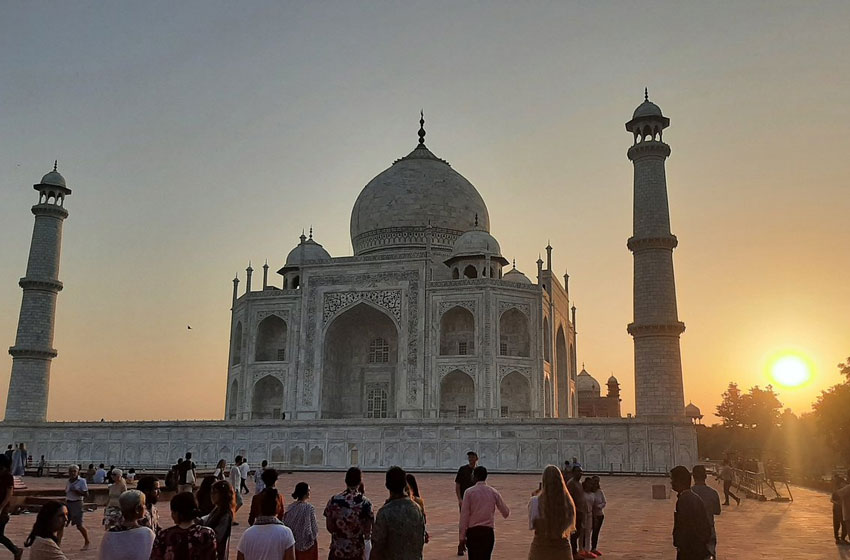
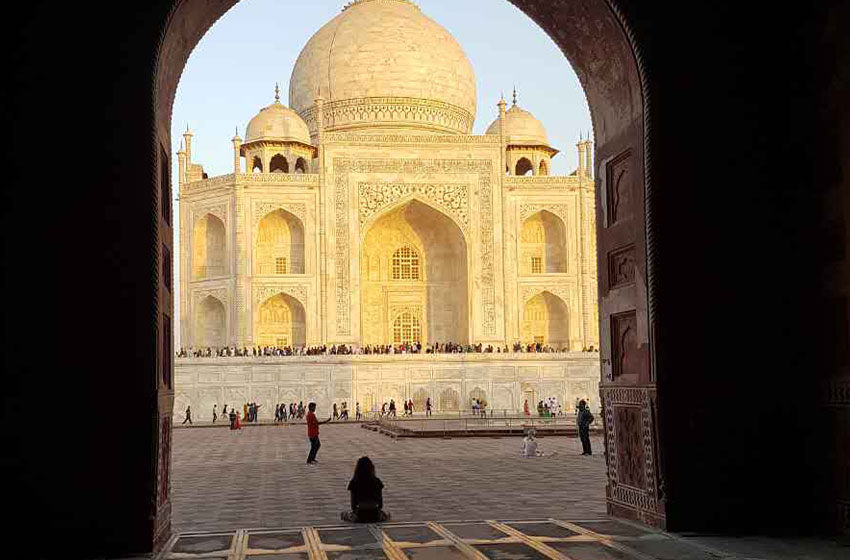
Visitors who want the Taj Mahal at sunrise on the same morning can still continue toward Jaipur afterward, but the day becomes considerably longer. A common arrangement is to visit the Taj Mahal at sunrise, return to the hotel for breakfast and check out before beginning the Agra-Jaipur road journey. Fatehpur Sikri can then be visited late in the morning, followed by lunch and onward travel. Abhaneri can still be possible, but the traveler's energy level and seasonal daylight should be considered.
If the Taj Mahal has already been visited on the previous day, leaving Agra earlier makes the transfer considerably more relaxed. Travelers can reach Fatehpur Sikri before the strongest heat, spend sufficient time there and continue toward Abhaneri without constantly checking the clock.
Families should avoid scheduling a major Jaipur sightseeing program immediately after arrival. After a full road day with two monuments, hotel check-in and a relaxed dinner are generally more sensible. Jaipur sightseeing can begin the following morning when everyone is rested.
A private Agra to Jaipur car with sightseeing gives travelers control over departure time and stops, making it much easier to adjust the day than when using fixed public transportation.
The price of an Agra to Jaipur private car varies according to vehicle type, passenger count, pickup and drop-off locations, sightseeing stops, season and whether additional guide services are required. Travelers should also distinguish between a simple one-way transfer and a full-day sightseeing transfer because a route involving Fatehpur Sikri and Abhaneri keeps the vehicle and driver engaged for considerably longer.
For budgeting purposes, international travelers can expect a professionally arranged private transfer in a clean air-conditioned sedan to commonly fall around ₹6,000 to ₹8,500 for the vehicle when sightseeing stops are included, depending on the service level and route. A larger SUV suitable for additional passengers and luggage can commonly fall around ₹8,000 to ₹11,000 or more. Premium vehicles, larger vans and luxury transportation cost substantially more. These figures should be treated as practical higher-side estimates rather than fixed tariffs because fuel costs, tolls and operating conditions can change.
Travelers should ask what is included before comparing quotations. A suspiciously low price may exclude tolls, parking, state taxes, waiting time or sightseeing detours. A proper quote should clearly state whether the vehicle is air-conditioned, whether driver allowances and road charges are included and which sightseeing stops have been agreed.
Monument tickets and professional guides are generally separate unless the package specifically includes them. Foreign visitors should therefore look at the total service rather than choosing purely on the lowest vehicle price.
India Agra Tours can arrange an Agra to Jaipur private transfer via Fatehpur Sikri and Abhaneri, with the vehicle category selected according to passenger numbers and luggage requirements.
Lunch should be treated as part of the day's schedule rather than something squeezed between monument visits. After walking around Fatehpur Sikri, most travelers appreciate a proper break before continuing toward Rajasthan. The exact restaurant should be selected according to route, hygiene standards, timing and the dietary needs of the group rather than simply stopping at the first roadside establishment.
Foreign visitors who are new to India often prefer established restaurants used to serving travelers, particularly during the first few days of their holiday. A clean dining environment, reliable bottled water and freshly prepared food are more important than finding the cheapest possible meal on a long driving day. Travelers with sensitive stomachs should avoid food that has been sitting uncovered for long periods and should be cautious with raw items when hygiene is uncertain.
Allowing approximately 45 minutes to an hour for lunch keeps the day comfortable. Families with children or elderly parents may want longer. A private chauffeur can coordinate the meal stop with the day's route so that travelers do not need to search independently while carrying luggage.
If Fatehpur Sikri and Abhaneri are both included, lunch usually works best somewhere between the major sightseeing periods rather than after reaching Jaipur. This gives everyone time to rest and makes the second half of the journey more comfortable.
Yes, it is possible to visit the Taj Mahal at sunrise, Fatehpur Sikri and travel to Jaipur on the same day, but visitors should understand that this creates a long schedule. The day may begin before sunrise and continue until evening, particularly if Abhaneri is also added. This arrangement is best suited to travelers who are comfortable with early starts and full sightseeing days.
A typical schedule would begin with the Taj Mahal around sunrise, followed by breakfast at the hotel and check-out. The private car would then travel to Fatehpur Sikri, where approximately 1.5 to two hours should be allowed. After lunch, the journey continues toward Jaipur. If the group is still comfortable and there is sufficient daylight, Abhaneri can be included. Otherwise, continuing directly to Jaipur may be the better decision.
The route becomes less suitable for elderly travelers when too many stops are added. Walking around the Taj Mahal and Fatehpur Sikri in the same day already involves substantial physical activity. Adding Chand Baori is possible, but the value of another stop should be weighed against arriving comfortably at the Jaipur hotel.
Travelers should also remember that the Taj Mahal is generally closed to regular tourists on Fridays. Anyone arranging this route around a sunrise visit must ensure the Agra date falls on an appropriate day.
For many visitors, a better structure is to see the Taj Mahal and Agra Fort on the previous day, stay overnight in Agra and use the following day solely for the Agra to Jaipur transfer with Fatehpur Sikri and Abhaneri.
A direct transfer is suitable for travelers who have already seen Fatehpur Sikri, have limited mobility, need to reach Jaipur for an afternoon commitment or simply want a rest day after intensive sightseeing. There is nothing wrong with traveling directly. A private car can collect guests from the Agra hotel and take them to their Jaipur accommodation without unnecessary stops, allowing the rest of the day to remain free.
A sightseeing transfer is more suitable for first-time visitors who have not seen Fatehpur Sikri and have enough time. Because Fatehpur Sikri lies naturally within the broader route, visiting it during the transfer avoids the need for a separate excursion. Abhaneri can then be added for travelers who want another architectural stop and are comfortable with a longer day.
The choice should therefore be based on the overall itinerary rather than the assumption that more stops always mean better value. If the previous morning began with Taj Mahal sunrise and the traveler has spent two intensive days sightseeing in Agra, a direct journey may be welcome. If the traveler is rested and interested in Mughal history, skipping Fatehpur Sikri merely to arrive in Jaipur two hours earlier may be a missed opportunity.
A good private Golden Triangle itinerary balances these intensive and lighter days. Road-transfer days can contain worthwhile attractions, but they should not become overloaded simply because a private vehicle makes additional stops technically possible.
Families traveling with elderly parents should allow additional time at every stage of the Agra-Jaipur journey. Fatehpur Sikri contains large open areas and substantial walking, while summer heat can make the visit considerably more demanding. An itinerary that looks easy for a younger couple may become exhausting for a senior traveler when monument walking, vehicle transfers and a long road journey are combined.
The most comfortable arrangement is usually a spacious private vehicle with good air-conditioning, flexible rest stops and no pressure to reach every attraction. Fatehpur Sikri can remain the main stop, while Abhaneri can be treated as optional depending on how everyone feels after lunch. This approach is better than promising three attractions in advance and forcing elderly family members to continue when they are tired.
Families with children face different requirements. Regular washroom breaks, meals and time outside the vehicle are important on a five- or six-hour road journey. Fatehpur Sikri can be interesting for older children when a guide explains the stories behind the buildings instead of delivering a long academic history lesson.
Vehicle size is particularly important for families. A group of four adults with several large suitcases may technically fit into a standard car, but comfort can deteriorate quickly during a full-day road transfer. A larger vehicle can be worth the additional cost, especially on a private Rajasthan tour with driver involving several consecutive road journeys.
Travelers should keep a small day bag accessible rather than packing everything into the main luggage compartment. Passports, money, medication, phone chargers, sunglasses and other essential items should remain within easy reach. During warmer months, sun protection is important because Fatehpur Sikri contains exposed areas, while a lightweight jacket can be useful during winter mornings.
Comfortable footwear is essential if Fatehpur Sikri and Abhaneri are included. This is not a transfer day where travelers remain inside the car from beginning to end. Visitors will walk across historic surfaces, courtyards and monument areas, so shoes should be selected for sightseeing rather than appearance alone.
Travelers using cameras should keep equipment manageable. Carrying a large photography bag around multiple monuments can become tiring, and current rules regarding tripods or specialized equipment should always be checked before arrival.
Drinking water should be available in the vehicle, and regular breaks are sensible on a long travel day. Visitors should also keep some Indian currency available for small personal expenses, although larger tourist services increasingly accept digital or card payments.
A well-prepared Agra to Jaipur road trip should feel like a comfortable sightseeing journey rather than a difficult endurance test.
A practical day can begin with hotel pickup in Agra around 8:00 a.m., although the exact departure should be adjusted according to season and personal preference. The first major stop is Fatehpur Sikri, where approximately 1.5 to two hours can be allocated. After leaving the complex, travelers continue along the route and stop for lunch at a suitable restaurant.
The journey then continues toward Abhaneri. Approximately 30 to 60 minutes is sufficient for most visitors at Chand Baori and the immediate historic area. Afterward, travelers return to the private vehicle and continue toward Jaipur, aiming to reach the hotel by late afternoon or early evening depending on traffic and the length of earlier stops.
This schedule provides enough sightseeing without turning the day into a checklist. Travelers who want to spend more time photographing Fatehpur Sikri can do so and shorten the Abhaneri stop. Families who become tired can skip the second stop entirely and continue directly to Jaipur.
Visitors should not schedule Amber Fort or another major Jaipur monument for the same evening. After a full transfer day, hotel check-in, dinner and rest are generally a better use of the evening. Jaipur sightseeing can begin properly the following morning.
India Agra Tours can arrange the complete Agra to Jaipur private car transfer with Fatehpur Sikri and Abhaneri, including hotel-to-hotel transportation and route coordination. This allows foreign visitors to use an otherwise ordinary transfer day for meaningful sightseeing while keeping the schedule flexible enough for traffic, meals and individual travel pace.
The most useful sightseeing stops are Fatehpur Sikri and Chand Baori at Abhaneri. Bharatpur and Keoladeo National Park are also important for travelers interested in birds and nature, although a proper park visit requires more time and may justify an overnight stay.
The Agra to Jaipur road distance is approximately 240 to 250 kilometers, depending on the exact pickup point, drop-off location and route. Direct driving generally takes around five to six hours, while sightseeing stops can turn the journey into a seven- to nine-hour travel day.
Yes. Fatehpur Sikri is one of the most practical stops on an Agra-Jaipur road transfer. Travelers can check out of their Agra hotel, visit the Mughal complex and then continue toward Jaipur without returning to Agra.
Most first-time visitors should keep approximately 1.5 to two hours for Fatehpur Sikri. History and photography enthusiasts may want longer because the complex contains multiple courtyards, gateways and important Mughal structures spread over a substantial area.
Yes, particularly for travelers interested in architecture and photography. Chand Baori Stepwell provides a very different sight from the Mughal and Rajput monuments on the Golden Triangle route, and most visitors can see it comfortably in approximately 30 to 60 minutes.
Yes. Both can be included in an Agra to Jaipur sightseeing transfer by private car when the journey begins in the morning. Travelers should treat the route as a full-day transfer and allow approximately seven to nine hours depending on traffic, meals and sightseeing pace.
Bharatpur is particularly worthwhile for birdwatchers because of Keoladeo National Park. A meaningful wildlife visit requires more time than a quick monument stop, so travelers may prefer to stay overnight or replace another attraction rather than adding Bharatpur, Fatehpur Sikri and Abhaneri to the same day.
A professionally arranged sightseeing transfer can commonly cost around ₹6,000 to ₹8,500 for a sedan and approximately ₹8,000 to ₹11,000 or more for a larger SUV, depending on the route, vehicle, season and inclusions. Premium cars and larger vans cost more, and current quotations should always confirm tolls, parking and driver charges.
Yes. Visitors can see the Taj Mahal at sunrise, return to the hotel for breakfast and then travel toward Jaipur with a stop at Fatehpur Sikri. Abhaneri can also be included when time and energy permit, although the complete day will be long.
Yes. India Agra Tours can arrange a private Agra to Jaipur transfer via Fatehpur Sikri and Abhaneri with an air-conditioned car and professional chauffeur. The vehicle can collect travelers directly from their Agra hotel with luggage and drop them at their Jaipur hotel after sightseeing, while the day's pace can be adjusted for couples, families, elderly travelers and private groups.